
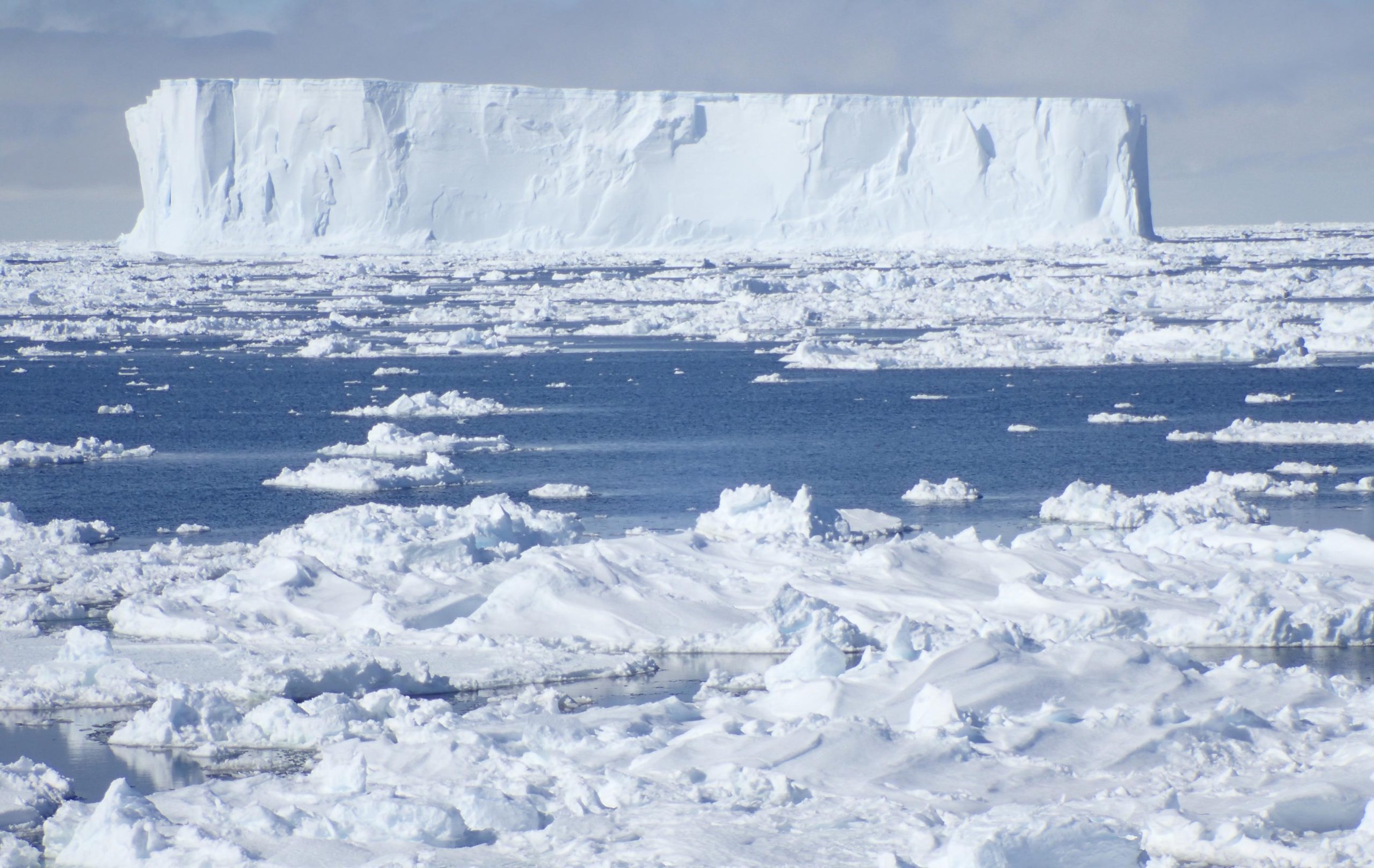
Researchers have proposed a groundbreaking plan to install an 80-kilometer underground curtain to protect the West Antarctic Ice Sheet from melting and causing significant sea level rises.
This idea has quickly shifted from a scientific to a social debate, raising concerns about political implications, authority, sovereignty, and security in Antarctica’s governance. Despite the challenges, there is historical precedent for resolving Antarctic disputes diplomatically, suggesting a pathway to international cooperation.
Innovative Climate Solutions in Antarctica
In January 2024, an article in Nature spotlighted a bold proposal by Finnish researchers to protect the West Antarctic Ice Sheet from melting—a scenario that could raise global sea levels by as much as 5 meters. The idea involves constructing an underground curtain, 80 kilometers long and 100 meters high, to block warm water from reaching the glaciers. The concept quickly gained international attention.
“What had been a technical discussion among some scientists quickly became a social debate involving the general public,” explains Akiho Shibata, an international law researcher at Kobe University.
However, while the scientific aspects of the proposal have been widely discussed, its political implications have been overlooked or downplayed. This oversight risks fueling conflict over a project designed to safeguard humanity in a region that has exemplified peaceful international collaboration for over six decades.
Political and Social Implications
Recognizing this as experts on the international law that governs the Antarctic’s peaceful existence dedicated to scientific investigation, Shibata and Patrick Flamm, a visiting scholar from the Peace Research Institute Frankfurt, worked urgently to analyze the political ramifications of this ambitious project. “We believe that it was important to publish a paper within one year of the original proposal, before the social debate takes on a life of its own,” Shibata notes.
Legal Shadows and Governance Challenges
In a policy paper now published in the journal International Affairs, the Kobe University researcher points out consequences along three main themes: authority, sovereignty, and security. Concerns about authority ask who is in a position to decide on the realization of such a project and what this means for the power balance in the body governing access to the Antarctic. Sovereignty concerns are centered around the implications for extant and dormant territorial claims. And questions around security consider how to practically safeguard a structure that would certainly be seen as planetary critical infrastructure.
Shibata sums up, saying: “This paper sheds light on the political and legal ‘shadows’ hidden behind the exciting surface of science and technology. However, we believe that it is necessary for the members of society to make decisions on the development of these technologies based on a thorough understanding of such negative aspects.”
Diplomatic Challenges and Historical Precedents
While the researchers write that “In the current climate, with growing international rivalry and great power strategic competition, it would be an extremely unlikely diplomatic achievement to secure the level of international cooperation … required for the proposed glacial geoengineering infrastructures,” they also point out a way forward by looking back.
In the early 1980s, a smoldering conflict around guidelines for Antarctic mineral extraction got resolved by the 1991 “Protocol on Environmental Protection to the Antarctic Treaty,” which proactively prohibited mining in the Antarctic indefinitely. This solution set a precedent for the treaty parties to seek solutions that avoid international discord over the Antarctic.
The Kobe University law expert is careful to point out that prohibition is not the default solution, however. He explains: “Recently, momentum has gathered among natural scientists to examine such technologies more multilaterally from the viewpoint of whether they are appropriate in the first place. If in such a deeper scientific and technical discussion the argument is that there are social benefits that outweigh the governance risks we have presented, then again, we international political scientists and international legal scholars need to be involved in this discussion. Perhaps then the discussion will no longer be about protecting the key principles of the current Antarctic Treaty System while considering this technology but about modifying those key principles themselves.”
Reference: “‘Ice sheet conservation’ and international discord: governing (potential) glacial geoengineering in Antarctica” by Patrick Flamm and Akiho Shibata, 18 November 2024, International Affairs.
DOI: 10.1093/ia/iiae281
This research was funded by the Japan Society for the Promotion of Science (grant 21K18124) and the Kobe University Strategic International Collaborative Research Grant Type C. It was conducted in collaboration with a researcher from the Peace Research Institute Frankfurt.
Never miss a breakthrough: Join the SciTechDaily newsletter.
Follow us on Google and Google News.
3 Comments
Have we not learned? Stay out of nature’s way = GOOD, interfere with nature = BAD!
https://www.independent.co.uk/news/science/antartic-ice-melting-robot-warming-b2643948.html Meanwhile, a robot named Marlin got stuck under Antarctic ice years ago. Its data has now revealed an even bigger problem.
It would be more easy to change wasteful human behaviour, such as demanding ever wider roads and selling bigger and “better” cars that are technologically ever more complicated, rather than using what in the past were very effective means of transport; bicycles, 100c motorcycles and municipal public transport.
Not to mention adoption of sensible public planning of cities rather than building houses on sand dunes and flood-prone areas.