
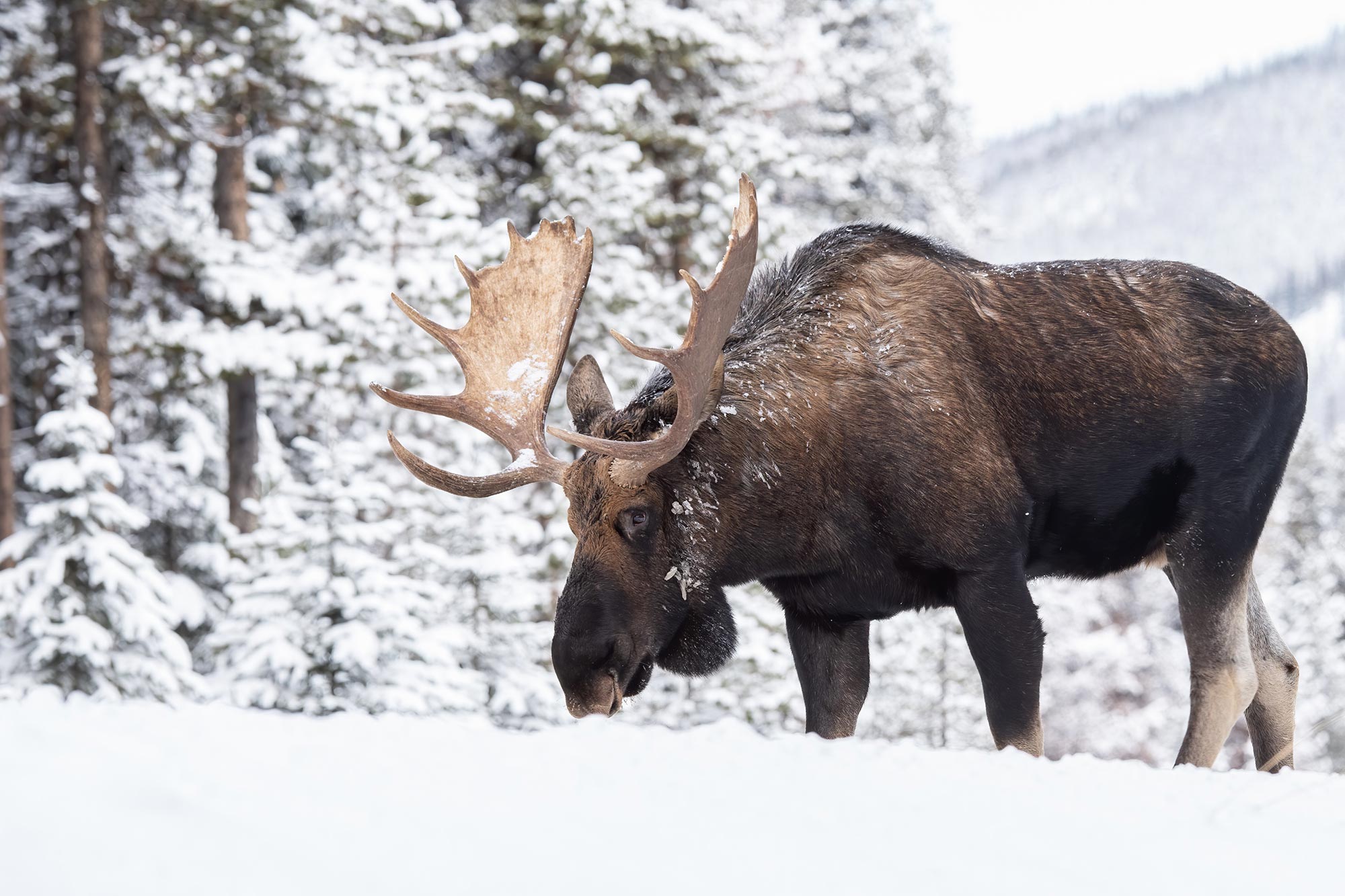
What is the “most Canadian” animal? Spoiler: it’s not the beaver or the moose.
Researchers have unveiled the most evolutionarily distinct Canadian terrestrial vertebrates, including the spiny softshell turtle and mudpuppy. The study stresses the importance of these species in conservation practices due to their unique evolutionary paths.
Evolutionary Distinctness in Canadian Species
A recent study published in The Canadian Field-Naturalist by researchers from Simon Fraser University and Wildlife Preservation Canada offers the first-ever ranking of Canadian terrestrial vertebrates by their evolutionary distinctness. This ranking measures how long each species has evolved independently from other species in Canada.
The highest-ranked species have no close relatives within the country, representing up to 100 million years of unique evolutionary history.
The study highlights that amphibians and reptiles are Canada’s most evolutionarily distinct species overall, with the spiny softshell turtle (Apalone spinifera) ranking as the most evolutionarily distinct terrestrial animal in Canada.
Key Findings on National Evolutionary Distinctness
According to the study, the most nationally evolutionary distinct animals by taxonomic group are:
- Spiny Softshell Turtle (turtles)
- Mudpuppy (amphibians)
- Northern Alligator lizard (reptiles)
- Virginia Opossum (mammals)
- Belted Kingfisher (birds)
- Pond Slider (exotic species)
“We weren’t surprised by the Opossum,” says Emma Kominek, a master’s student who collated the lists. “It’s Canada’s only Marsupial. But the aquatic mudpuppy salamander? That was interesting.”
The authors considered all known Canadian vertebrates (222 mammal, 674 bird, 48 amphibian, and 49 reptile living species) and created Top 20 lists for each group based on their national evolutionary distinctiveness (ED) scores.
Methodology and National Implications for Conservation
Researchers measure ED by tracing a species’ entire family tree. The further back in time a species connects to its family tree and the fewer relatives it has overall, the higher its ED score. For these national scores, the researchers considered just the species found in the country.
All the animals in the Top 20 rankings have long evolutionary histories and all have biological features that can’t be found in any other species in Canada. Such species contribute more to the Canadian Tree of Life, an important concept in biology illustrating the history of life on Earth.
“Conservation of species at risk is often done at the national level,” says SFU biological sciences professor Arne Mooers, who sits on the Committee on the Status of Endangered Wildlife in Canada, and who led the research. “So, it made sense to consider our national evolutionary heritage in this way.”
Exotic Species and Their Unexpected Impact
In the face of current pressures on biodiversity – such as climate change, habitat loss, and limited resources available for conservation – Mooers says the study can serve as a new tool to help national policy-makers prioritize which species to focus conservation efforts on.
Researchers also rated the distinctness of exotic species; animals that are not native to Canada, but that have been introduced as a result of human activity.
Exotic species are not currently considered suitable targets for conservation, but researchers were surprised to find that seven exotic animals cracked the Top 20 National lists.
“Some of these exotic species – like the European Wall Lizard – come from far away, so it makes sense they have no relatives in Canada,” said Mooers. “But we were surprised to see the wild horse and feral pig high in the list.” In the future, Mooers added, there could be value in considering exotic species as part of Canada’s biodiversity.
And what of the mighty beaver’s place as a national icon?
Parks Canada won’t have to pull its likeness from its logos anytime soon.
Two species of beaver still cracked the Top 20 list as Canada’s most distinct mammals: the ironically named American beaver and the mountain beaver at numbers three and six, respectively.
Reference: “Evolutionary isolation of Canadian terrestrial vertebrate species” by Emma Kominek, Olivia Cornies, Hannah McCurdy-Adams and Arne Ø. Mooers, 23 October 2024, The Canadian Field-Naturalist.
DOI: 10.22621/cfn.v137i4.2673
Never miss a breakthrough: Join the SciTechDaily newsletter.
Follow us on Google and Google News.
1 Comment
Something cannot be most unique. It’s either unique or It’s not. It’s a part of the definition!