
New findings enable more accurate prediction of the carbon cycle.
Warmer soils harbor a greater diversity of active microbes, according to a new study from researchers at the Centre for Microbiology and Environmental Systems Science (CeMESS) at the University of Vienna. The study, published in Science Advances, represents a significant shift in our understanding of how microbial activity in the soil influences the global carbon cycle and possible feedback mechanisms on the climate. Until now, scientists have assumed that higher soil temperatures accelerate the growth of microbes, thus increasing the release of carbon into the atmosphere. However, this increased release of carbon is actually caused by the activation of previously dormant bacteria.
The Role of Soil in Carbon Cycling
“Soils are Earth’s largest reservoir of organic carbon,” states Andreas Richter, lead author of the study and professor at the Centre for Microbiology and Environmental Systems Science. Microorganisms silently dictate the global carbon cycle, breaking down this organic matter thereby releasing carbon dioxide. As temperatures rise – a guaranteed scenario under climate change–microbial communities are thought to emit more carbon dioxide, further accelerating climate change in a process known as soil carbon-climate feedback.
Innovative Research in Subarctic Grasslands
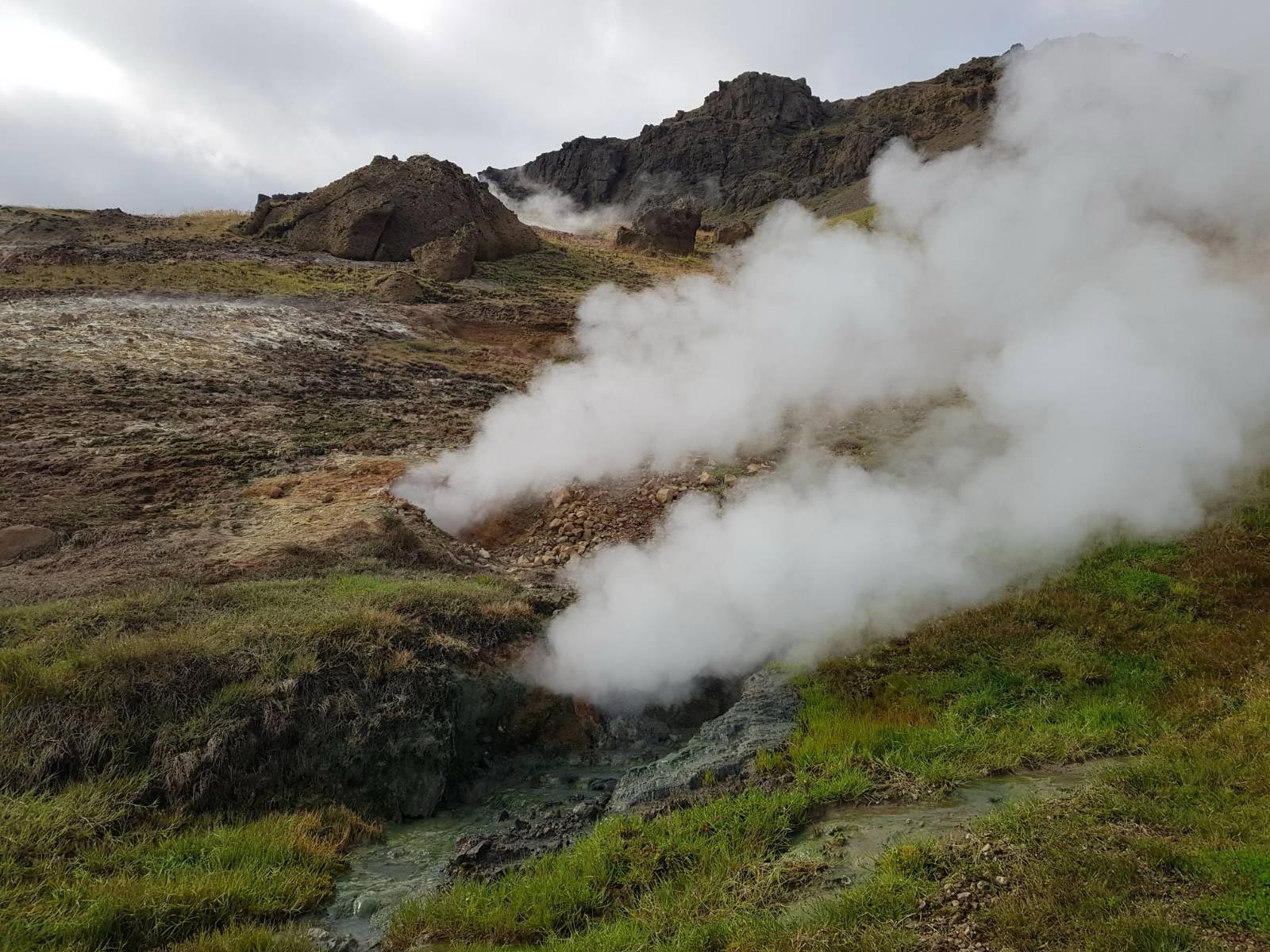
“For decades, scientists have assumed that this response is driven by increased growth rates of individual microbial taxa in a warmer climate,” explains Richter. In this study, the researchers visited a subarctic grassland in Iceland that has undergone over half a century of geothermal warming, resulting in elevated soil temperatures compared to surrounding areas. By collecting soil cores and using cutting-edge isotope probing techniques, the team identified active bacterial taxa, comparing their growth rates at both ambient and elevated temperatures, the latter being 6 °C higher.
“We saw that more than 50 years of consistent soil warming increased microbial growth at the community level,” says Dennis Metze, PhD student and primary author of the study. “But remarkably, the growth rates of microbes in warmer soils were indistinguishable to those at normal temperatures.” The pivotal difference lay in the bacterial diversity: Warmer soils harbored a more varied array of active microbial taxa.
Predicting Soil Microbial Activities in a Future Climate
“Understanding the complexities of the soil microbiome’s reaction to climate change has been a considerable challenge, often rendering it a ‘black box’ in climate modeling,” adds Christina Kaiser, associate professor at the Centre. This new finding transcends the traditional focus on community-aggregated growth, setting the stage for more accurate predictions of microbial behavior and its consequent effects on carbon cycling in the evolving climate scenario. The insights gained from this study illuminate the diverse microbial responses to warming and are vital for forecasting the soil microbiome’s impact on future carbon dynamics.
Reference: “Soil warming increases the number of growing bacterial taxa but not their growth rates” by Dennis Metze, Jörg Schnecker, Coline Le Noir de Carlan, Biplabi Bhattarai, Erik Verbruggen, Ivika Ostonen, Ivan A. Janssens, Bjarni D. Sigurdsson, Bela Hausmann, Christina Kaiser and Andreas Richter, 23 February 2024, Science Advances.
DOI: 10.1126/sciadv.adk6295
Never miss a breakthrough: Join the SciTechDaily newsletter.
Follow us on Google and Google News.
1 Comment
Some infrared frequencies can pass through the atmosphere and some cannot. The
ones that cannot get trapped and cause the earth to get hotter. Could we build
something that would convert the frequency that cannot penetrate the atmosphere to
the frequency that can so the energy can escape to space? It might be something as
simple as a sheet of metal painted with a special paint. Maybe someone can do the
math.