
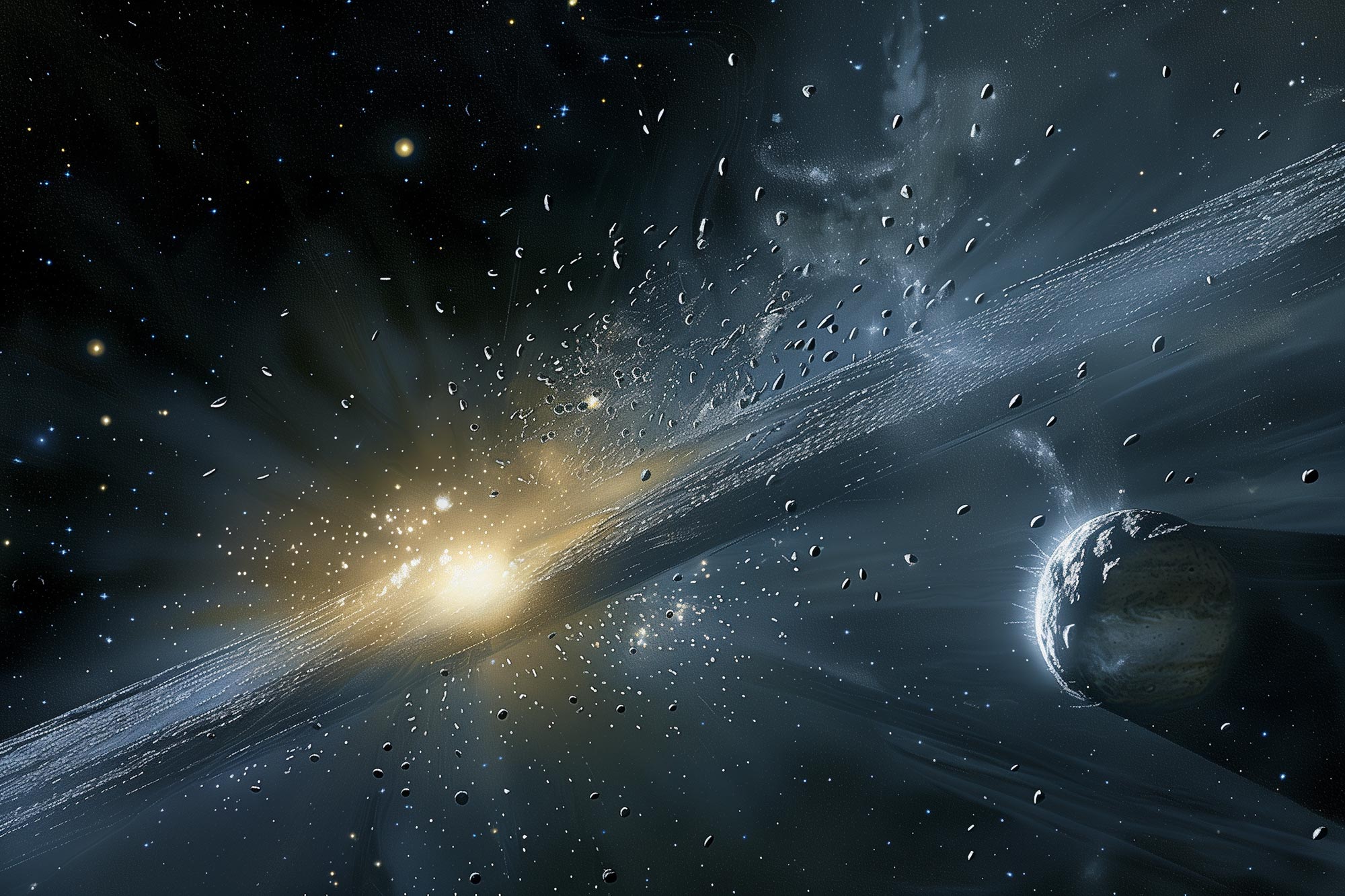
NASA’s New Horizons has discovered unexpectedly high dust levels in the Kuiper Belt, hinting at a larger expanse or a new belt, reshaping our understanding of the solar system’s outer edge.
New observations from NASA’s New Horizons spacecraft hint that the Kuiper Belt – the vast, distant outer zone of our solar system populated by hundreds of thousands of icy, rocky planetary building blocks – might stretch much farther out than we thought.
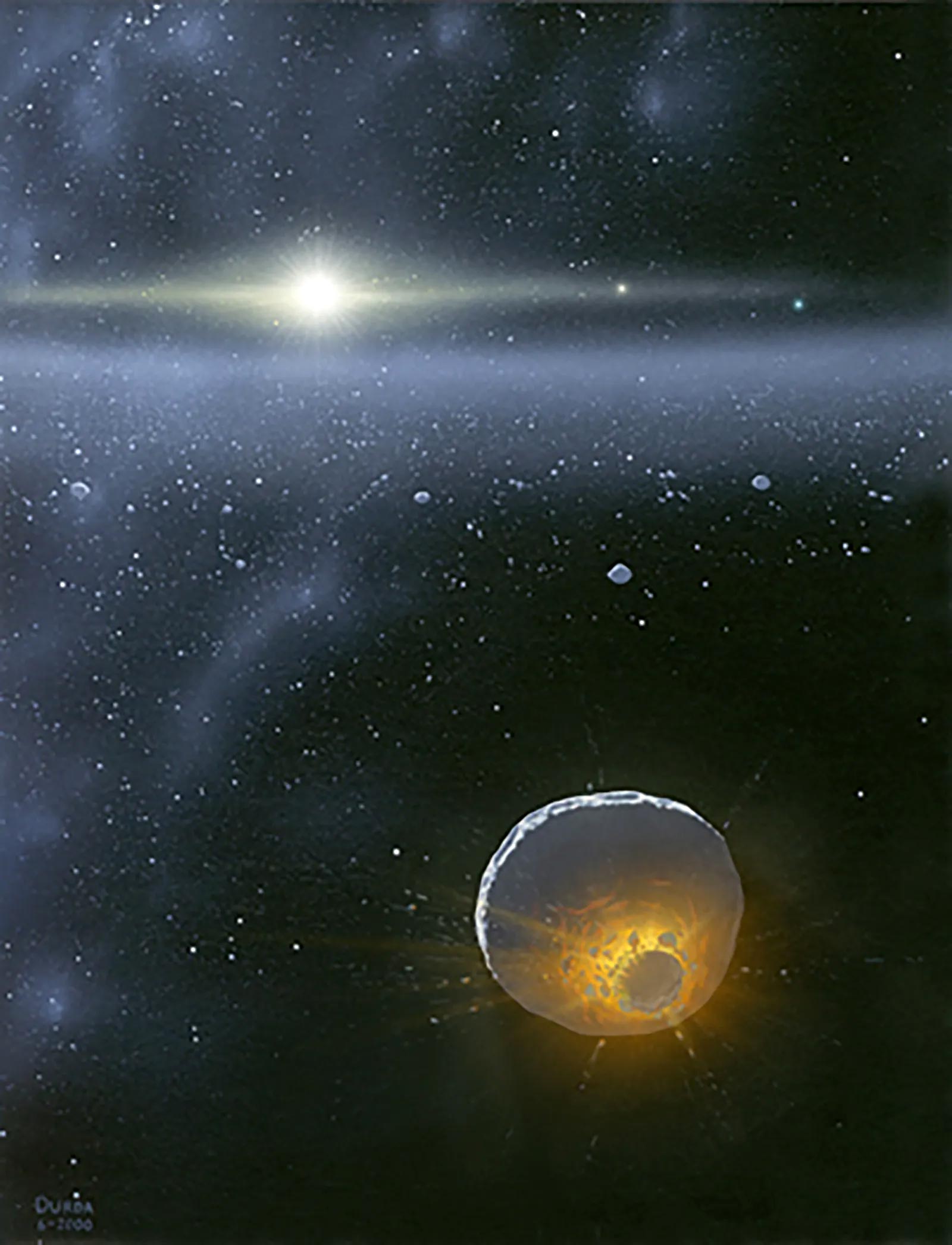
Speeding through the outer edges of the Kuiper Belt, almost 60 times farther from the Sun than Earth, the New Horizons Venetia Burney Student Dust Counter (SDC) instrument is detecting higher than expected levels of dust – the tiny frozen remnants of collisions between larger Kuiper Belt objects (KBOs) and particles kicked up from KBOs being peppered by microscopic dust impactors from outside of the solar system.
The readings defy scientific models that the KBO population and density of dust should start to decline a billion miles inside that distance and contribute to a growing body of evidence that suggests the outer edge of the main Kuiper Belt could extend billions of miles farther than current estimates – or that there could even be a second belt beyond the one we already know.
The results appear in the February 1 issue of the Astrophysical Journal Letters.
New Discoveries Beyond Neptune
“New Horizons is making the first direct measurements of interplanetary dust far beyond Neptune and Pluto, so every observation could lead to a discovery,” said Alex Doner, lead author of the paper and a physics graduate student at the University of Colorado Boulder who serves as SDC lead. “The idea that we might have detected an extended Kuiper Belt — with a whole new population of objects colliding and producing more dust – offers another clue in solving the mysteries of the solar system’s most distant regions.”
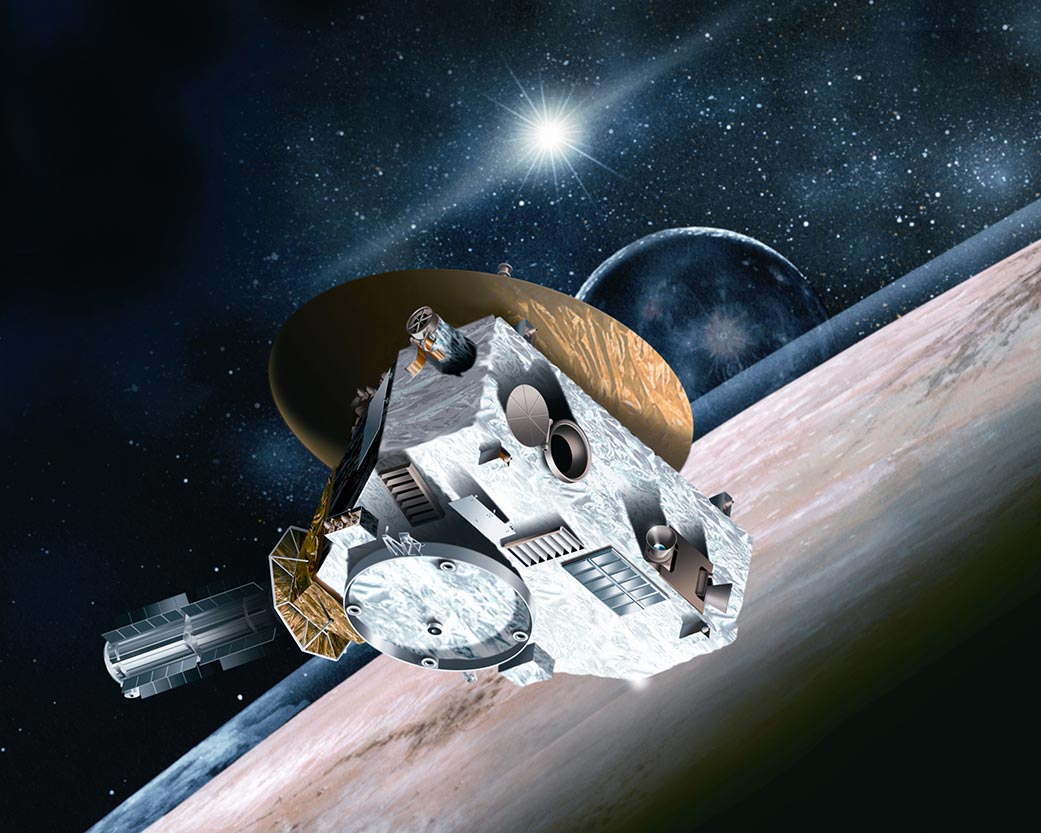
Designed and built by students at the Laboratory for Atmospheric and Space Physics (LASP) at the University of Colorado Boulder under the guidance of professional engineers, SDC has detected microscopic dust grains produced by collisions among asteroids, comets and Kuiper Belt objects all along New Horizons’ 5-billion-mile, 18-year journey across our solar system – which after launch in 2006 included historic flybys of Pluto in 2015 and the KBO Arrokoth in 2019. The first science instrument on a NASA planetary mission to be designed, built and “flown” by students, the SDC counts and measures the sizes of dust particles, producing information on the collision rates of such bodies in the outer solar system.
The latest, surprising results were compiled over three years as New Horizons traveled from 45 to 55 astronomical units (AU) from the Sun – with one AU being the distance between Earth and the Sun, about 93 million miles or 140 million kilometers.
These readings come as New Horizons scientists, using observatories like the Japanese Subaru Telescope in Hawaii, have also discovered a number KBOs far beyond the traditional outer edge of the Kuiper Belt. This outer edge (where the density of objects starts to decline) was thought to be at about 50 AU, but new evidence suggests the belt may extend to 80 AU, or farther.
As telescope observations continue, Doner said, scientists are looking at other possible reasons for the high SDC dust readings. One possibility, perhaps less likely, is radiation pressure and other factors pushing dust created in the inner Kuiper Belt out past 50 AU. New Horizons could also have encountered shorter-lived ice particles that cannot reach the inner parts of the solar system and were not yet accounted for in the current models of the Kuiper Belt.
“These new scientific results from New Horizons may be the first time that any spacecraft has discovered a new population of bodies in our solar system,” said Alan Stern, New Horizons principal investigator from the Southwest Research Institute in Boulder. “I can’t wait to see how much farther out these elevated Kuiper Belt dust levels go.”
New Horizons’ Continuing Journey
Now into its second extended mission, New Horizons is expected to have sufficient propellant and power to operate through the 2040s, at distances beyond 100 AU from the Sun. That far out, mission scientists say, the SDC could potentially even record the spacecraft’s transition into a region where interstellar particles dominate the dust environment. With complementary telescopic observations of the Kuiper Belt from Earth, New Horizons, as the only spacecraft operating in and collecting new information about the Kuiper Belt, has a unique opportunity to learn more about KBOs, dust sources and expanse of the belt, and interstellar dust and the dust disks around other stars.
Reference: “New Horizons Venetia Burney Student Dust Counter Observes Higher than Expected Fluxes Approaching 60 au” by Alex Doner, Mihály Horányi, Fran Bagenal, Pontus Brandt, Will Grundy, Carey Lisse, Joel Parker, Andrew R. Poppe, Kelsi N. Singer, S. Alan Stern and Anne Verbiscer, 25 January 2024, The Astrophysical Journal Letters.
DOI: 10.3847/2041-8213/ad18b0
The Johns Hopkins Applied Physics Laboratory (APL) in Laurel, Maryland, built and operates the New Horizons spacecraft and manages the mission for NASA’s Science Mission Directorate. Southwest Research Institute, based in San Antonio and Boulder, Colorado, directs the mission via Principal Investigator Alan Stern and leads the science team, payload operations and encounter science planning. New Horizons is part of NASA’s New Frontiers program, managed by NASA’s Marshall Space Flight Center in Huntsville, Alabama.
Never miss a breakthrough: Join the SciTechDaily newsletter.
Follow us on Google and Google News.
1 Comment
My work with the Stars in Celestia star program tell me that a Solar System is aprox. .01 ly = (632.4 au, = 316200 sec, = 87 hours 50 minutes) in Radius.