
Close Menu
    Facebook X (Twitter) Instagram
    SciTechDaily
    • Biology
    • Chemistry
    • Earth
    • Health
    • Physics
    • Science
    • Space
    • Technology
    Facebook X (Twitter) Pinterest YouTube RSS
    SciTechDaily
    Home»Technology»Carbon Nanotubes Could Help Electronics Withstand Outer Space’s Damaging Cosmic Radiation
    Technology

    Carbon Nanotubes Could Help Electronics Withstand Outer Space’s Damaging Cosmic Radiation

    By American Chemical SocietyOctober 28, 2021No Comments3 Mins Read
    Facebook Twitter Pinterest Telegram LinkedIn WhatsApp Email Reddit
    Share
    Facebook Twitter LinkedIn Pinterest Telegram Email Reddit
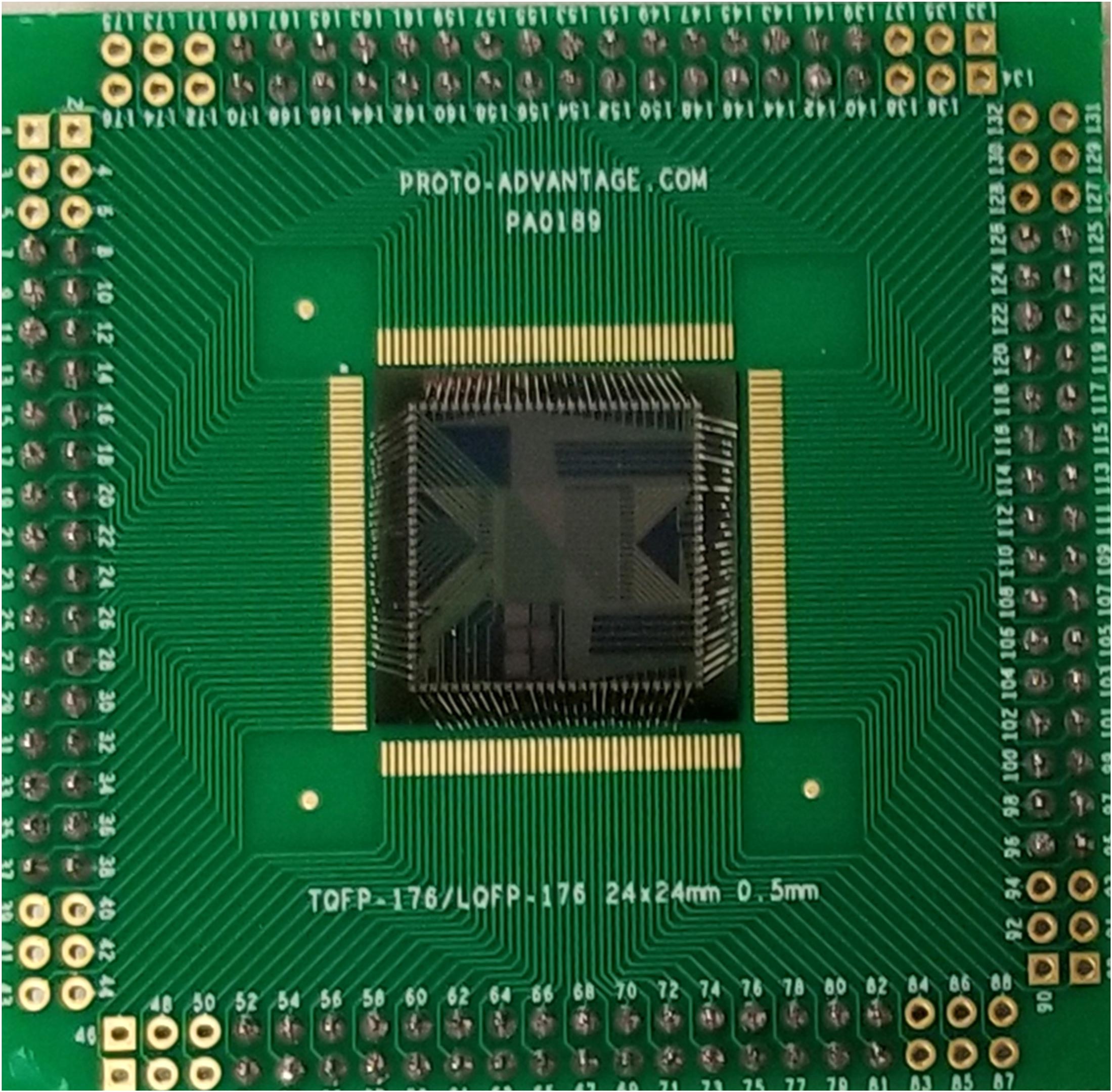
    Carbon Nanotube Memory Chip
    A memory chip was made of transistors with carbon nanotubes that maintained their electrical properties and memory after being bombarded by high amounts of radiation. Credit: Adapted from ACS Nano 2021, DOI: 10.1021/acsnano.1c04194

    Carbon nanotube transistors with shielding show unprecedented radiation resistance, paving the way for durable electronics in deep space exploration.

    Space missions, such as NASA’s Orion that will take astronauts to Mars, are pushing the limits of human exploration. But during their transit, spacecrafts encounter a continuous stream of damaging cosmic radiation, which can harm or even destroy onboard electronics. To extend future missions, researchers reporting in ACS Nano show that transistors and circuits with carbon nanotubes can be configured to maintain their electrical properties and memory after being bombarded by high amounts of radiation.

    The lifetime and distance of deep space missions are currently limited by the energy efficiency and robustness of the technology driving them. For example, harsh radiation in space can damage electronics and cause data glitches, or even make computers break down completely.

    Carbon Nanotubes: A Promising Alternative to Silicon

    One possibility is to include carbon nanotubes in widely used electronic components, such as field-effect transistors. These single-atom-thick tubes are expected to make transistors more energy efficient compared to more run-of-the-mill silicon-based versions. In principle, the ultra-small size of the nanotubes should also help reduce the effects that radiation would have when striking memory chips containing these materials. However, the radiation tolerance for carbon nanotube field-effect transistors has not been widely studied. So, Pritpal Kanhaiya, Max Shulaker and colleagues wanted to see if they could engineer this type of field-effect transistor to withstand high levels of radiation, and build memory chips based on these transistors.

    To do this, the researchers deposited carbon nanotubes on a silicon wafer as the semiconducting layer in field-effect transistors. Then, they tested different transistor configurations with various levels of shielding, consisting of thin layers of hafnium oxide and titanium and platinum metal, around the semiconducting layer.

    The team found that placing shields both above and below the carbon nanotubes protected the transistor’s electrical properties against incoming radiation up to 10 Mrad — a level much higher than most silicon-based radiation-tolerant electronics can handle. When a shield was only placed beneath the carbon nanotubes, they were protected up to 2 Mrad, which is comparable to commercial silicon-based radiation-tolerant electronics.

    Finally, to achieve a balance between fabrication simplicity and radiation robustness, the team built static random-access memory (SRAM) chips with the bottom shield version of the field-effect transistors. Just as with experiments performed on the transistors, these memory chips had a similar X-ray radiation threshold as silicon-based SRAM devices.

    These results indicate that carbon nanotube field-effect transistors, especially double-shielded ones, could be a promising addition to next-generation electronics for space exploration, the researchers say.

    Reference: “Carbon Nanotubes for Radiation-Tolerant Electronics” by Pritpal S. Kanhaiya, Andrew Yu, Richard Netzer, William Kemp, Derek Doyle and Max M. Shulaker, 27 October 2021, ACS Nano.
    DOI: 10.1021/acsnano.1c04194

    The authors acknowledge funding from the U.S. Air Force Research Laboratory and Analog Devices, Inc.

    Never miss a breakthrough: Join the SciTechDaily newsletter.
    Follow us on Google and Google News.

    American Chemical Society Carbon Nanotubes Electrical Engineering Nanotubes Semiconductors
    Share. Facebook Twitter Pinterest LinkedIn Email Reddit

    Related Articles

    “Fundamental Discovery” Used To Turn Nanotube Into Tiny Transistor – 25,000x Smaller Than Width of a Human Hair

    Patterned Optical Chips That Emit Chaotic Light Waves Keep Secrets Perfectly Safe

    New Hydrogel Can Cool Down Electronic Devices and Convert Waste Heat Into Electricity

    The Future of Semiconductors Is Clear For Improved Solar Power Generation

    Revolutionary Light-Emitting Silicon – “Holy Grail” Breakthrough After 50 Years of Work

    Chance Discovery Results in New Type of Transistor for High-Power Electronic Devices

    Scientists Develop a New Nanobiocomposite Material

    Designing Circuits Containing CNTs for Highly Energy-Efficient Computing

    Analyzing the Environmental Costs and Impacts of Technology

    Leave A Reply Cancel Reply

    • Facebook
    • Twitter
    • Pinterest
    • YouTube

    Don't Miss a Discovery

    Subscribe for the Latest in Science & Tech!

    Trending News

    Your Blood Pressure Reading Could Be Wrong Because of One Simple Mistake

    Astronomers Stunned by Ancient Galaxy With No Spin

    Physicists May Be on the Verge of Discovering “New Physics” at CERN

    Scientists Solve 320-Million-Year Mystery of Reptile Skin Armor

    Scientists Say This Daily Walking Habit May Be the Secret to Keeping Weight Off After Dieting

    New Therapy Rewires the Brain To Restore Joy in Depression Patients

    Giant Squid Detected off Western Australia in Stunning Deep-Sea Discovery

    Popular Sugar-Free Sweetener Linked to Liver Disease, Study Warns

    Follow SciTechDaily
    • Facebook
    • Twitter
    • YouTube
    • Pinterest
    • Newsletter
    • RSS
    SciTech News
    • Biology News
    • Chemistry News
    • Earth News
    • Health News
    • Physics News
    • Science News
    • Space News
    • Technology News
    Recent Posts
    • Scientists Revive Ancient Chemistry Trick To Engineer Next-Generation Glass
    • Scientists Use AI To Supercharge Ultrafast Laser Simulations by More Than 250x
    • Scientists Just Found a Surprising Way To Destroy “Forever Chemicals”
    • Popular Supplement Ingredient Linked to Shorter Lifespan in Men
    • Scientists May Have Found a Way To Repair Nerve Damage in Multiple Sclerosis
    Copyright © 1998 - 2026 SciTechDaily. All Rights Reserved.
    • Science News
    • About
    • Contact
    • Editorial Board
    • Privacy Policy
    • Terms of Use

    Type above and press Enter to search. Press Esc to cancel.