
Close Menu
    Facebook X (Twitter) Instagram
    SciTechDaily
    • Biology
    • Chemistry
    • Earth
    • Health
    • Physics
    • Science
    • Space
    • Technology
    Facebook X (Twitter) Pinterest YouTube RSS
    SciTechDaily
    Home»Space»A Closer Look at the Colors of the Small Magellanic Cloud
    Space

    A Closer Look at the Colors of the Small Magellanic Cloud

    By European Space Agency (ESA)February 23, 2015No Comments3 Mins Read
    Facebook Twitter Pinterest Telegram LinkedIn WhatsApp Email Reddit
    Share
    Facebook Twitter LinkedIn Pinterest Telegram Email Reddit
    Exploring the Colors of the Small Magellanic Cloud
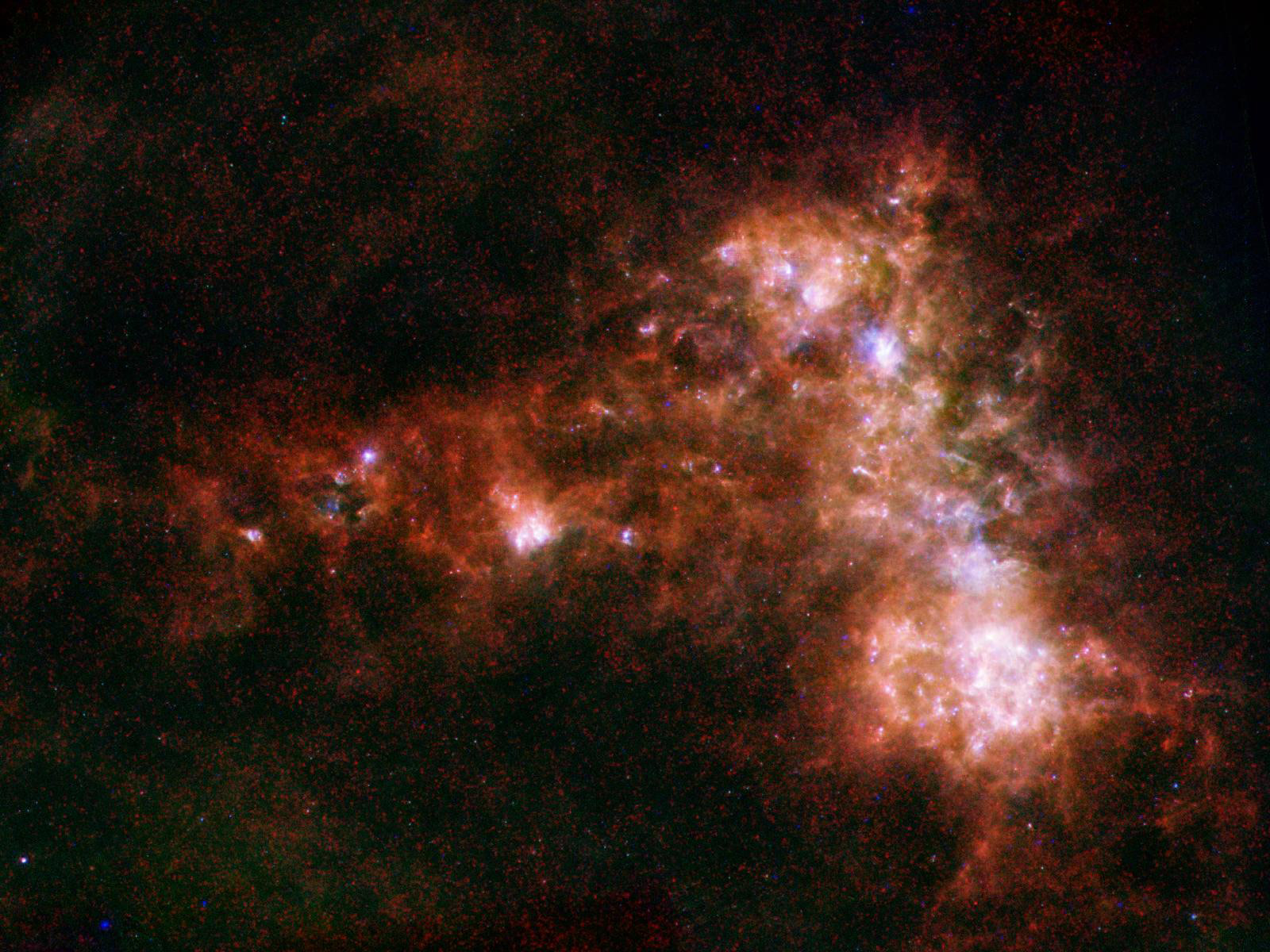
    Small Magellanic Cloud composite image using data from Herschel’s Spectral and Photometric Imaging Receiver (SPIRE), Photodetector Array Camera and Spectrometer (PACS), and Spitzer’s Multiband Imaging Photometer (MIPS). Credit: ESA/NASA/JPL-Caltech/STScI

    This composite image used data from Herschel’s Spectral and Photometric Imaging Receiver (SPIRE), Photodetector Array Camera and Spectrometer (PACS), and Spitzer’s Multiband Imaging Photometer (MIPS) to get a better view of the Small Magellanic Cloud.

    Astronomical images often look like works of art. This picture of one of our nearest neighboring galaxies, the Small Magellanic Cloud, is certainly no exception!

    The scene is actually a collaboration between two cosmic artists — ESA’s Herschel Space Observatory and NASA’s Spitzer space telescope. The image is reminiscent of an artistic stipple or pointillist painting, with lots of small, distinct dots coming together to create a striking larger-scale view.

    The colors within this image provide information about the temperature of the dust mixed with the gas throughout the galaxy. The slight green tint stretching towards the left of the frame and the red hue of the main body of the galaxy are from the Herschel observations, which highlight cold material, down to a chilly -260 degrees Celsius (-436 degrees Fahrenheit).

    The brighter patches of blue were captured by Spitzer. These regions are made up of ‘warmer’ — about -150 degrees Celsius (-238 degrees Fahrenheit) — gas and dust, and within some of these areas new stars are being born. These newborn stars in turn warm up their surroundings, resulting in intense clumps of heated gas and dust within the galaxy.

    These clumps show up brightly in this image, tracing the shape of the galaxy clearly — the SMC is made up of a central ‘bar’ of star formation, visible on the right-hand side, and then a more extended ‘wing’, stretching out towards the left of the frame.

    Overall, the Small Magellanic Cloud is about 1/20th of the size of the Milky Way. It can be seen shining in the night sky of the southern hemisphere, and its brightest regions are easily visible to the naked eye. It is a satellite galaxy of our own — it orbits around the Milky Way along with its bigger companion, the Large Magellanic Cloud. These two galaxies have been extensively studied because of their proximity to us; astronomers can observe them relatively easily to explore how star formation and galactic evolution works in galaxies other than our own.

    Never miss a breakthrough: Join the SciTechDaily newsletter.
    Follow us on Google and Google News.

    Astronomy European Space Agency Small Magellanic Cloud Spitzer Space Telescope
    Share. Facebook Twitter Pinterest LinkedIn Email Reddit

    Related Articles

    Einstein Probe Captures a Rare Celestial Duo Igniting the X-ray Sky

    A Cosmic Tale of Death & Dust Revealed in Orion Constellation

    Sparkling Dreams: Hubble Space Telescope Head in the Clouds

    Astronomers Build Incredible 3D Visualization of Exploded Star Using NASA’s Great Observatories [Video]

    Spitzer Views Star-Forming Region ON2

    Astronomers Discover Some of the Youngest Stars Ever Seen

    Ultra-Fast Outflows are Common Features of Black-Hole-Powered Galaxies

    NASA’s Spitzer Space Telescope Finds Solid Buckyballs in Space

    ESA’s Mars Express MARSIS Radar Explores Martian Oceans

    Leave A Reply Cancel Reply

    • Facebook
    • Twitter
    • Pinterest
    • YouTube

    Don't Miss a Discovery

    Subscribe for the Latest in Science & Tech!

    Trending News

    Popular Supplement Ingredient Linked to Shorter Lifespan in Men

    Scientists May Have Found a Way To Repair Nerve Damage in Multiple Sclerosis

    “Totally Unexpected” – Scientists Discover Pancreatic Cancer’s Fatal Addiction

    A Strange Quantum Effect May Explain One of Biology’s Greatest Mysteries

    James Webb Telescope Reveals the Universe’s Hidden Cosmic Web in Stunning Detail

    Scientists Identify Simple Supplement That Greatly Reduces Alzheimer’s Damage

    You May Have a Dangerous Type of Cholesterol Even if Your Tests Look Normal

    Your Blood Pressure Reading Could Be Wrong Because of One Simple Mistake

    Follow SciTechDaily
    • Facebook
    • Twitter
    • YouTube
    • Pinterest
    • Newsletter
    • RSS
    SciTech News
    • Biology News
    • Chemistry News
    • Earth News
    • Health News
    • Physics News
    • Science News
    • Space News
    • Technology News
    Recent Posts
    • Scientists Discover Hidden “Switch” That Burns Fat and Could Treat Bone Disease
    • Deadly Hantavirus Outbreak on Cruise Ship Sparks Global Health Alert
    • New Research Reveals Certain Fats Can Either Trigger or Suppress Cancer
    • After 50 Years of Mystery, Researchers Identify New Human Blood Group
    • Leading Climate Scientist Rebuts “Factually Incorrect” US Government Climate Claims
    Copyright © 1998 - 2026 SciTechDaily. All Rights Reserved.
    • Science News
    • About
    • Contact
    • Editorial Board
    • Privacy Policy
    • Terms of Use

    Type above and press Enter to search. Press Esc to cancel.