
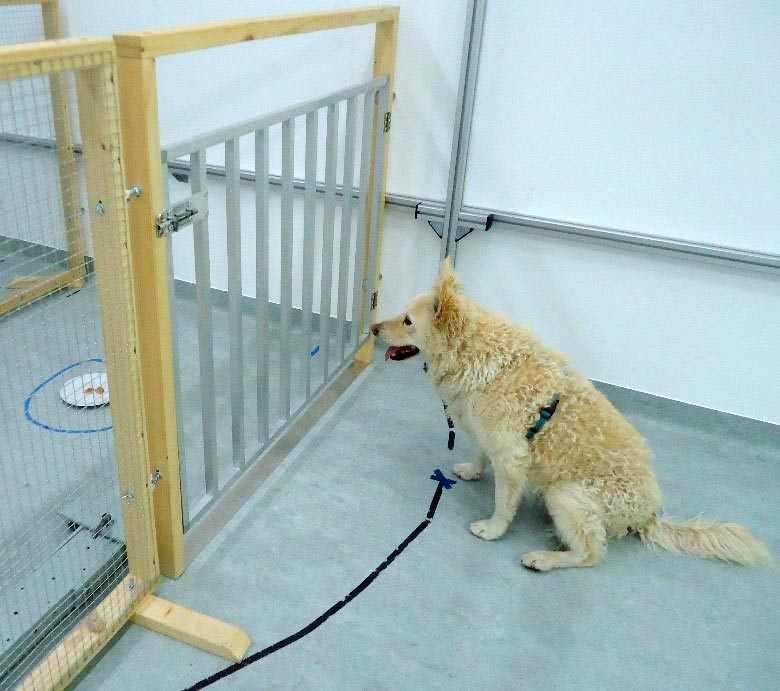
New study has developed robust tests to measure behavior and cognition in aged pet dogs and suggests need for further research into links between aging, nutrition, and training.
A new study of older pet dogs found that problem solving, sociability, boldness, and dependency decline with age, and reported no associations between an enriched diet, lifelong training experiences, and measures of behavior and cognition after a one-year diet period. A team of researchers at the University of Veterinary Medicine, Vienna, Austria, and University of Liverpool, UK present these findings in the open-access journal PLOS ONE on September 16, 2020.
Like humans, dogs can experience cognitive decline and behavioral changes as they age. For instance, they may display less curiosity about novel objects and show decline in social responsiveness, memory and attention. Also like humans, individual dogs vary in their rates of cognitive decline. Some research suggests that lifelong training and an enriched diet could slow cognitive aging in dogs. However, few studies have explored aging in pet dogs, as opposed to dogs in laboratory settings.
To better understand aging in pet dogs, the authors assigned 119 pet dogs–aged over 6 years and of varying breeds–to receive either an enriched diet (including nutrients such as antioxidants, omega-fatty acids, Phosphatidylserine and tryptophan) or a control diet over the course of one year. They also asked the dog owners to report their pets’ previous training experiences. After one year of dietary treatment, the researchers evaluated the dogs’ cognition and behaviors in a newly developed battery of tests known as the Modified Vienna Canine Cognitive Battery (MVCCB).
The analyses showed that, in general, the aging dogs experienced declines in four out of six total factors addressed by the MVCCB: problem solving, sociability, boldness, and dependency. The two other factors, trainability and activity-independence, showed no change with age. Previous training experiences and an enriched diet showed no significant association with the observed cognitive declines.
These findings suggest that additional research is needed to determine whether and how training and diet might impact aging in pet dogs. The authors highlight that the MVCCB could be a useful tool to detect age related changes in dogs for future research.
Author Durga Chapagain adds: “Modified Vienna Canine Cognitive Battery can be used as a tool to determine behavioral changes and cognitive deficits in aged dogs.”
Reference: “Behavioural and cognitive changes in aged pet dogs: No effects of an enriched diet and lifelong training” by Durga Chapagain, Lisa J. Wallis, Friederike Range, Nadja Affenzeller, Jessica Serra and Zsófia Virányi, 16 September 2020, PLoS ONE.
DOI: 10.1371/journal.pone.0238517
Funding: This research was fully funded by Royal Canin, Aimargues, France (Project Number: FA 3721 4007). JS was an employee with Royal Canin, Aimargues, France. The funders had no role in study design, data collection and analysis, and decision to publish. Lisa J. Wallis was additionally supported by funding from the European Research Council (ERC) under the European Union’s Horizon 2020 research and innovation program (Grant Agreement No. 680040).
Competing Interests: This research was fully funded by Royal Canin, Aimargues, France (Project Number: FA 37214007). JS was an employee with Royal Canin, Aimargues, France. This does not alter our adherence to PLOS ONE policies on sharing data and materials”.
Never miss a breakthrough: Join the SciTechDaily newsletter.
Follow us on Google and Google News.