

More than a billion people worldwide struggle with obesity, and popular treatments like Ozempic and Wegovy don’t work for everyone — and can cause unpleasant side effects.
Now, researchers have discovered a tiny, hidden molecule in our DNA that could help change that. Using cutting-edge genetic tools, they found this microprotein plays a role in how our bodies store fat, opening the door to a whole new type of weight loss treatment.
Global Obesity Crisis and Limited Treatments
Over the past three decades, obesity rates have more than doubled, now affecting more than one billion people worldwide. This widespread condition is closely tied to serious health problems, including type 2 diabetes, heart disease, chronic kidney disease, and various cancers. While existing treatments such as lifestyle changes, bariatric surgery, and GLP-1 drugs like Ozempic or Wegovy can be effective, many people face challenges in starting, completing, or sustaining these approaches, often regaining lost weight over time.
Researchers at the Salk Institute are exploring a promising new path involving microproteins. These small, often-overlooked molecules are found throughout the body and influence both health and disease. In a recent study, the team used CRISPR gene editing to analyze thousands of fat cell genes. They identified dozens of genes that appear to code for microproteins, and confirmed one that directly affects fat cell growth or the build-up of lipids (fat molecules) inside the cells.
CRISPR Unlocks New Therapeutic Possibilities
Published in the Proceedings of the National Academy of Sciences (PNAS) on August 7, 2025, the study highlights microproteins that could one day become targets for new obesity and metabolic disorder treatments. It also demonstrates how valuable CRISPR screening can be for uncovering microproteins with medical potential.
“CRISPR screening is extremely effective at finding important factors in obesity and metabolism that could become therapeutic targets,” says senior author Alan Saghatelian, a professor and holder of the Dr. Frederik Paulsen Chair at Salk. “These new screening technologies are allowing us to reveal a whole new level of biological regulation driven by microproteins. The more we screen, the more disease-associated microproteins we find, and the more potential targets we have for future drug development.”
How Fat Cells Store and Harm the Body
When people take in more energy than they burn, fat cells can increase in both size and number. These cells store extra energy as fatty molecules called lipids. While the body can tolerate some extra storage, excessive fat can build up in different areas, triggering widespread inflammation and damaging organs.
Many biological factors control this intricate energy storage system. The challenge for scientists is figuring out how to identify all of them, and more importantly, how to pinpoint which ones could lead to safe and effective treatments.

Past Drug Targets and Their Limitations
This has been a longstanding question for Salk scientists. In fact, Salk Professor Ronald Evans has been working on it for decades. Evans is an expert on PPAR gamma, a key regulator of fat cell development and a potent target for treating diabetes. Several drugs have been developed to target PPAR gamma to treat obesity, but they resulted in side effects like weight gain and bone loss. An ideal PPAR gamma-based obesity therapeutic has yet to hit the market.
When PPAR gamma drugs fell short, GLP-1 drugs entered the scene. GLP-1 is a peptide small enough to be considered a microprotein, and it serves as a blood sugar and appetite regulator. But, like PPAR gamma, GLP-1 drugs have their own shortcomings, such as muscle loss and nausea. Nonetheless, the popularity of GLP-1 drugs demonstrates a promising future for microprotein drugs in the obesity therapeutic space.
Searching the Genome’s “Dark” Regions
Saghatelian’s team is now searching for the next microprotein therapeutic with new genetic tools that bring microproteins out of the “dark.” For many years, long stretches of the genome have been considered “junk” and thus left unexplored. But recent technological advances have allowed scientists to look at these dark sections and find a hidden world of microproteins—in turn, expanding protein libraries by 10 to 30 percent.
In particular, the Salk team is using innovative CRISPR screening to scour the “dark” for possible microproteins. This approach is enabling the simultaneous discovery of thousands of potential microproteins involved in lipid storage and fat cell biology, accelerating the search for the next PPAR gamma or GLP-1 drug.
Precision Discovery Through CRISPR Screening
CRISPR screens work by cutting out genes of interest in cells and observing whether the cell thrives or dies without them. From these results, scientists can determine the importance and function of specific genes. In this case, the Salk team was interested in genes that may code for microproteins involved in fat cell differentiation or proliferation.
“We wanted to know if there was anything we had been missing in all these years of research into the body’s metabolic processes,” says first author Victor Pai, a postdoctoral researcher in Saghatelian’s lab. “And CRISPR allows us to pick out interesting and functional genes that specifically impact lipid accumulation and fat cell development.”
This latest research follows up on a prior study from Saghatelian’s lab. The previous study identified thousands of potential microproteins by analyzing microprotein-coding RNA strands derived from mouse fat tissues. These microprotein-coding RNA strands were filed away to await investigation into their functions.
The new study first expanded this collection to include additional microproteins identified from a pre-fat cell model. Notably, this new model captures the differentiation process from pre-fat cell to a fully mature fat cell. Next, the researchers screened the cell model with CRISPR to determine how many of these potential microproteins were involved in fat cell differentiation or proliferation.
“We’re not the first to screen for microproteins with CRISPR,” adds Pai, “but we’re the first to look for microproteins involved in fat cell proliferation. This is a huge step for metabolism and obesity research.”
From Mouse Models to Microprotein Shortlist
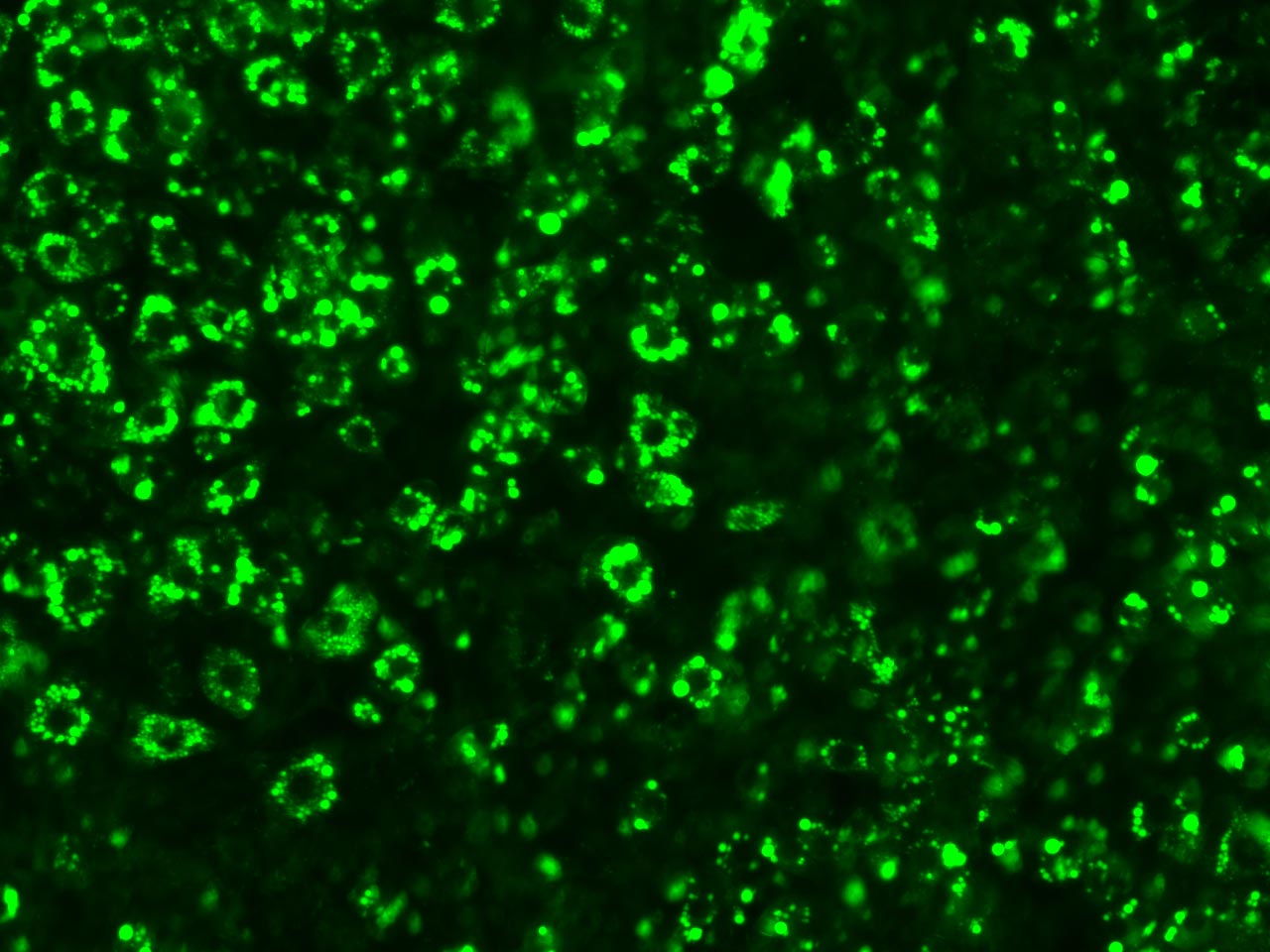
Using their mouse model and CRISPR screening approach, the team identified microproteins that may be involved in fat cell biology. They then narrowed the pool even further with another experiment to create a shortlist of 38 potential microproteins involved in lipid droplet formation—which indicates increasing fat storage—during fat cell differentiation.
At this point, the shortlisted microproteins were all still “potential” microproteins. This is because the genetic screening finds genes that may code for microproteins, rather than finding the microproteins themselves. While this approach is a helpful workaround to finding microproteins that are otherwise so small they elude capture, it also means that the screened microproteins require further testing to confirm whether they are functional.
And that’s what the Salk team did next. They picked several of the shortlisted microproteins to test and were able to verify one. Pai hypothesizes this new microprotein, called Adipocyte-smORF-1183, influences lipid droplet formation in fat cells (also known as adipocytes).
Adipocyte-smORF-1183: A Verified Target
Verification of Adipocyte-smORF-1183 is an exciting step toward identifying more microproteins involved in lipid accumulation and fat cell regulation in obesity. It also verifies that CRISPR is an effective tool for finding microproteins involved in fat cell biology, obesity, and metabolism.
“That’s the goal of research, right?” says Saghatelian. “You keep going. It’s a constant process of improvement as we establish better technology and better workflows to enhance discovery and, eventually, therapeutic outcomes down the line.”
Next Steps: Human Trials and Expanded Screening
Next, the researchers will repeat the study with human fat cells. They also hope their success inspires others to use CRISPR screenings to continue bringing microproteins out from the dark—like Adipocyte-smORF-1183, which until now, was considered an unimportant bit of “junk” DNA.
Further validation or screening of new cell libraries will expand the list of potential drug candidates, setting the stage for the new-and-improved obesity and metabolic disorder therapeutics of the future.
Reference: “CRISPR–Cas9 screening reveals microproteins regulating adipocyte proliferation and lipid metabolism” by Victor J. Pai, Huanqi Shan, Cynthia J. Donaldson, Joan M. Vaughan, Eduardo V. De Souza, Carolyn O’Connor, Michelle Liem, Antonio F. M. Pinto, Jolene Diedrich and Alan Saghatelian, 7 August 2025, Proceedings of the National Academy of Sciences.
DOI: 10.1073/pnas.2506534122
Other authors include Hazel Shan, Cynthia Donaldson, Joan Vaughan, Eduardo V. De Souza, Carolyn O’Connor, and Michelle Liem of Salk; and Antonio Pinto and Jolene Diedrich of Scripps Research Institute.
The work was supported by the National Institutes of Health (F32 DK132927, RC2 DK129961, R01 DK106210, R01 GM102491, RF1 AG086547, NCI Cancer Center P30 014195, S10- OD023689, and S10-OD034268), Ferring Foundation, Clayton Foundation, and Larry and Carol Greenfield Technology Fund.
Never miss a breakthrough: Join the SciTechDaily newsletter.
Follow us on Google and Google News.