
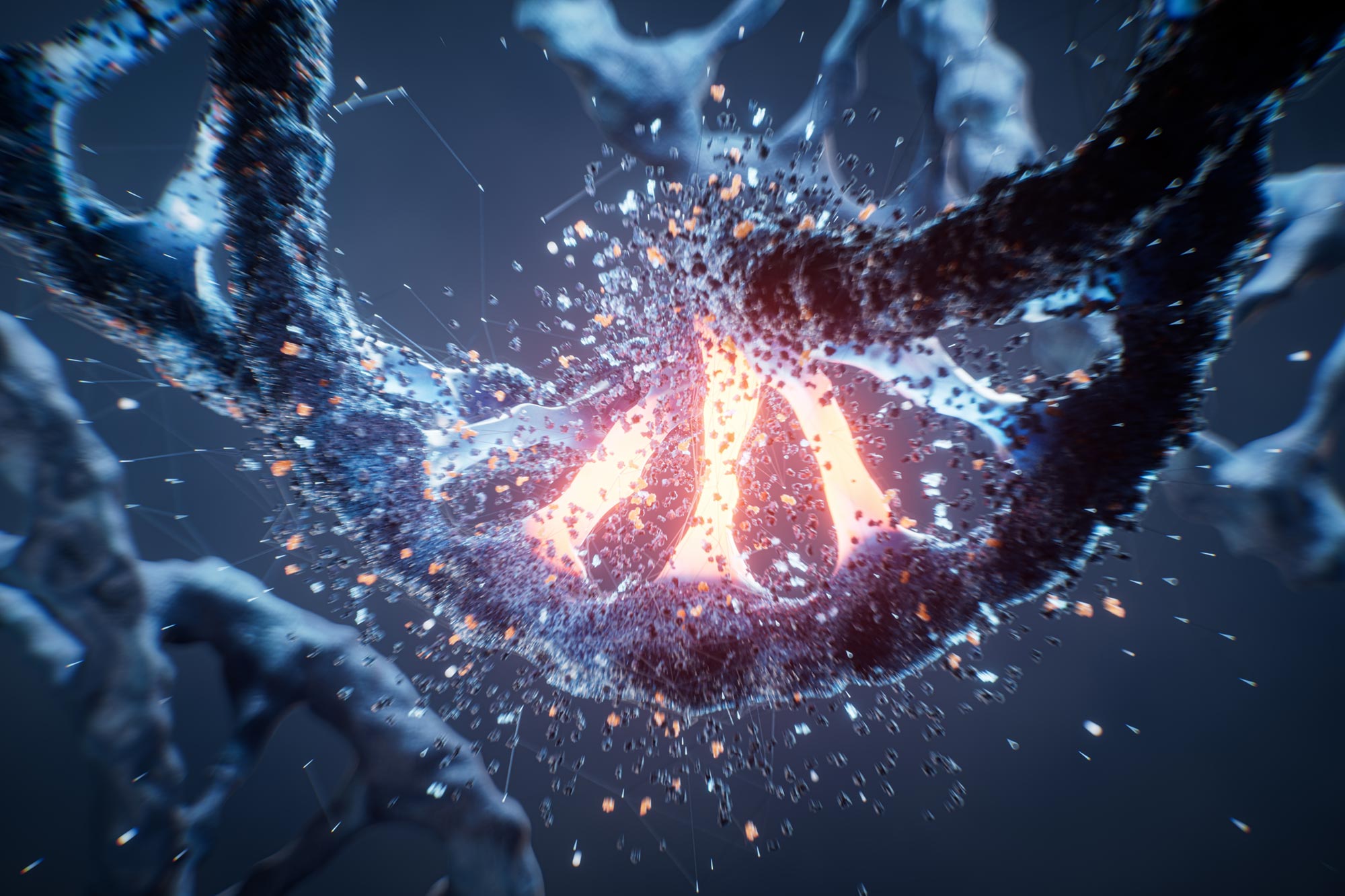
Researchers at Texas A&M are pairing a widely used ingredient with advanced medical technology to develop new treatments for chronic conditions.
Could something as simple as coffee one day play a role in cancer treatment?
Researchers at the Texas A&M Health Institute of Biosciences and Technology think it might. By pairing caffeine with CRISPR, a powerful gene editing technology known as clustered regularly interspaced short palindromic repeats, scientists are developing new ways to treat long-term illnesses such as cancer and diabetes through an approach called chemogenetics.
Yubin Zhou, a professor and director of the Center for Translational Cancer Research at the Institute of Biosciences and Technology, focuses on studying disease at the cellular, epigenetic, and genetic levels. Across a career that includes more than 180 scientific publications, he has consistently used advanced tools such as CRISPR and chemogenetic control systems to answer complex medical questions.
Chemogenetics is a method that allows researchers to influence how cells behave by introducing small external molecules, often drugs or compounds found in the diet. These molecules activate specially engineered genetic switches inside cells. Unlike conventional medications, which can affect many tissues at once, chemogenetic systems are designed to work only in cells that have been programmed to respond, offering far greater precision.
Gene editing with a kick
Zhou’s latest work expands on existing knowledge of genetic “switches” by introducing a chemogenetic system that links CRISPR activity to caffeine. The process starts by preparing cells in advance. Using established gene transfer techniques, scientists deliver genes that encode a nanobody, its matching target protein, and the CRISPR machinery, enabling the cells to produce all the necessary components themselves. Once this framework is established, the system can be controlled from outside the body. When a person later consumes a 20 mg dose of caffeine—such as from coffee, chocolate, or a soda—it prompts the nanobody and target protein to bind together, which in turn activates CRISPR-based gene modifications inside the cells.
This approach also makes it possible to activate T cells, a capability that other gene-editing strategies have struggled to achieve. T cells act as the immune system’s long-term memory, retaining information about past infections to help fight future ones. Being able to switch these cells on intentionally could give scientists a new way to steer immune responses against specific diseases.
The researchers also discovered that certain drugs can shut the system back down by causing the paired proteins to separate. This stops further gene changes and adds an important safety feature by making the process reversible. In a medical setting, this could allow clinicians to pause gene-editing activity if patients need relief from treatment related stress or side effects, then restart it later. Rather than leaving gene control permanently active, the system could be adjusted over time to better match a patient’s needs.
“You can also engineer these antibody-like molecules to work with rapamycin-inducible systems, so by adding a different drug like rapamycin, you can achieve the opposite effect,” Zhou said. “For example, if at first proteins A and B are separate, adding caffeine brings them together; conversely, if proteins A and B start out together, adding a drug like rapamycin can cause them to dissociate.”
Rapamycin is a widely available immunosuppressant drug traditionally used as an anti-rejection regiment for organ transplant patients. The drug works by blocking white blood cells from attacking foreign entities in the body. The affordability and availability of the drug make it a prime candidate for applications like this one.
Percolating future possibilities
When an engineered nanobody protein can be switched on by caffeine, it’s called a “caffebody.” By harnessing the power of these caffebodies, Zhou says scientists may someday be able to treat a range of diseases. In the long term, he believes it may be possible to engineer cells that allow people with diabetes to boost insulin production simply by drinking a cup of coffee.
Beyond insulin, the technology can be adapted to control other important molecules, such as those that power T cells. In cancer therapy, for example, caffebodies could be built into T cells to give doctors chemogenetic control over when, where and how strongly the immune system attacks tumors.
In animal model lab studies, Zhou and his team have found that caffeine, as well as its metabolites — such as theobromine , which is abundantly available from chocolate or cocoa—could trigger the response and allows for editing with CRISPR. This form of treatment is accessible, easier to control and has fewer side effects than other treatments, he said.
While similar activation techniques have been observed before, this allows for much more control to open and close the circuit. When caffeine is introduced, the team has a few hours—or the metabolization time of caffeine — to control the involved physiological processes or gene editing. Then, rapamycin can be administered as a stop signal, driving protein dissociation and terminating the process. Few existing approaches offer this level of coordinated start-and-stop control, making the method particularly precise and well-suited for both research and therapeutic applications.
“It’s quite modular,” Zhou said. “You can integrate it into CRISPR and chimeric antigen receptor T (CAR-T) cells, and also if you want to induce some therapeutic gene expression like insulin or other things, and this is fully tunable in a very precisely controlled manner.”
Zhou and his team hope to advance the work into further preclinical studies and explore more ways to utilize caffebodies and CRISPR for treating a wide range of medical conditions, bringing everyday molecules one step closer to becoming tools for precision medicine.
“What excites us is the idea of repurposing well-known drugs and even commonly found food ingredients like caffeine to do entirely new tricks,” Zhou said. “Instead of acting as therapies themselves, molecules like caffeine or rapamycin can serve as precise control signals for sophisticated cell and gene therapies. Because these compounds are already well understood, this approach opens a practical path toward translation. Our hope is that one day, clinicians could use simple, familiar inputs to finely tune powerful therapies in a safe and reversible way.”
Reference: “Reprogramming chemically induced dimerization systems with genetically encoded nanobodies” by Tianlu Wang, Tatsuki Nonomura, Mingguang Cui, Tien-Hung Lan, Pauline X. Cai, Lian He and Yubin Zhou, 20 October 2025, Chemical Science.
DOI: 10.1039/D5SC05703E
This work was supported by the National Institutes of Health (R01GM144986 and R21AI174606 to Y. Z.), the Center Prevention and Research Institute of Texas (RP250468 to Y. Z.), the Welch Foundation (BE-1913-20220331 to Y. Z.) and the Leukaemia & Lymphoma Society (to Y. Z.).
Never miss a breakthrough: Join the SciTechDaily newsletter.
Follow us on Google and Google News.
1 Comment
Nobody wants your CRISPR crapola in their bodies. Nobody (well except maybe people on the Epstein list) wants this in their bodies. How do you sleep at night – trying to change God’s design for our bodies without our consent or knowledge. Well I rebuke and bind all your pharma in Jesus’s name.