
Close Menu
    Facebook X (Twitter) Instagram
    SciTechDaily
    • Biology
    • Chemistry
    • Earth
    • Health
    • Physics
    • Science
    • Space
    • Technology
    Facebook X (Twitter) Pinterest YouTube RSS
    SciTechDaily
    Home»Earth»Cryosat Mission Took Detailed Data of Polar Ice Caps
    Earth

    Cryosat Mission Took Detailed Data of Polar Ice Caps

    By SciTechDailyApril 24, 20121 Comment2 Mins Read
    Facebook Twitter Pinterest Telegram LinkedIn WhatsApp Email Reddit
    Share
    Facebook Twitter LinkedIn Pinterest Telegram Email Reddit
    cryosat-esa-ice-floe-arctic-circle
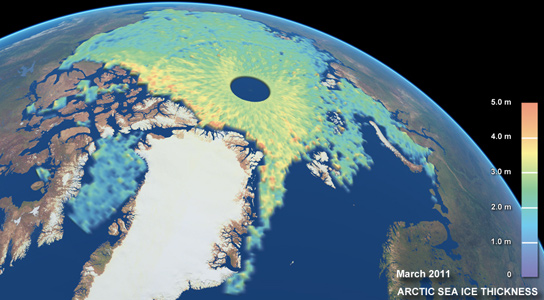
    Since 2010, the ESA’s Cryosat mission has meticulously tracked Arctic sea ice, monitoring changes in thickness and shape.

    The ESA’s Cryosat mission has been watching the Arctic sea ice with a high degree of precision ever since it was launched in 2010 to monitor the changes in the thickness and shape of polar ice. It’s taken two years for scientists to tackle the amount of data that Cryosat generated.

    They reported an unprecedented view of the seasonal growth and retreat of sea ice spanning the entire Arctic basin. They also released a map showing the difference in height across the Greenland ice sheet.
    underwater-ice-thickness

    Several other satellites have already detailed the rapid erosion of summer sea ice since the Arctic has warmed, but Cryosat provides a means to get a figure for the ice volume, which is far more significant to allow scientists to understand the long-term viability of the ice.

    Cryosat carries one of the highest resolution synthetic aperture radars ever put into orbit. The radar sends down pulses of microwave energy that bounce off both the top of the ice and the water in the cracks, which separate the floes. By measuring the difference in height between these two surfaces, it’s easily possible to get an accurate approximation of the volume of the marine cover.

    The new data shows an entire seasonal cycle for the Arctic ice, spanning from October 2010 to March 2011, and approximates the total volume of sea ice in the central Arctic at 14,500 cubic kilometers.

    Never miss a breakthrough: Join the SciTechDaily newsletter.
    Follow us on Google and Google News.

    Arctic Cryosat European Space Agency Ice Caps Satellites
    Share. Facebook Twitter Pinterest LinkedIn Email Reddit

    Related Articles

    On Thin Ice: Arctic Coastal Sea Ice Thinning Twice As Fast As Thought

    MOSAiC Arctic Expedition – World’s Largest and Longest Polar Research Expedition – Reaches North Pole

    Monitoring the Arctic Heatwave: Alarmingly High Temperatures, Extreme Wildfires and a Significant Loss of Sea Ice

    State of Emergency Declared After Massive Diesel Oil Leak Within the Arctic Circle

    Earth From Space: Magnificent Canadian Arctic Archipelago

    Stunning Animation Shows Permafrost Changes in the Arctic Due to Climate Change

    CryoSat Satellite Shows Increased Volume of Arctic Sea Ice

    MSG-3 Weather Satellite Captures Its First Image of Earth

    Research Shows Roughly 150 Billion Tons of Ice Lost Annually

    1 Comment

    1. BadWolf on February 13, 2016 1:28 pm

      Fascinating pictures. But being that this wasn’t taken by a camera over the pole, why the hole?

      Reply
    Leave A Reply Cancel Reply

    • Facebook
    • Twitter
    • Pinterest
    • YouTube

    Don't Miss a Discovery

    Subscribe for the Latest in Science & Tech!

    Trending News

    Popular Sugar-Free Sweetener Linked to Liver Disease, Study Warns

    What Is Hantavirus? The Deadly Disease Raising Alarm Worldwide

    Scientists Just Discovered How the Universe Builds Monster Black Holes

    Scientists Unveil New Treatment Strategy That Could Outsmart Cancer

    A Simple Vitamin May Hold the Key to Treating Rare Genetic Diseases

    Scientists Think the Real Fountain of Youth May Be Hiding in Your Gut

    Ravens Don’t Follow Wolves, They Predict Them

    This Common Knee Surgery May Be Doing More Harm Than Good

    Follow SciTechDaily
    • Facebook
    • Twitter
    • YouTube
    • Pinterest
    • Newsletter
    • RSS
    SciTech News
    • Biology News
    • Chemistry News
    • Earth News
    • Health News
    • Physics News
    • Science News
    • Space News
    • Technology News
    Recent Posts
    • Why Are So Many New Fathers Dying? Scientists Say the U.S. Has a Dangerous Blind Spot
    • Scientists Identify Simple Supplement That Greatly Reduces Alzheimer’s Damage
    • You May Have a Dangerous Type of Cholesterol Even if Your Tests Look Normal
    • Study Reveals Dangerous Flaw in AI Symptom Checkers
    • New MRI Breakthrough Captures Stunningly Clear Images of the Eye and Brain
    Copyright © 1998 - 2026 SciTechDaily. All Rights Reserved.
    • Science News
    • About
    • Contact
    • Editorial Board
    • Privacy Policy
    • Terms of Use

    Type above and press Enter to search. Press Esc to cancel.