
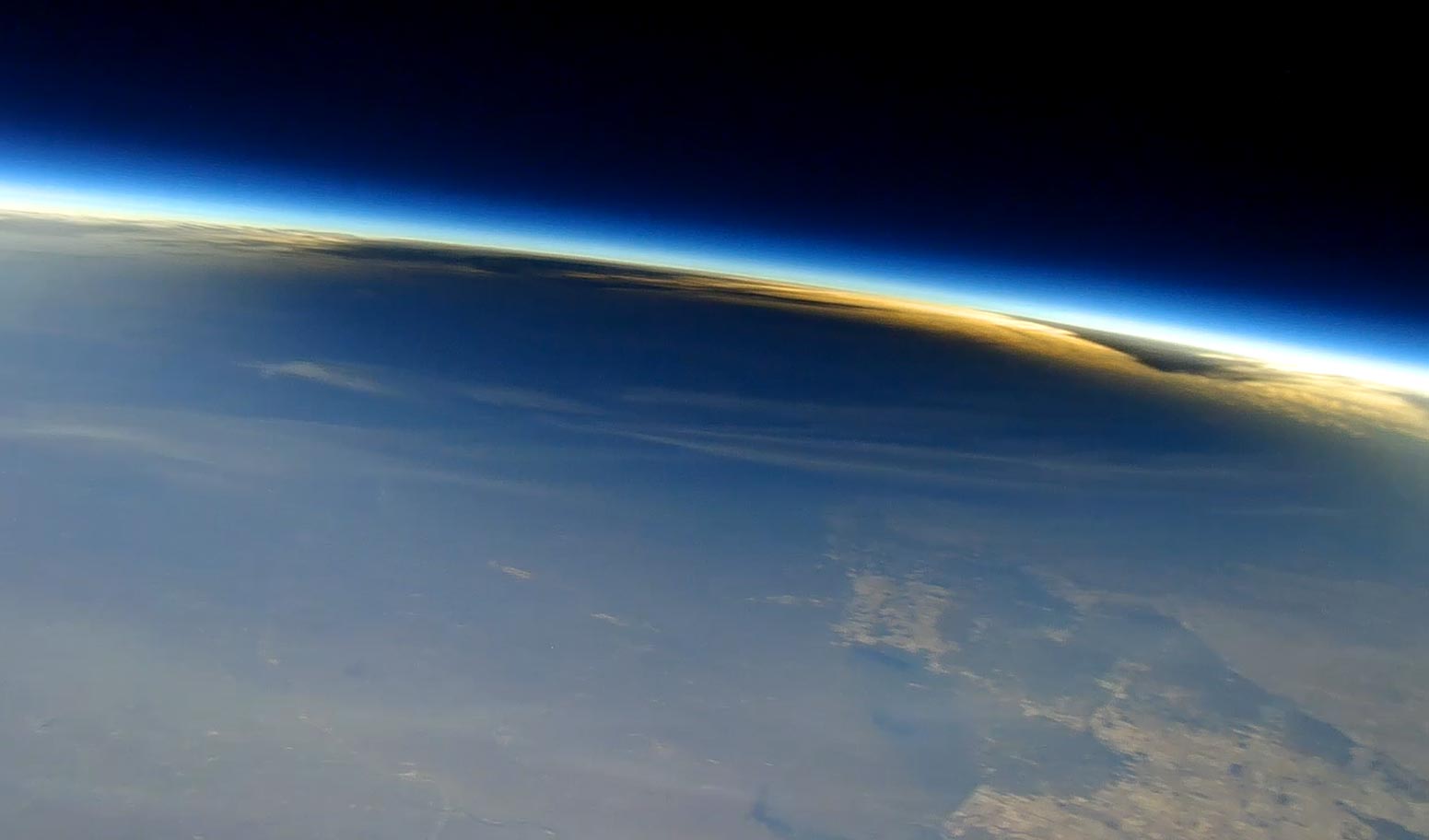
The 2024 solar eclipse across North America spurred numerous NASA-supported research projects that observed the eclipse’s impact on the sun’s corona, Earth’s atmosphere, and radio communications.
Significant data were gathered from ground-based telescopes, aircraft, amateur radio transmissions, and student-launched high-altitude balloons.
Sweeping Solar Eclipse Across North America
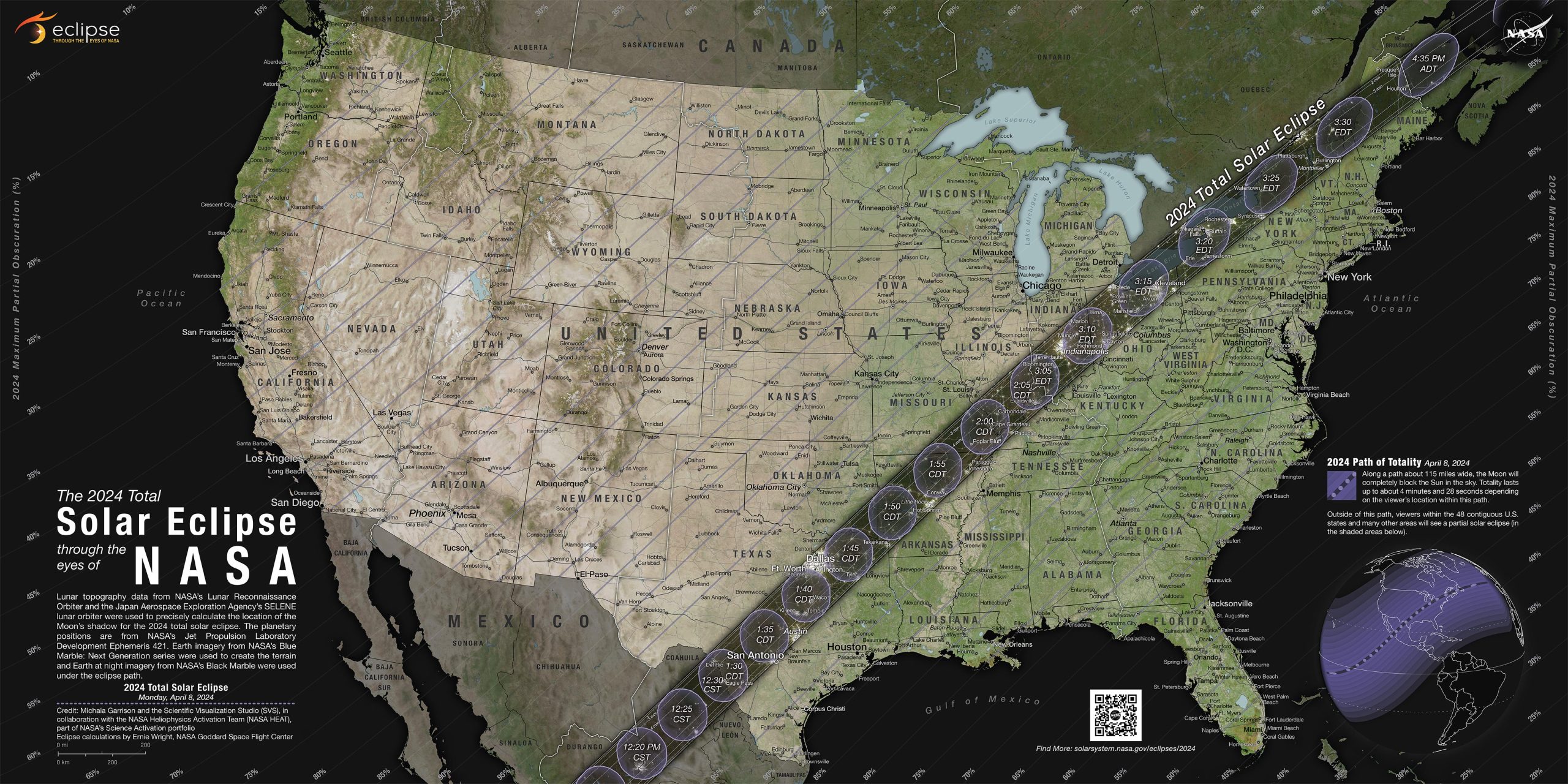
On April 8, 2024, a total solar eclipse crossed North America, beginning on Mexico’s western coast, sweeping through the United States, and ending in northeastern Canada. To study the event, NASA funded several research projects and enlisted citizen scientists to explore how the Sun impacts Earth, particularly how its interactions affect the planet’s atmosphere and radio signals.
At a press briefing on December 10, scientists attending the American Geophysical Union’s annual meeting in Washington, D.C., shared early findings from several of these eclipse-related studies.
“Scientists and tens of thousands of volunteer observers were stationed throughout the Moon’s shadow,” said Kelly Korreck, eclipse program manager at NASA Headquarters in Washington. “Their efforts were a crucial part of the Heliophysics Big Year – helping us to learn more about the Sun and how it affects Earth’s atmosphere when our star’s light temporarily disappears from view.”
This preliminary movie from the Citizen CATE 2024 project stitches together polarized images of the solar corona taken from different sites during the total solar eclipse on April 8, 2024. Credit: SwRI/Citizen CATE 2024/Dan Seaton/Derek Lamb
Observing the Sun’s Corona
On April 8, the Citizen CATE 2024 (Continental-America Telescopic Eclipse) project stationed 35 observing teams from local communities from Texas to Maine to capture images of the Sun’s outer atmosphere, or corona, during totality. Their goal is to see how the corona changed as totality swept across the continent.
On December 10, Sarah Kovac, the CATE project manager at the Southwest Research Institute in Boulder, Colorado, reported that, while a few teams were stymied by clouds, most observed totality successfully — collecting over 47,000 images in all.
These images were taken in polarized light, or light oriented in different directions, to help scientists better understand the processes that shape the corona.

Kovac shared the first cut of a movie created from these images. The project is still stitching together all the images into the final, hour-long movie, for release at a later time.
“The beauty of CATE 2024 is that we blend cutting-edge professional science with community participants from all walks of life,” Kovac said. “The dedication of every participant made this project possible.”
Challenges and Successes in Aerial Observations
Meanwhile, 50,000 feet above the ground, two NASA WB-57 aircraft chased the eclipse shadow as it raced across the continent, observing above the clouds and extending their time in totality to approximately 6 minutes and 20 seconds.
On board were cameras and spectrometers (instruments that analyze different wavelengths of light) built by multiple research teams to study the corona.

On December 10, Shadia Habbal of the University of Hawaii, who led one of the teams, reported that their instruments collected valuable data, despite one challenge. Cameras they had mounted on the aircraft’s wings experienced unexpected vibrations, which caused some of the images to be slightly blurred.
However, all the cameras captured detailed images of the corona, and the spectrometers, which were located in the nose of the aircraft, were not affected. The results were so successful, scientists are already planning to fly similar experiments on the aircraft again.
“The WB-57 is a remarkable platform for eclipse observations that we will try to capitalize on for future eclipses,” Habbal said.
Impact on Ionospheric Communications
On April 8, amateur or “ham” radio operators sent and received signals to one another before, during, and after the eclipse as part of the Ham Radio Science Citizen Investigation (HamSCI) Festivals of Eclipse Ionospheric Science. More than 6,350 amateur radio operators generated over 52 million data points to observe how the sudden loss of sunlight during totality affects their radio signals and the ionosphere, an electrified region of Earth’s upper atmosphere.
Radio communications inside and outside the path of totality improved at some frequencies (from 1-7 MHz), showing there was a reduction in ionospheric absorption. At higher frequencies (10 MHz and above), communications worsened.
Results using another technique, which bounced high-frequency radio waves (3-30 MHz) off the ionosphere, suggests that the ionosphere ascended in altitude during the eclipse and then descended to its normal height afterward.
“The project brings ham radio operators into the science community,” said Nathaniel Frissell, a professor at the University of Scranton in Pennsylvania and lead of HamSCI. “Their dedication to their craft made this research possible.”
Exploring Atmospheric Responses
Also looking at the atmosphere, the Nationwide Eclipse Ballooning Project organized student groups across the U.S. to launch balloons into the shadow of the Moon as it crossed the country in April 2024 and during a solar eclipse in October 2023. Teams flew weather sensors and other instruments to study the atmospheric response to the cold, dark shadow.
This research, conducted by over 800 students, confirmed that eclipses can generate ripples in Earth’s atmosphere called atmospheric gravity waves. Just as waves form in a lake when water is disturbed, these waves also form in the atmosphere when air is disturbed. This project, led by Angela Des Jardins of Montana State University in Bozeman, also confirmed the presence of these waves during previous solar eclipses. Scientists think the trigger for these waves is a “hiccup” in the tropopause, a layer in Earth’s atmosphere, similar to an atmospheric effect that is observed during sunset.
“Half of the teams had little to no experience ballooning before the project,” said Jie Gong, a team science expert and atmospheric scientist at NASA’s Goddard Space Flight Center in Greenbelt, Maryland. “But their hard work and research was vital in this finding.”
Never miss a breakthrough: Join the SciTechDaily newsletter.
Follow us on Google and Google News.