
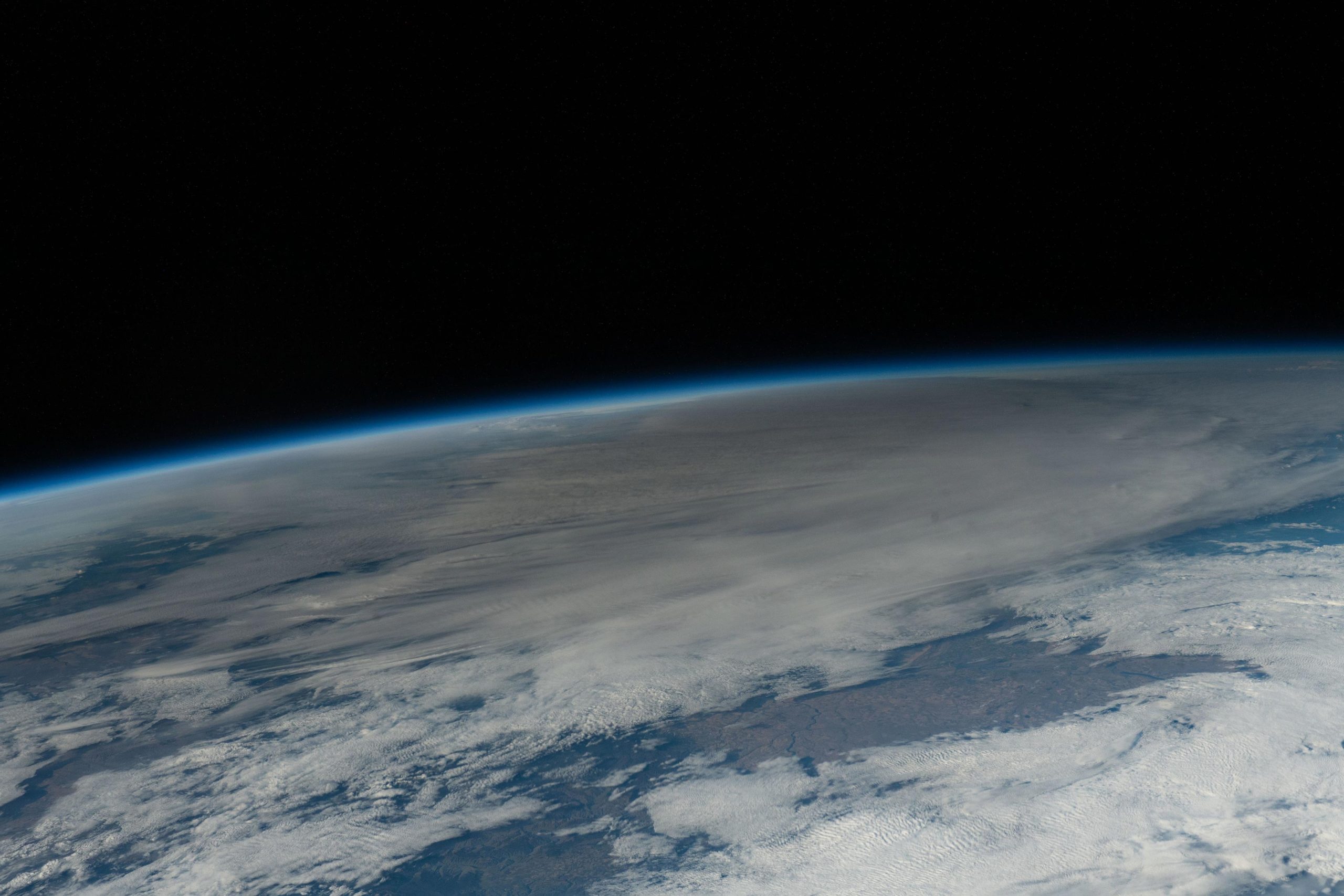
Teams from U.S. universities proved during the 2023 solar eclipse that such events can trigger atmospheric gravity waves, as evidenced by data from NASA-sponsored balloon launches. This breakthrough offers new insights that could enhance weather forecasting and our understanding of atmospheric dynamics.
Student teams from three U.S. universities became the first to measure what scientists have long predicted: eclipses can generate ripples in Earth’s atmosphere called atmospheric gravity waves. The waves’ telltale signature emerged in data captured during the North American annular solar eclipse on October 14, 2023, as part of the Nationwide Eclipse Ballooning Project (NEBP) sponsored by NASA.
Through NEBP, high school and university student teams were stationed along the eclipse path through multiple U.S. states, where they released weather balloons carrying instrument packages designed to conduct engineering studies or atmospheric science experiments. A cluster of science teams located in New Mexico collected the data definitively linking the eclipse to the formation of atmospheric gravity waves, a finding that could lead to improved weather forecasting.
“Climate models are complicated, and they make some assumptions about what atmospheric factors to take into account.”
Angela Des Jardins, Director of the Montana Space Grant Consortium, which led NEBP.
“Understanding how the atmosphere reacts in the special case of eclipses helps us better understand the atmosphere, which in turn helps us make more accurate weather predictions and, ultimately, better understand climate change.”
Gravity Waves vs. Gravitational Waves
Gravity waves and gravitational waves, though sounding similar, refer to entirely different concepts. Gravity waves occur within atmospheric and oceanic contexts and are caused by the stabilization effort of gravity when a fluid element is displaced from its equilibrium. They manifest as fluctuations in the densities and pressures of the mediums involved. Gravitational waves, however, are cosmic phenomena that involve the distortion of spacetime caused by massive astronomical events, like the collision of black holes or neutron stars. These waves travel at the speed of light and were first observed by scientists in 2015, confirming a major prediction of Einstein’s theory of general relativity.
Catching Waves in New Mexico
Previous ballooning teams also had hunted atmospheric gravity waves during earlier eclipses, research that was supported by NASA and the National Science Foundation. In 2019, an NEBP team stationed in Chile collected promising data, but hourly balloon releases didn’t provide quite enough detail. Attempts to repeat the experiment in 2020 were foiled by COVID-19 travel restrictions in Argentina and a heavy rainstorm that impeded data collection in Chile.
Project leaders factored in these lessons learned when planning for 2023, scheduling balloon releases every 15 minutes and carefully weighing locations with the best potential for success.
“New Mexico looked especially promising,” said Jie Gong, a researcher in the NASA Climate and Radiation Lab at the agency’s Goddard Space Flight Center in Greenbelt, Maryland, and co-investigator of the research on atmospheric gravity waves. “The majority of atmospheric gravity sources are convection, weather systems, and mountains. We wanted to eliminate all those possible sources.”
The project created a New Mexico “supersite” in the town of Moriarty where four atmospheric science teams were clustered: two from Plymouth State University in Plymouth, New Hampshire, and one each from the State University of New York (SUNY) Albany and SUNY Oswego.
Students began launching balloons at 10 a.m. the day before the eclipse.
“They worked in shifts through the day and night, and then everyone was on site for the eclipse,” said Eric Kelsey, research associate professor at Plymouth State and the NEBP northeast regional lead.
“Our hard work really paid off. The students had a real sense of accomplishment.”
Eric Kelsey, Research Associate Professor at Plymouth State and the NEBP Northeast Regional Lead.
Each balloon released by the science teams carried a radiosonde, an instrument package that measured temperature, location, humidity, wind direction, and wind speed during every second of its climb through the atmosphere. Radiosondes transmitted this stream of raw data to the team on the ground. Students uploaded the data to a shared server, where Gong and two graduate students spent months processing and analyzing it.
Confirmation that the eclipse had generated atmospheric gravity waves in the skies above New Mexico came in spring 2024.
“We put all the data together according to time, and when we plotted that time series, I could already see the stripes in the signal,” Gong said. “I bombarded everybody’s email. We were quite excited.”

For Students, Learning Curves Bring Opportunity
The program offered many students their first experience in collecting data. But the benefits go beyond technical and scientific skill.
“The students learned a ton through practicing launching weather balloons,” Kelsey said. “It was a huge learning curve. They had to work together to figure out all the logistics and troubleshoot. It’s good practice of teamwork skills.”
“All of this is technically complicated,” Des Jardins said. “While the focus now is on the science result, the most important part is that it was students who made this happen.”
NASA’s Science Mission Directorate Science Activation program funds NEBP, along with contributions from the National Space Grant College and Fellowship Project and support from NASA’s Balloon Program Office.
Never miss a breakthrough: Join the SciTechDaily newsletter.
Follow us on Google and Google News.