
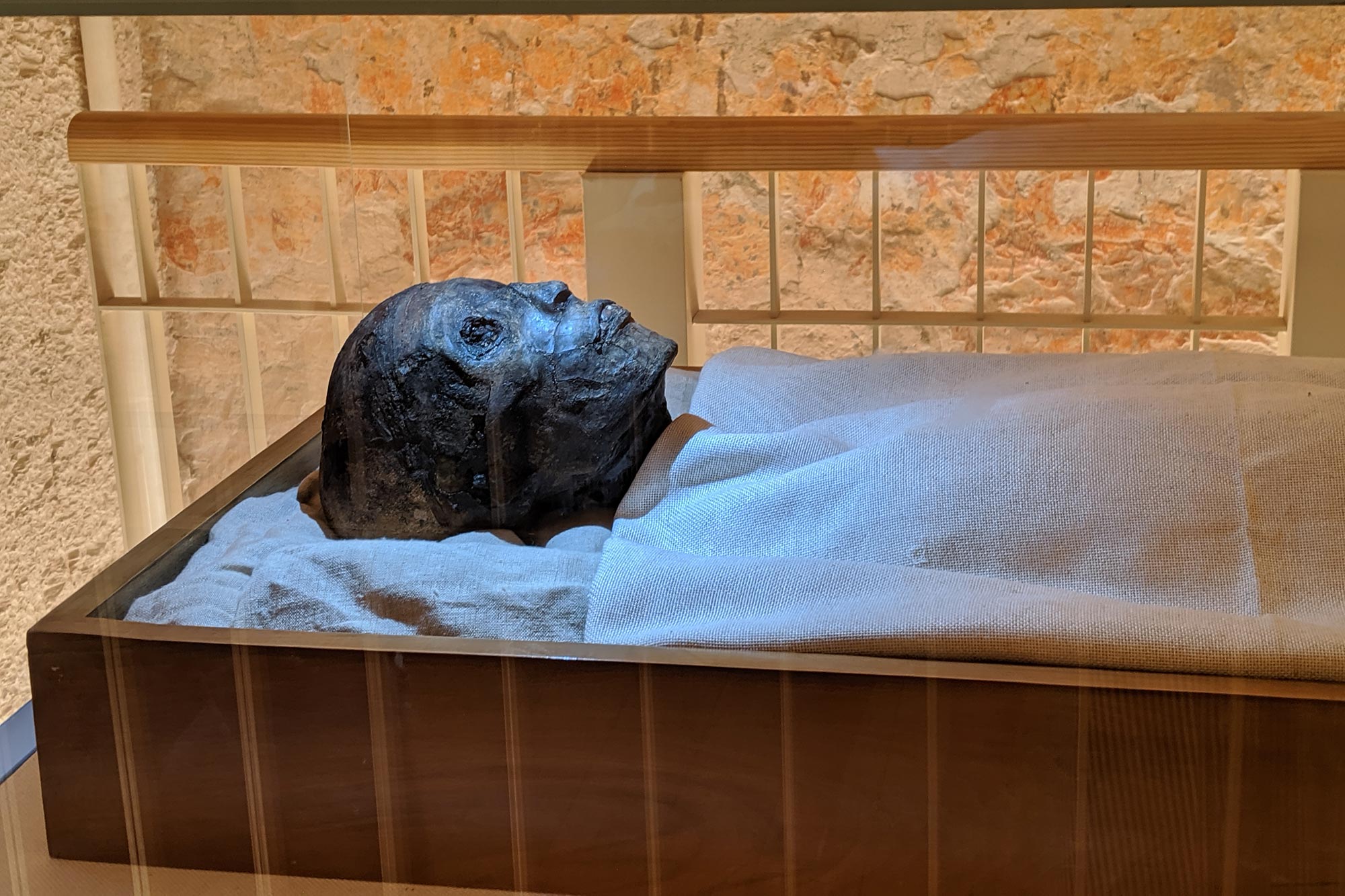
A toxic mold once feared for causing mysterious deaths in ancient tombs is now at the center of a medical breakthrough.
Scientists at Penn have engineered compounds from Aspergillus flavus—a fungus blamed for the “pharaoh’s curse”—into powerful cancer-fighting molecules called asperigimycins. These unique, ring-shaped peptides not only rival FDA-approved leukemia drugs but also offer clues for unlocking more medicines hidden in fungi. By enhancing the compounds with lipids and uncovering a key gene that acts like a cellular gateway, researchers have created a highly targeted therapy that disrupts cancer cell division without harming other tissues. Nature, it seems, had the cure all along.
Deadly Fungus Turned Cancer Killer
Scientists at the University of Pennsylvania have turned a once-feared fungus into a powerful new weapon against cancer. The fungus, Aspergillus flavus, is infamous for contaminating crops and has been linked to mysterious deaths in ancient tombs. But researchers have now isolated a brand-new class of molecules from it, modified them in the lab, and tested them on leukemia cells. The results are remarkable: the compounds showed cancer-killing effects on par with FDA-approved leukemia drugs.
“Fungi gave us penicillin,” says Sherry Gao, Presidential Penn Compact Associate Professor in Chemical and Biomolecular Engineering (CBE) and in Bioengineering (BE) and senior author of a new paper in Nature Chemical Biology on the findings. “These results show that many more medicines derived from natural products remain to be found.”

Ancient Tomb Spores & Modern Threats
Aspergillus flavus has a notorious history. In the 1920s, after the opening of King Tutankhamun’s tomb, several members of the excavation team died suddenly, giving rise to tales of a pharaoh’s curse. Decades later, scientists suggested that ancient fungal spores might have been the real culprit.
The mystery deepened in the 1970s when a team of scientists entered the tomb of Polish king Casimir IV. Within weeks, 10 out of 12 had died. Investigators later found A. flavus inside the tomb, a fungus whose toxins can trigger serious lung infections, especially in people with weakened immune systems.
Now, in a remarkable scientific twist, this same fungus is being transformed into a source of hope for cancer treatment.
Uncovering Rare Fungal RiPPs
The therapy in question is a class of ribosomally synthesized and post-translationally modified peptides, or RiPPs, pronounced like the “rip” in a piece of fabric. The name refers to how the compound is produced — by the ribosome, a tiny cellular structure that makes proteins — and the fact that it is modified later, in this case, to enhance its cancer-killing properties.
“Purifying these chemicals is difficult,” says Qiuyue Nie, a postdoctoral fellow in CBE and the paper’s first author. While thousands of RiPPs have been identified in bacteria, only a handful have been found in fungi. In part, this is because past researchers misidentified fungal RiPPs as non-ribosomal peptides and had little understanding of how fungi created the molecules. “The synthesis of these compounds is complicated,” adds Nie. “But that’s also what gives them this remarkable bioactivity.”

Genetic Sleuthing Tracks RiPP Source
To find more fungal RiPPs, the researchers first scanned a dozen strains of Aspergillus, which previous research suggested might contain more of the chemicals.
By comparing chemicals produced by these strains with known RiPP building blocks, the researchers identified A. flavus as a promising candidate for further study.
Genetic analysis pointed to a particular protein in A. flavus as a source of fungal RiPPs. When the researchers turned the genes that create that protein off, the chemical markers indicating the presence of RiPPs also disappeared.
This novel approach — combining metabolic and genetic information — not only pinpointed the source of fungal RiPPs in A. flavus, but could be used to find more fungal RiPPs in the future.
Asperigimycins: Rings With a Punch
After purifying four different RiPPs, the researchers found the molecules shared a unique structure of interlocking rings. The researchers named these molecules, which have never been previously described, after the fungus in which they were found: asperigimycins.
Even with no modification, when mixed with human cancer cells, asperigimycins demonstrated medical potential: two of the four variants had potent effects against leukemia cells.
Another variant, to which the researchers added a lipid, or fatty molecule, that is also found in the royal jelly that nourishes developing bees, performed as well as cytarabine and daunorubicin, two FDA-approved drugs that have been used for decades to treat leukemia.
Lipid Boost Unlocks Cell Entry
To understand why lipids enhanced asperigimycins’ potency, the researchers selectively turned genes on and off in the leukemia cells. One gene, SLC46A3, proved critical in allowing asperigimycins to enter leukemia cells in sufficient numbers.
That gene helps materials exit lysosomes, the tiny sacs that collect foreign materials entering human cells. “This gene acts like a gateway,” says Nie. “It doesn’t just help asperigimycins get into cells, it may also enable other ‘cyclic peptides’ to do the same.”
Like asperigimycins, those chemicals have medicinal properties — nearly two dozen cyclic peptides have received clinical approval since 2000 to treat diseases as varied as cancer and lupus — but many of them need modification to enter cells in sufficient quantities.
“Knowing that lipids can affect how this gene transports chemicals into cells gives us another tool for drug development,” says Nie.
Targeted Microtubule Disruption
Through further experimentation, the researchers found that asperigimycins likely disrupt the process of cell division. “Cancer cells divide uncontrollably,” says Gao. “These compounds block the formation of microtubules, which are essential for cell division.”
Notably, the compounds had little to no effect on breast, liver or lung cancer cells — or a range of bacteria and fungi — suggesting that asperigimycins’ disruptive effects are specific to certain types of cells, a critical feature for any future medication.
Vast Fungal Pharmacy Ahead
In addition to demonstrating the medical potential of asperigimycins, the researchers identified similar clusters of genes in other fungi, suggesting that more fungal RiPPS remain to be discovered. “Even though only a few have been found, almost all of them have strong bioactivity,” says Nie. “This is an unexplored region with tremendous potential.”
The next step is to test asperigimycins in animal models, with the hope of one day moving to human clinical trials. “Nature has given us this incredible pharmacy,” says Gao. “It’s up to us to uncover its secrets. As engineers, we’re excited to keep exploring, learning from nature and using that knowledge to design better solutions.”
Reference: “A class of benzofuranoindoline-bearing heptacyclic fungal RiPPs with anticancer activities” by Qiuyue Nie, Fanglong Zhao, Xuerong Yu, Mithun C. Madhusudhanan, Caleb Chang, Siting Li, Sandipan Roy Chowdhury, Bryce Kille, Andy Xu, Rory Sharkey, Chunxiao Sun, Hongzhi Zeng, Shuai Liu, Dishu Zhou, Xin Yu, Kevin Yang, Sandra A. C. Figueiredo, Maria Zotova, Zichen Hu, Alan Y. Du, Dongyin Guan, Rui Tang, Todd Treangen, Jin Wang, Pedro N. Leão, Yang Gao, Junjie Chen, Peng Liu, Hans Renata and Xue Gao, 23 June 2025, Nature Chemical Biology.
DOI: 10.1038/s41589-025-01946-9
This study was conducted at the University of Pennsylvania School of Engineering and Applied Science; Rice University; the University of Pittsburgh; The University of Texas MD Anderson Cancer Center; Washington University School of Medicine, St. Louis; Baylor College of Medicine and the University of Porto.
The study was supported by the U.S. National Institutes of Health (R35GM138207, R35CA274235, R35GM128779), the University of Pennsylvania, the Welch Foundation (C-2033-20200401), the Houston Area Molecular Biophysics Program (NIH Grant T32 GM008280), the Cancer Prevention and Research Institute of Texas (RR220087, RR210029) and the National Science Foundation (OAC-2117681, OAC-1928147, OAC-1928224).
Additional co-authors include Fanglong Zhao, Xuerong Yu, Caleb Chang, Rory Sharkey, Bryce Kille, Hongzi Zheng, Kevin Yang, Alan Du, Todd Treangen, Yang Gao and Hans Renata of Rice University; Chunxiao Sun and Shuai Liu of Penn Engineering and Rice; Siting Li and Junjie Chen of MD Anderson; Mithun C. Madhusudhanan and Peng Liu of Pitt; Sandipan Roy Chowdhury, Dongyin Guan, Jin Wang, Xin Yu and Dishu Zhou of Baylor; Maria Zotova and Zichen Hu of Penn Engineering; Sandra A. Figueiredo and Pedro N. Leão of the University of Porto; and Andy Xu and Rui Tang of Wash U, St. Louis.
Never miss a breakthrough: Join the SciTechDaily newsletter.
Follow us on Google and Google News.