
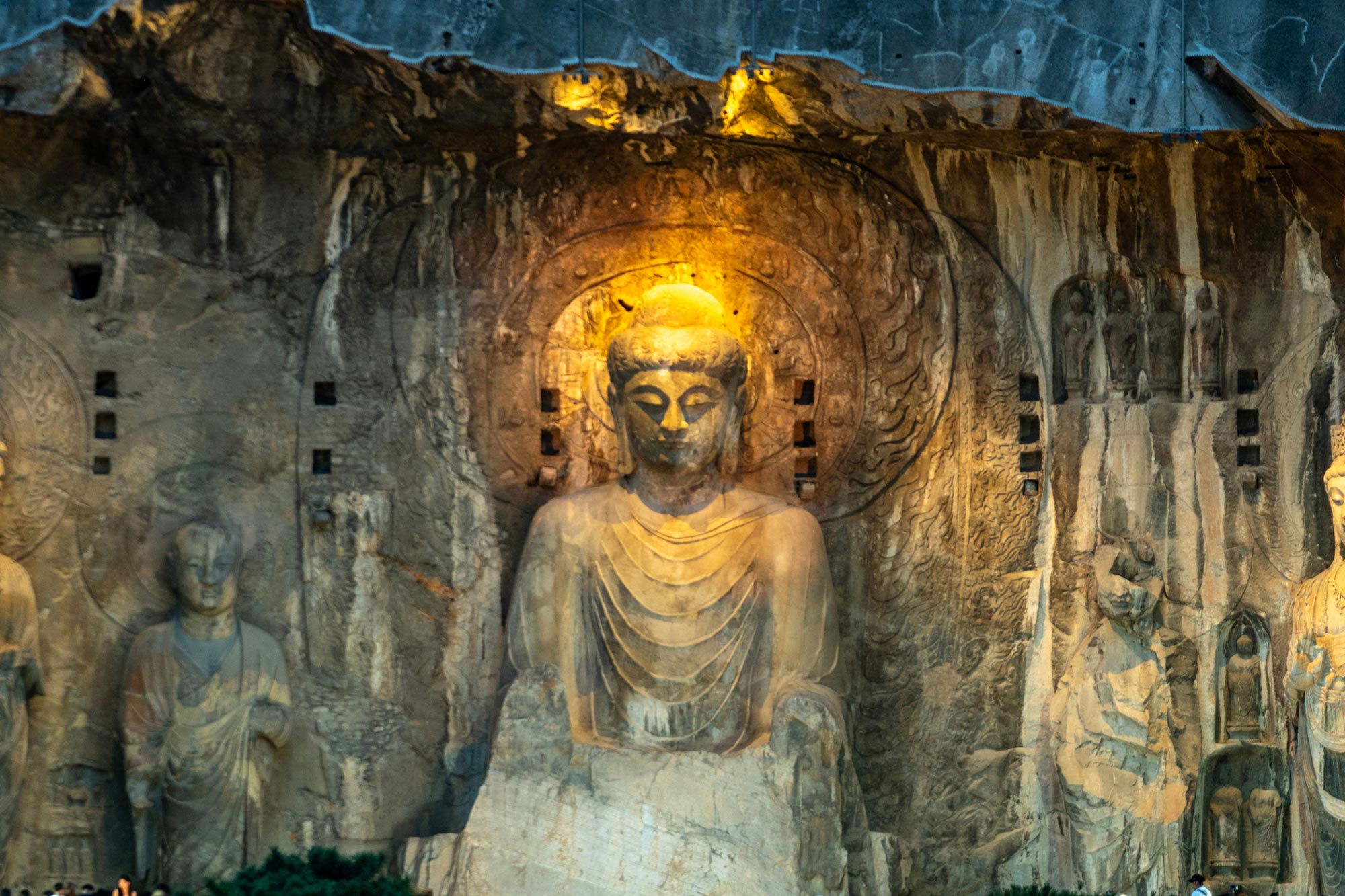
Environmental phenomena and their consequences can disrupt social structures and destabilize political systems. An interdisciplinary research team demonstrated this through the example of the late Tang Dynasty in medieval China.
Climate driven migration is often viewed as a modern crisis, but history tells a different story. An interdisciplinary team of researchers, including scientists from the University of Basel, has shown that large-scale environmental disruption shaped societies more than a thousand years ago.
Their study examined how severe hydrological extremes such as prolonged droughts and destructive floods between 800 and 907 CE influenced political stability and everyday life in China. The findings were published in Nature Communications Earth and Environment.
Tree rings as contemporary witnesses
The period under investigation coincides with the final decades of the Tang dynasty, which ruled from 618 CE and is widely regarded as one of the most culturally and administratively advanced eras in Chinese history. During its height, the empire maintained a complex governing system and fostered remarkable achievements in art, literature, and technology.
Yet by the ninth century, that stability began to weaken. The research focuses on northern China, particularly the region surrounding the Huanghe River (Yellow River), an area central to agriculture, transportation, and political power.
To understand how the climate shifted during this critical period, scientists turned to natural archives known as climate proxies. Among the most valuable of these are tree rings. Trees record environmental conditions in their annual growth patterns. In wetter years, abundant rainfall allows trees to grow more quickly, producing wider rings. In dry years, growth slows, leaving narrower rings. The longer a tree lives, the further back this environmental record extends, offering a detailed timeline of past climate conditions.
The team relied on long-term tree ring datasets from the Yellow River basin to reconstruct historical runoff patterns. These reconstructions helped model hydroclimatic conditions, especially in the river’s upper reaches. Water flowing downstream directly affected how much was available for irrigation and farming. As the study’s first author Michael Kempf explained, “The runoff eventually reaches further downstream and influences the amount of water available, for example, for irrigating the fields.” Kempf conducted the research at the University of Basel and has since moved to the University of Cambridge.
Fatal changes in agriculture
After examining the evidence, the team determined that shifts in climate and a rise in severe weather events played a major role in the fall of the Tang dynasty in 907 CE. More frequent droughts and floods placed intense pressure on the soldiers responsible for defending the empire’s frontiers, as well as on their families. These environmental hardships weakened their ability to protect the realm from invading forces beyond its borders.
“Hydroclimatic extremes have a very direct influence on crop failure and grain storage conditions,” says Kempf. Seed shortages and increased food demand quickly pushed supply systems to their limits. A bad year, therefore, also had consequences for the future.
The situation was further exacerbated by the choice of cereal crops: people increasingly favored the cultivation of wheat and rice over millet. Kempf can only speculate about the reasons for the agricultural change. Perhaps millet was considered a less prestigious food than wheat and rice. However, these are less climate-resistant than drought-resistant millet and require more water to grow. “As long as there is enough water, this is not a problem, but during prolonged dry periods, shortages occur.” Millet cultivation could perhaps have cushioned these negative effects. As it was, however, the risk of crop failures and famines increased.
These losses could not easily be compensated for by shipments from other parts of the country. This was also because droughts and floods affected supply routes and supply corridors collapsed.
Fleeing from hunger
The malnutrition of the population may ultimately have led to the collapse of border defenses in the north of the empire. “Of course, people were weakened and therefore more vulnerable. Due to the military pressure on the outer border regions, they migrated south, where they believed they would find better conditions,” says Kempf. “This led to political destabilization and is likely to have contributed to the demise of the Tang dynasty.”
However, Kempf emphasizes: “Our results are approximations. The actual conditions at that time cannot be reconstructed with certainty. It’s a complex interplay of many different factors.”
The study concluded that sociocultural and climatic changes can lead to tipping points in the system because the balance is disrupted. This is a development that could occur more frequently in view of climate change today.
Reference: “Hydroclimatic instability accelerated the socio-political decline of the Tang Dynasty in northern China” by M. Kempf, M. L. C. Depaermentier, R. N. Spengler III, M. D. Frachetti, F. Chen, J. Luterbacher, E. Xoplaki and U. Büntgen, 26 November 2025, Communications Earth & Environment.
DOI: 10.1038/s43247-025-03038-x
Never miss a breakthrough: Join the SciTechDaily newsletter.
Follow us on Google and Google News.
2 Comments
maybe these people can come to my island
Climate change is now becoming the worldwide not easily solvable one.Due to the climate change now the total world is facing various kinds of the vast level risks containing the disastrous events.In coming days the worldwide climate change relating to the temperature is going to increase above and above. Due to the climate change extreme level, beyond the limit drought is existing in the major portions of the world.At that same time the cloudburst relating to the heavy rain is raining time to time in the various parts of the world that which has been recently rained in the country of Peru. Continuous forest firing events, forceful melting situation of all the snowy portions relating to the forceful increasing situation of all the sea portions, increasing temperature relating to the eviction of the atrocious heatwaves, establishing of the precious man life losing situation through by this eviction of the atrocious heatwaves, decreasing situation of the proper periodical monsoon rain, increasing situation of the extreme level water scarcity all these are becoming the worldwide climate change relating to the variety of the vast level risks containing the disastrous events. All these are happening through by the worldwide continuous emission of the eight kinds of the greenhouse gases like the Steam, Carbon dioxide, Carbon monoxide, Nitrogen dioxide, Clorofloro carbon, Hydro florocarbon, Methan, Nitrous.All these are becoming the ingredients of the carbon. To control the above mentioned the eight kinds of the green house gases I shall mail some valuable tips containing the articles.All these are enough to put a permanent fullstop not only to the present worldwide containing of the plentiful polution in the air also to the present worldwide containing of the abundant global warming situation.
With regards…
Kalyanasundaram.A,
Jr.inspector of sericulture (Retd)
Government of Tamil Nadu,
1/24- Vasthu nagar, pillananallur,
Gurusamypalaym-Post office,
Rasipuram – Circle,
Namakkal – District,
Tamil Nadu – State, India.