
Close Menu
    Facebook X (Twitter) Instagram
    SciTechDaily
    • Biology
    • Chemistry
    • Earth
    • Health
    • Physics
    • Science
    • Space
    • Technology
    Facebook X (Twitter) Pinterest YouTube RSS
    SciTechDaily
    Home»Biology»Discovery Could Lead to New Treatments for Lung Disorders in Premature Babies
    Biology

    Discovery Could Lead to New Treatments for Lung Disorders in Premature Babies

    By Karen N. Peart, Yale UniversityMarch 20, 2013No Comments3 Mins Read
    Facebook Twitter Pinterest Telegram LinkedIn WhatsApp Email Reddit
    Share
    Facebook Twitter LinkedIn Pinterest Telegram Email Reddit
    Researchers Find Control Switch for Preterm Lung Disorders
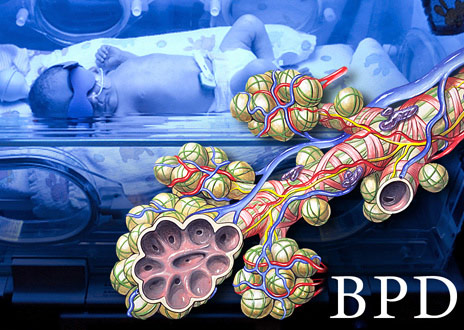
    Researchers spot molecular control switch for preterm lung disorders. Credit: Yale University

    While working with mice, researchers discovered key molecules that switch on stress pathways in preterm lung disorders and potential new drug targets to treat or prevent human BPD.

    Researchers at Yale School of Medicine have made major discoveries that could lead to new treatments for lung disorders in premature babies. In a mouse study, the team located key molecules that switch on stress pathways in preterm lung disorders, and also found that when parts of these pathways were blocked with a pain drug, lung damage was prevented or reversed.

    The findings are published online ahead of print in the March issue of American Journal of Respiratory Cell and Molecular Biology.

    Bronchopulmonary dysplasia (BPD) is the most common chronic lung disease in premature infants and does not have any specific treatment. The disorder affects about 97% of infants with birth weights below 1,250 grams (2.76 pounds), and can lead to repeated respiratory tract infections, as well as to emphysema and chronic obstructive pulmonary disease in adulthood.

    A research team led by Dr. Vineet Bhandari, associate professor of pediatric neonatology and obstetrics, gynecology & reproductive sciences at Yale School of Medicine, theorized that if the molecules that cause these disorders can be blocked early on, they could essentially prevent lifelong lung problems.

    Bhandari and his team studied the lung tissue of newborn mice. The team noted that when this lung tissue was exposed to hyperoxia —excess oxygen in tissues and organs that activates all components of the stress pathways in the newborn lung— there was a marked increase of cyclooxygenase 2 (Cox2) in the lung’s stress pathways. This action resulted in BPD in mice. Once the team used a drug that inhibits Cox2, they were able to reverse BPD in mice.

    “This is the first time hyperoxia has been comprehensively shown to be responsible for activating the stress pathway in developing lungs,” said Bhandari. “Hyperoxia can induce interferon gamma and disrupt lung development, leading to BPD in mice. Once we used the Cox2 inhibitor Celecoxib, we were able to reverse the effects in the mouse BPD models. The drug, originally indicated to treat pain, protected the lungs from cell death, and was able to prevent destruction of and damage to the developing lung exposed to hyperoxia or excess interferon gamma in room air.”

    Bandari added that the findings suggest that Cox2 and or CHOP — a molecule important in the stress pathway — are potential new drug targets that can be inhibited to treat or prevent human BPD.

    Bhandari said the next step is to conduct pre-clinical studies.

    Reference: “Hyperoxia and Interferon-γ Induced Injury in Developing Lungs Occur via Cox2 and the ER Stress Dependent Pathway” by Rayman Choo-Wing, Mansoor A. Syed, Anantha Harijith, Brianne Bowen, Gloria Pryhuber, Cecilia Janér, Sture Andersson, Robert J. Homer and Vineet Bhandari, 7 March 2013, American Journal of Respiratory Cell and Molecular Biology.
    DOI: 10.1165/rcmb.2012-0381OC

    Other authors on the study include Rayman Choo-Wing; Mansoor A. Syed; Anantha Harijith, M.D.; Brianne Bowen; Gloria Pryhuber; M.D.; Cecilia Janér, M.D.; Sture Andersson, M.D.; and Robert J. Homer, M.D.

    Never miss a breakthrough: Join the SciTechDaily newsletter.
    Follow us on Google and Google News.

    Babies Disease Obstetrics Reproductive Biology Yale University
    Share. Facebook Twitter Pinterest LinkedIn Email Reddit

    Related Articles

    Researchers Discover Autism Risk in Abnormal Placentas

    Chitinase 3-like-1, A Key to Fighting Pneumonia

    Stem Cells Regenerate Tissue in an Uninjured Mammal

    Preserved Frogs May Hold Past Clues About Batrachochytrium Dendrobatidis

    Understanding the Internal Process That Makes Salmonella Dangerous

    Nanoparticles Stop Lymphoma in Mice

    A Potential Therapeutic Target for Treating Pulmonary Fibrosis

    Yale Neurologists Discover the Source of Diabetic Neuropathy Pain

    Human Presence Increases Indoor Bacteria

    Leave A Reply Cancel Reply

    • Facebook
    • Twitter
    • Pinterest
    • YouTube

    Don't Miss a Discovery

    Subscribe for the Latest in Science & Tech!

    Trending News

    Largest-Ever Study Finds Medicinal Cannabis Ineffective for Anxiety, Depression, PTSD

    250-Million-Year-Old Egg Solves One of Evolution’s Biggest Mysteries

    Living With Roommates Might Be Changing Your Gut Microbiome Without You Knowing

    Century-Old Cleaning Chemical Linked to 500% Increased Risk of Parkinson’s Disease

    What if Your Memories Never Happened? Physicists Take a New Look at the Boltzmann Brain Paradox

    One of the Universe’s Largest Stars May Be Getting Ready To Explode

    Scientists Discover Enzyme That Could Supercharge Ozempic-Like Weight Loss Drugs

    Popular Sweetener Linked to DNA Damage – “It’s Something You Should Not Be Eating”

    Follow SciTechDaily
    • Facebook
    • Twitter
    • YouTube
    • Pinterest
    • Newsletter
    • RSS
    SciTech News
    • Biology News
    • Chemistry News
    • Earth News
    • Health News
    • Physics News
    • Science News
    • Space News
    • Technology News
    Recent Posts
    • Challenging the Narrative: New Study Shows U.S. Life Expectancy Is Rising Across All States
    • Mystery Illness Kills 5 in Burundi As Doctors Scramble for Answers
    • Bone-Strengthening Discovery Could Reverse Osteoporosis
    • The Most Elusive Number in Physics Just Got Even More Mysterious
    • Scientists Uncover Hidden Trigger Behind Stem Cell Aging
    Copyright © 1998 - 2026 SciTechDaily. All Rights Reserved.
    • Science News
    • About
    • Contact
    • Editorial Board
    • Privacy Policy
    • Terms of Use

    Type above and press Enter to search. Press Esc to cancel.