
The Finding Could Alter Our Understanding of How Parasitic DNA Affects Genome Evolution
Meiotic drivers, a kind of selfish gene, are indeed selfish. They are found in virtually all species’ genomes, including humans, and unjustly transfer their genetic material to more than half of their offspring, resulting in infertility and impaired organism health. Their longevity over evolutionary time was thought to be brief due to their parasitic potential, until recently.
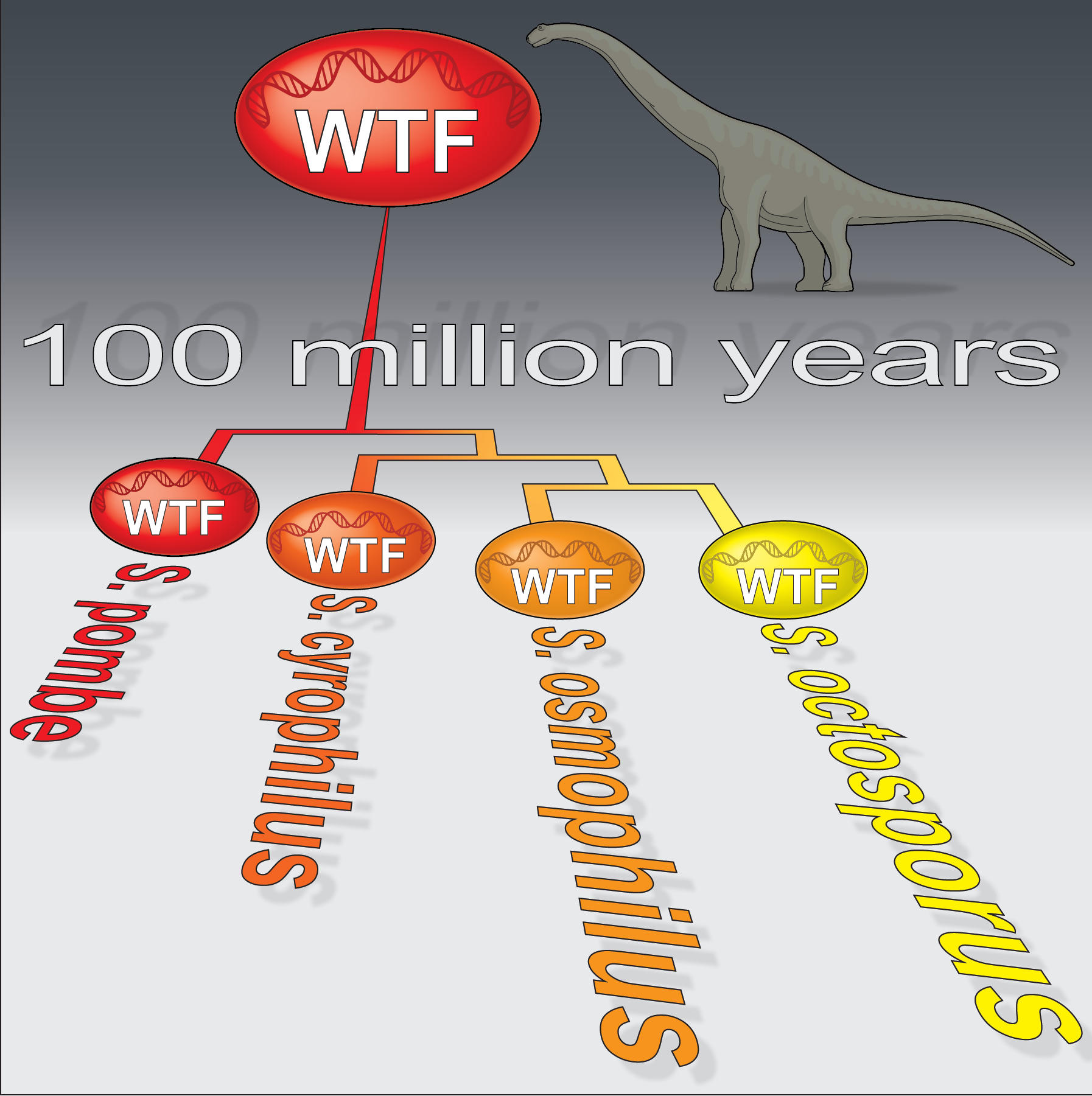
The Stowers Institute for Medical Research, in collaboration with the National Institute for Biological Sciences in Beijing, China, has discovered a selfish gene family that has survived for over 100 million years—ten times longer than any other meiotic driver ever identified—calling into question established beliefs about how natural selection and evolution deal with these threatening sequences.
“The thinking has always been that because these genes are so nasty, they won’t stick around in populations for very long,” said Associate Investigator Sarah Zanders, Ph.D. “We just found out, that isn’t true, that the genomes simply can’t always get rid of them.”
How Meiotic Drivers Sabotage Genomes
Meiotic drivers are thus named because they can literally “drive” the transmission of their genes throughout a genome, often with negative consequences. Natural selection is therefore the primary force opposing selfish genes, favoring genetic variations that eliminate drive for a species’ recovery of fertility and overall health.
“Natural selection has a limited ability to remove meiotic drivers from a population,” said Zanders. “Imagine holding soccer team tryouts (natural selection) to recruit the best players (genes that promote fitness). Drivers are players that sabotage the other players trying out. Drivers make the team, but not because they are good at soccer.”
Stowers Investigator Sarah Zanders provides insight into the discovery. Credit: Stowers Institute for Medical Research
In a recent study published in the journal eLife, led by researcher Mickael De Carvalho, Ph.D., from the Zanders Lab, and Guo-Song Jia, a predoctoral researcher in the lab of Li-Lin Du, Ph.D., identified for the first time that a family of selfish genes called wtf have not only flourished in the fission yeast, Schizosaccharomyces pombe, but have been passed on to three unique yeast species that diverged from S. pombe around 119 million years ago.
“This finding is particularly novel as a family of drive genes has thrived at least ten times longer than what geneticists ever believed possible,” said Zanders.
During meiosis, the specialized cell division that gives rise to reproductive cells like sperm and eggs, the inheritance of genetic material from a set of chromosomes from each parent is 50/50, or equally probable for each reproductive cell.
Meiotic drivers in yeast are in fact a more potent genetic parasite. The wtf gene family are killer meiotic drivers; they not only transmit the selfish gene to over 50 percent of offspring but then destroy the reproductive cells—or spores in yeast—that do not inherit the drive gene.
Overcoming Natural Selection Through Mutation
Natural selection in a genome typically rescues a species from selfish genes by favoring genes that suppress, or silence drive, rendering it useless. How the wtf gene family evaded suppression is largely due to their rapid rates of mutation.
This persistence alters our perception of how a species can overcome the expected increase in infertility that typically leads to extinction. It also changes the way scientists may look for and identify families of selfish genes in different species, including humans.
“Until now, when looking for candidate drivers within a genome, I wouldn’t have considered “old” genes as a possibility,” said Zanders. “Since selfish genes are major drivers of evolution, this new finding opens the door for thinking about how drivers can have persistent, long-term effects on genome evolution.”
Reference: “The wtf meiotic driver gene family has unexpectedly persisted for over 100 million years” by Mickaël De Carvalho, Guo-Song Jia, Ananya Nidamangala Srinivasa, R. Blake Billmyre, Yan-Hui Xu, Jeffrey J. Lange, Ibrahim M. Sabbarini, Li-Lin Du and Sarah E. Zanders, 13 October 2022, eLife.
DOI: 10.7554/eLife.81149
The study was funded by the National Institutes for Health, the Stowers Institute for Medical Research, the Chinese Ministry of Science and Technology, and the Beijing Municipal Government.
The content is solely the responsibility of the authors and does not necessarily represent the official views of the NIH.
Never miss a breakthrough: Join the SciTechDaily newsletter.
Follow us on Google and Google News.
1 Comment
WTF?!