
Beating the Odds in Mutation’s Game of Chance
New research challenges the long-held assumption that DNA mutations occur randomly, showing that mutations are strategically placed to benefit organisms like plants. This discovery alters our understanding of evolution and could impact everything from agriculture to cancer research.
Rethinking Randomness in DNA Mutations
Mutations of DNA do not occur as randomly as previously assumed, according to new research from Max Planck Institute for Biology Tübingen in Germany and University of California Davis in the US. The findings have the potential to dramatically change our view of evolution. The insights have far-reaching implications, from better knowledge of crop domestication to predictions of the mutational landscape in cancers.
Evolution is primarily fueled by mutations, which arise when DNA is damaged and left unrepaired. Darwin’s theory of evolution bases its main tenet on the premise that genes emerge randomly and that only natural selection can control which genes change more rapidly and which more slowly as time progresses. This fundamental assumption has now been disproved.
Mutation Patterns and Plant Evolution
“We always thought of mutations appearing solely by chance across the genome,” says Grey Monroe, an assistant professor in the UC Davis Department of Plant Sciences and first author of the paper. “It now turns out that the pattern of mutation is not only very non-random, but also that it’s non-random in a way that benefits the plant.”
“This is a completely novel perspective on mutation and the way evolution works,” comments Detlef Weigel, scientific director at the Max Planck Institute for Biology and senior author of the study.
Implications for Evolutionary Biology and Genetics
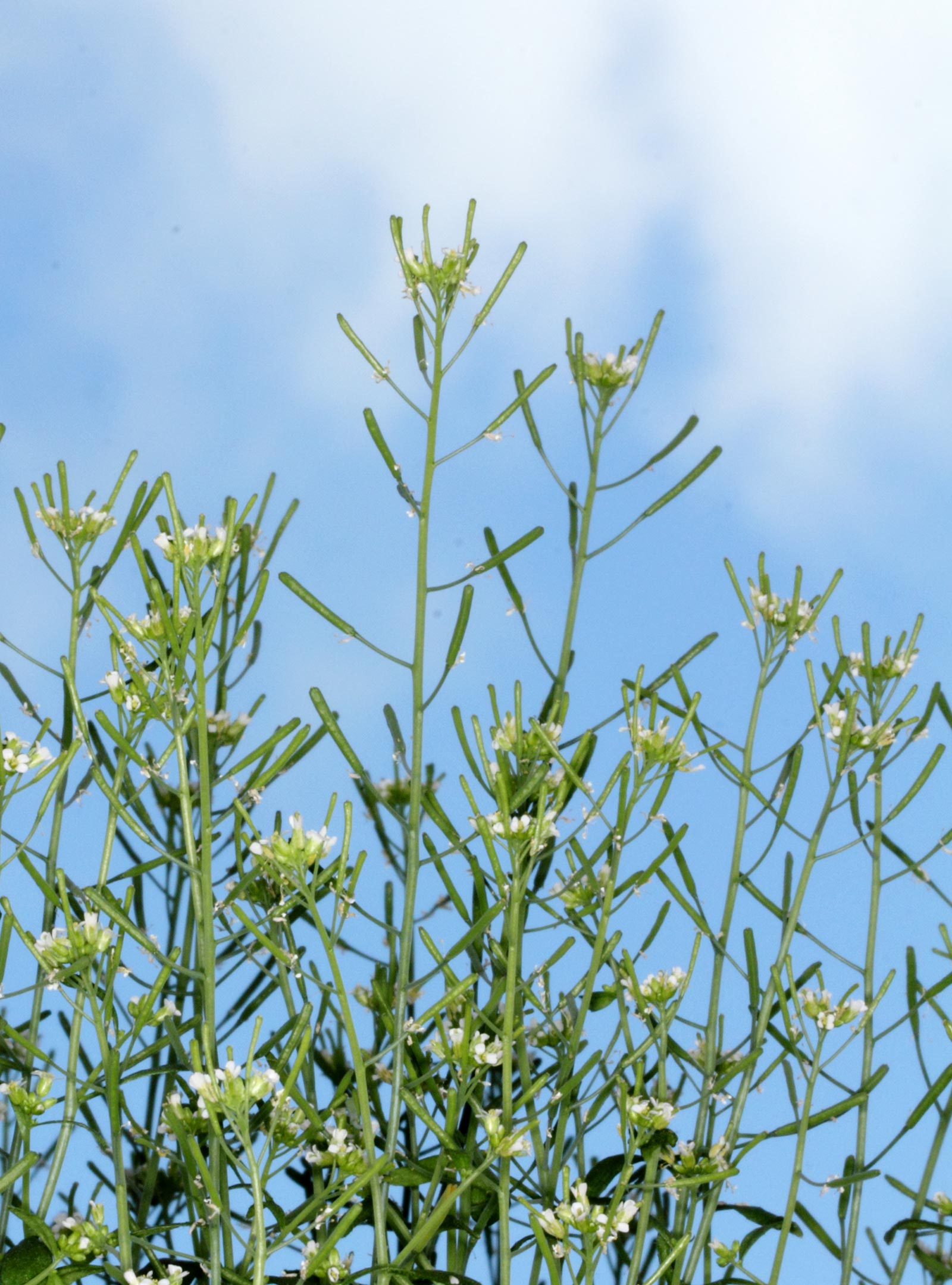
In a protected lab setting where all plants, even those with detrimental mutations, could reproduce, researchers raised specimens of the widely dispersed weed Arabidopsis thaliana. The selection forces that predominate in nature usually swiftly eliminate such deleterious mutations, causing them to vanish before they are ever seen. The scientist was able to track thousands of mutations as they emerged by examining the genomes of hundreds of lab-grown plants.
Sophisticated statistical analyses revealed that these mutations were by no means randomly distributed in the genome, as the researchers had expected. Instead, they found stretches of the genome where mutations were rare, and others where mutations were much more common. In those regions with few mutations, genes needed in every cell and thus essential for the survival of every plant were greatly overrepresented. “These are regions of the genome most sensitive to harmful effects of new mutations,” Weigel says, “and DNA damage repair seems therefore to be particularly effective in these regions.” It is as if evolution were playing with loaded dice – it minimizes the risk of damaging the most vital genes.

DNA Packaging and Mutation Frequency
The scientists found that the different types of proteins around which DNA is wrapped in the cell nucleus are highly correlated with the appearance of mutations. “It gives us a good idea of what’s going on, so that we can predict which genes are more likely to mutate than others,” Monroe says.
Weigel stressed how entirely unexpected the results were in the light of classical evolutionary theory: “It has long been known that during the course of evolution certain regions of the genome accumulate more mutations than other regions do. At first glance, what we found seemed to contradict accepted wisdom that this just reflects natural selection removing most mutations before they can actually be observed,” he explains. However, despite the uneven distribution of mutations in a typical genome, the important regions are not entirely devoid of them, and these regions can therefore also evolve, although at a slower pace than other parts of the genome.
Advancements in Gene Protection and Medical Research
“The plant has evolved a way to protect its most important genes from mutation,” Monroe says. “This is exciting because we could even use these discoveries to think about how to protect human genes from mutation.” In the future, one might use them to predict which genes are best targets for breeding because they evolve fast, or which are most likely to cause disease in humans.
Reference: “Mutation bias reflects natural selection in Arabidopsis thaliana” by J. Grey Monroe, Thanvi Srikant, Pablo Carbonell-Bejerano, Claude Becker, Mariele Lensink, Moises Exposito-Alonso, Marie Klein, Julia Hildebrandt, Manuela Neumann, Daniel Kliebenstein, Mao-Lun Weng, Eric Imbert, Jon Ågren, Matthew T. Rutter, Charles B. Fenster and Detlef Weigel, 12 January 2022, Nature.
DOI: 10.1038/s41586-021-04269-6
Most of the work was carried out at the Max Planck Institute for Biology (formerly the Max Planck Institute for Developmental Biology), and it is now being continued both there and at UC Davis. Researchers from the Carnegie Institution for Science, Stanford University, Westfield State University, University of Montpellier, Uppsala University, College of Charleston, and South Dakota State University also contributed to the work. Funding came from the Max Planck Society, with additional funding from the National Science Foundation and the German Research Foundation.
Never miss a breakthrough: Join the SciTechDaily newsletter.
Follow us on Google and Google News.
41 Comments
“and DNA damage repair seems therefore to be particularly effective in these regions.”
Or, might it be that mutations in these critical regions result in the plant’s seeds not germinating, or dying before they can even flower, and therefore give the appearance of few mutations? If my conjecture is right, then Darwin and the consensus view is right.
Do you really think the scientists behind this are so stupid that you can demolish their deductions with a few seconds of casual conjecture? I think you’ve been skimming the article (something I often do as well). You should read the article again, and pay particular attention to paragraph 5:
<>
“… where all plants, including ones with harmful mutations, could reproduce.”
The operative work here is “could.” Nothing is said about the germination rate or vitality of the specimens with mutations in the survival-critical regions of the genome.
You asked, “Do you really think the scientists behind this are so stupid that you can demolish their deductions …?”
In a word, “Yes.” I’m dismayed at the quality of research that makes it through peer review in recent years.
Well, the paper itself mentions it: mutations leading to inviability or sterility were not included. They measured mutations in single seeds, so the mutation still had to permit seed production.
However, it is interesting they also performed somatic mutation analysis, since that one has much less selection bias. It still needs a live cell, but sterility concerns are removed.
The fault is this vulgarizing article. It fails to touch the issue totally.
This is exactly what happened in WWII airplanes. The experts noticed the damage to returning bombers were localized in specific regions. They armored up those areas expecting a drop in losses, but losses increased. Someone then asked “what if the damage to the other unaffected areas is why those planes didn’t return”. They moved the armor to the places that didn’t have reoccurring damage, and bingo, losses dropped dramatically. Sometimes the inverse of the hypothesis is true.
“Discovery transforms our view of evolution”
I like to imagine editors trying to find the “right” word to minimize the real issue the title should bring: “Discovery refutes/falsifies/destroys our view of evolution.” “Transforms”, friends?
Unfortunately for you, this paper neither refutes, nor falsifies, nor destroys the theory of evolution. If you think that, you probably have a bible freak’s understanding of the theory of evolution.
Pro Tip: If you actually read what the theory of evolution is, you might look less stupid than you appear in that pic of yours.
Unfortunately for you, no matter the choice of the words for a title, science won’t stop exposing the inconsistencies of “theories” and their consequences (in ways you and others won’t be able to control).
(Btw, my congrats to the editors: “transforms” changed to “radically changes” here. At least, a better choice):
https://scitechdaily.com/dna-mutations-are-not-random-new-research-radically-changes-our-understanding-of-evolution/amp/
Pro Tip: Stop thinking spitting insults makes you an intelligent person. Wrong correlation.
Would these ‘protections’ also come to be in our sensory systems for will and attitudes…
…I can see this should effect physiology and psychology in particular,thanks…
No.
I disagree that DNA mutations are a result of DNA being damaged without repair. Folks should revisit the different types of DNA repair!
So random mutations/errors and natural selection created systems/machinery to protect their creation from random errors. Miraculous.
Nice strawman… Do you build them as a hobby, or do you get paid for building them?
Interesting to read
… ?
Babu G. Ranganathan*
(B.A. Bible/Biology)
THE NATURAL LIMITS TO EVOLUTION
ONLY LIMITED EVOLUTION (micro-evolution or evolution within biological “kinds”) is genetically possible (such as the varieties of dogs, cats, horses, cows, etc.), but not macro-evolution, or evolution across biological “kinds,” (such as from sea sponge to human). All real evolution in nature is simply the expression, over time, of already existing genes or variations of already existing genes. For example, we have breeds of dogs today that we didn’t have a few hundred years ago. The genes for these breeds had always existed in the dog population but never had opportunity before to be expressed. Only limited evolution, variations of already existing genes and traits, is possible.
The genes (chemical instructions or code) for a trait must first exist or otherwise the trait cannot come into existence. Genes instruct the body to build our tissues and organs. Nature is mindless and has no ability to design and program entirely new genes for entirely new traits.
Evolutionists believe that, if given millions of years, accidents in the genetic code of species caused by the environment will generate entirely new code making evolution possible from one type of life to another. It’s much like believing that by randomly changing the sequence of letters in a romance novel, over millions of years, can turn the novel into a book on astronomy! Not to worry. We’ll address the issue of “Junk DNA” in a moment.
WHAT ABOUT NATURAL SELECTION? Natural selection doesn’t produce biological traits or variations. It can only “select” from biological variations that are possible and which have survival value.
HOW COULD SPECIES HAVE SURVIVED if their vital tissues, organs, reproductive systems, etc. were still evolving? A partially evolved trait or organ that is not complete and fully integrated and functioning from the start would be a liability to a species, not a survival asset. Plants and animals in the process of macro-evolution would be unfit for survival. For example, “if a leg of a reptile were to evolve (over supposedly millions of years) into a wing of a bird, it would become a bad leg long before it became a good wing” (Dr. Walt Brown, scientist and creationist). Survival of the fittest actually would have prevented evolution across biological kinds!
NEW SPECIES BUT NOT NEW DNA: Although it’s been observed that new species have come into existence, they don’t carry any new genes. They’ve become new species only because they can’t be crossed back with the original parent stock for various biological reasons. A biological “kind” allows for new species but not new genes. Nature has no ability to invent new genes for new traits. Only limited variations and adaptations are possible in nature, and all strictly within a biological “kind” (i.e. varieties of dogs, cats, etc.).
Dr. Randy J. Guliuzza’s extensive research points to a better explanation than natural selection for variation and adaptation in nature. Dr. Guliuzza explains that species have pre-engineered mechanisms that enable organisms to continuously track and respond to environmental changes with system elements that correspond to human-designed tracking systems. This model is called CET (continuous environmental tracking). His research strongly indicates that living things have been pre-engineered to produce the right adaptations and changes required to live in changing environments. It’s much like a car that’s been pre-engineered so that the head lights turn on automatically when day changes to night.
What about genetic and biological similarities between species? Genetic information, like other forms of information, cannot happen by chance, so it is more logical to believe that genetic and biological similarities between all forms of life are due to a common Designer who designed similar functions for similar purposes. It doesn’t mean all forms of life are biologically related! Only genetic similarities within a natural species proves relationship because it’s only within a natural species that members can interbreed and reproduce.
Many people have wrong ideas of how evolution is supposed to work. Physical traits and characteristics are determined and passed on by genes – not by what happens to our body parts. For example, if a woman were to lose her finger this wouldn’t affect how many fingers her baby will have. Changing the color and texture of your hair will not affect the color and texture of your children’s hair. So, even if an ape or ape-like creature’s muscles and bones changed so that it could walk upright it still would not be able to pass on this trait to its offspring. Only changes or mutations that occur in the genetic code of reproductive cells (i.e. sperm and egg) can be passed on to offspring.
What about the new science of epigenetics? Epigenetics involves inheritable factors which can turn already-existing genes on or off, but epigenetics doesn’t create new genes.
Most biological variations are from new combinations of already existing genes, not mutations. Mutations are accidents in the genetic code caused by nature (i.e. environmental radiation), are mostly harmful, and have no capability of producing greater complexity in the code. Even if a good accident occurred, for every good one there would be hundreds of harmful ones with the net result, over time, being harmful, even lethal, to the species. Even if a single mutation is not immediately harmful, the accumulation of mutations over time will be harmful to the species resulting in extinction. At very best, mutations only produce further variations within a natural species.
All species of plants and animals in the fossil record are found complete, fully formed, and fully functional. This is powerful evidence that all species came into existence as complete and fully formed from the beginning. This is only possible by creation.
God began with a perfect and harmonious creation. Even all the animals were vegetarian (Genesis 1:30) in the beginning and did not struggle for survival nor kill and devour each other. Macro-evolutionary theory does not begin with a perfect and harmonious creation as the Bible states. The Bible and macro-evolutionary theory cannot both be true.
All the fossils that have been used to support human evolution have been found to be either hoaxes, non-human, or human, but not non-human and human (i.e. Neanderthal Man was discovered later to be fully human).
There has never been unanimous agreement among evolutionary scientists on ANY fossil evidence that has been used to support human evolution over the many years, Including LUCY.
The actual similarity between ape and human DNA is between 70-87% not 99.8% as commonly believed. The original research stating 99.8% similarity was based on ignoring contradicting evidence. Only a certain segment of DNA between apes and humans was compared, not the entire DNA genome.
Also, so-called “Junk DNA” isn’t junk. Although these “non-coding” segments of DNA don’t code for proteins, they have recently been found to be vital in regulating gene expression (i.e. when, where, and how genes are expressed, so they’re not “junk”). Also, there is evidence that, in certain situations, they can code for protein.
ARE FOSSILS REALLY MILLIONS OF YEARS OLD? (Internet article by author)
Visit my latest Internet site: THE SCIENCE SUPPORTING CREATION (This site answers many arguments, both old and new, that have been used by evolutionists to support their theory)
Author of popular Internet article, TRADITIONAL DOCTRINE OF HELL EVOLVED FROM GREEK ROOTS
*I have given successful lectures (with question and answer period afterwards) defending creation before evolutionist science faculty and students at various colleges and universities. I’ve been privileged to be recognized in the 24th edition of Marquis “Who’s Who in The East” for my writings on religion and science.
You said, “God began with a perfect and harmonious creation.” One would expect such a thing from a perfect being.
I do have a question, however. The Christian God is depicted as being male, as in ‘God the Father,’ and the scriptures say He created Adam in His image. Why would a ‘perfect’ being have need for a penis when there was no female counterpart with which to beget little Gods? For that matter, why was Adam initially created with a penis when there was only him, the image of God?
This is not Sunday School or a catechism class. It is supposed to be a science blog. Where is your science?
When God made Eve he took her from Adam’s River which in Hebrew means ribbon. If you take away one arm from an X chromosome you end up with a Y chromosome and with the SRY gene you have a phenotypical male. I am inferring that the rib taken from Adam to make Eve was in fact from the sex chromosome. Thus, the ancients who wrote the Bible may have had a much more in depth understanding of biology then we have today considering the loss of things like the library of Alexandria would have only left humanity with the important standard works that God intended for us to have. Nice try though.
Riiiight… And in Alice in Wonderland, the mad hatter represents the creation process because hat in ancient Aramaic means heavens, and in ancient Egyptian it means ruler, and the shuffling of places means that all god’s creatures were created and distributed to all the continents after the flood. Cool. Let’s do Red Riding Hood next!
Are you one of those “special” people who thing Da Vinci Code is a documentary? You need help, dude… the kind that people in white coats and syringes can provide.
PS: you do realize that in your scenario Adam initially had two X chromosomes before your god took away a snippet, right? So since god created Adam in his image, god has two X chromosomes, which makes god female. So Adam was a female, and god genetically modified him/her to be a male, in order to make a female… Somehow in your head maybe all this makes sense.
Can the esteemed bible/biologist (lol) and author of internet articles (roflmao) explain how kangaroos got to Australia after the flood?
Babu Ranganathan has the only valid perspective
and makes perfect sense. The rest are just lost
unfortunately. Kudos to Babu for such courage
and clarity.
Is your other name “Babu?” You sound like a soap commercial: “Nine out of ten physicians recommend Babu soap! Get yours today with this one-time offer of two for the price of one.”
I thought life just popped up from mutations and natural selection out of Miller and Urey’s premordial soup? You mean it takes more that just random mutations to drive an evolutionary engine. Surely thouest jest? Better not say anything to evolutionary biologists they already took Darwinian evolution to the bank…you will labeled a feable minded creationist.
Unfortunately, you thought wrong. I would suggest maybe reading a modern textbook on evolution. You know, the sort of book that contains facts about modern data and analysis that shows how mutations are one of the processes that determine our current best model for how evolution happens.
Spoiler alert:- Those processes do not include god. I won’t spoil the surprise of discovering real facts for you.
Well, you are a feeble-minded creationist who can’t spell.
“A central assumption of Darwin’s theory of evolution is that they arise randomly, and that only natural selection determines which genes change more quickly and which more slowly in the course of evolution.” Sloppy. Darwin didn’t know about genes and mutations. To ascribe these views to him is either sloppy research or bad writing.
The fact that certain parts of the genome are better protected or have more effective repair mechanisms, does not mean that mutations do not occur randomly. Researchers have long been able to predict which parts of viruses are most likely to experience mutations, and yet those mutations themselves are likely to occur randomly and cannot be predicted. We also know that certain types of viruses experience more frequent mutations than some other types, and in many or most cases we understand the mechanisms that provide protection against mutations.
I am not a geneticist or an evolutionary scientist, but the findings highlighted in this article don’t seem to be as revolutionary as the authors of the article suggest.
We DO NOT HAVE DNA FROM EVOLUTION AND WE DO NOT COME MONKEYS
Orderly! 100mg Thorazine statt!!
Yeah and these so called random mutations are a result of beneficial viruses and bacterial infections transmitted by human activity or in the wild by inactivity.
Congrats…you have given fuel to anti-evolutionists and creationists.
The idiot talking about “kinds” is talking creationism nonsense!macro evolution is inbetweeners and above species level, since the definition of a species is reproductive barriers anything above that is arbitrary jerry coyne has made this clear, by infusing a mutation in drosophila he stopped them be able to pass on genes and made a new species macro evolution!! He mutated them so there body parts were growing from anywhere making it look like a new species.micro and macro have been proven in the lab and field watch aron ra videos.
For humanity–universe cosmos, order chaos, infinite finite…
These are the tensions we have to work with…
That we are in part and part of these tensions…
Some of just want to work at understanding what where and why we are here now…
…this article helps…thanks
Clearly this research has found yet another impediment to the Philosophy/Religion of Evolution. (No actual scientific theory could have so much scientific evidence against it and still be called a “theory.”) It seems mutations are far more likely where they do not matter. That fits well with a Creationist point of view but not Evolution.
Clearly we have another idiot here who doesn’t understand science and doesn’t understand what a scientific theory is, and what the principle of falsifiability is. If I am mistaken in this assessment, please show how this paper falsifies the theory of evolution. I am sure the authors would be happy to receive their Nobel prize in that case.
Only place where you are correct is when you correctly label creationism as a point of view. I would call it a fantasy, but that’s just semantics.
Twenty-two years ago a research team headed by Barbara Wright demonstrated non random mutations. See https://scholarworks.umt.edu/biosci_pubs/263/
Reading this announcement in detail…it says that the DNA repair mechanism targets those areas with essential plant systems. I presume these are related to cell operation and replication. That makes absolute sense if hundreds of millions of years of selection has honed the DNA repair mechanism. It will repair selectively those sections essential to the basic opportunities to become a seedling (even if you grow that plant in a “mutation favourable” environment.
So the mutation repair will be more lax in areas that are in zones of DNA sequence that lack those fundamental Germinal and cell function genes.
I don’t see this as some mysterious evolutionary force that defies neo-Darwinism. In fact it is wholly expected from the theory. Mutations are still largely random with respect to novel conditions experience by the organism. But the REPAIR mechanism has targeted, after hundreds of millions of years of SELECTION to protect specific sequence regions.
That’s all they’ve demonstrated.
BTW Darwin was himself intrigued by the greater apparent mutability of domesticated plants and animals. He felt that this relaxed selection has something to do with it as breeders would encourage odd “sports” that nature would quickly prune from the bush.
After reading all the comment, not surprised by the typical evolutionists, once they have no more valid arguments they start insulting people, not the brightest crayons in the evolution box.
Darwin’s theory essentially is an attempt to explain the existence of life without the ‘God’ factor. Trouble is even if you suggest like he did such a theory you are still left unable to explain the origin of it all and further now we can see the complexity of a single cell mathematically is against random mutation as being the answer. I would refer readers to Federico Faggin whereby evolution is driven intrinsically and is not blind.