
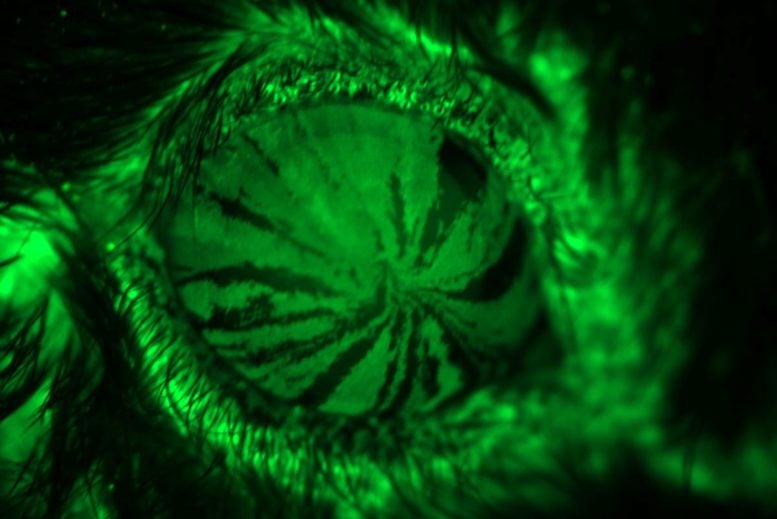
SPARC protein, produced by corneal stem cells, may help treat dry eye disease and prevent corneal injuries.
People with a condition known as dry eye disease are more likely than those with healthy eyes to suffer injuries to their corneas. Studying mice, researchers at Washington University School of Medicine in St. Louis have found that proteins made by stem cells that regenerate the cornea may be new targets for treating and preventing such injuries.
The study will be published online today (January 2, 2023) in the journal Proceedings of the National Academy of Sciences.
Dry eye disease occurs when the eye can’t provide adequate lubrication with natural tears. People with the common disorder use various types of drops to replace missing natural tears and keep the eyes lubricated, but when eyes are dry, the cornea is more susceptible to injury.
“We have drugs, but they only work well in about 10% to 15% of patients,” said senior investigator Rajendra S. Apte, MD, PhD, the Paul A. Cibis Distinguished Professor in the John F. Hardesty, MD, Department of Ophthalmology & Visual Sciences. “In this study involving genes that are key to eye health, we identified potential targets for treatment that appear different in dry eyes than in healthy eyes. Tens of millions of people around the world — with an estimated 15 million in the United States alone — endure eye pain and blurred vision as a result of complications and injury associated with dry eye disease, and by targeting these proteins, we may be able to more successfully treat or even prevent those injuries.”
The researchers analyzed genes expressed by the cornea in several mouse models — not only for dry eye disease, but also for diabetes and other conditions. They found that in mice with dry eye disease, the cornea activated expression of the gene SPARC. They also found that higher levels of SPARC protein were associated with better healing.
Potential Therapeutic Targets
“We conducted single-cell RNA sequencing to identify genes important to maintaining the health of the cornea, and we believe that a few of them, particularly SPARC, may provide potential therapeutic targets for treating dry eye disease and corneal injury,” said first author Joseph B. Lin, an MD/PhD student in Apte’s lab.
“These stem cells are important and resilient and a key reason corneal transplantation works so well,” Apte explained. “If the proteins we’ve identified don’t pan out as therapies to activate these cells in people with dry eye syndrome, we may even be able to transplant engineered limbal stem cells to prevent corneal injury in patients with dry eyes.”
Reference: “Dry eye disease in mice activates adaptive corneal epithelial regeneration distinct from constitutive renewal in homeostasis” by Joseph B. Lin, Xiaolei Shen, Charles W. Pfeifer, Fion Shiau, Andrea Santeford, Philip A. Ruzycki, Brian S. Clark, Qin Liu, Andrew J. W. Huang and Rajendra S. Apte, 2 January 2023, Proceedings of the National Academy of Sciences.
DOI: 10.1073/pnas.2204134120
The study was funded with support from the National Eye Institute, the National Institute of Diabetes and Digestive and Kidney Diseases, and the National Institute of General Medical Sciences of the National Institutes of Health (NIH). Grant numbers: R01 EY019287, R01 EY027844, R01 EY024704, P30 EY02687, F30 DK130282, T32 GM07200 Additional funding provided by the Jeffrey T. Fort Innovation Fund, a Centene Corp. contract for the Washington University-Centene ARCH Personalized Medicine Initiative, and Research to Prevent Blindness.
Never miss a breakthrough: Join the SciTechDaily newsletter.
Follow us on Google and Google News.
1 Comment
Mijn vraag is:
Is het mogelijk om van het droge ogen probleem af te komen?
Ben sinds mijn 9e bril dragend. Draag sinds 1983 harde zuurstof doorlatende lenzen. Vanaf 2018 steeds last van problemen met deze lenzen en erg vermoeide ogen. Sinds september 2022 zoveel last van het lenzen dragen ovrrgestapt op dragen van de bril. Problemen droge ogen blijft. Via optometrist en onderzoek bij Eyescan in Utrecht bijna besloten om implantaatlenzen te laten plaatsen. Met advies om dit eerst met zachte lenzen uit te proberen. Dit geeft heel veel verlichting en minder vermoeide ogen. Met gebruik van druppels 3x per dag.
Heeft u de oplossing voor mij?
Met vriendelijke groeten,
Ans van Lier