
Close Menu
    Facebook X (Twitter) Instagram
    SciTechDaily
    • Biology
    • Chemistry
    • Earth
    • Health
    • Physics
    • Science
    • Space
    • Technology
    Facebook X (Twitter) Pinterest YouTube RSS
    SciTechDaily
    Home»Biology»Eavesdropping Marmosets Understand Other Monkeys’ Conversations – And They Judge
    Biology

    Eavesdropping Marmosets Understand Other Monkeys’ Conversations – And They Judge

    By University of ZurichFebruary 3, 2021No Comments3 Mins Read
    Facebook Twitter Pinterest Telegram LinkedIn WhatsApp Email Reddit
    Share
    Facebook Twitter LinkedIn Pinterest Telegram Email Reddit
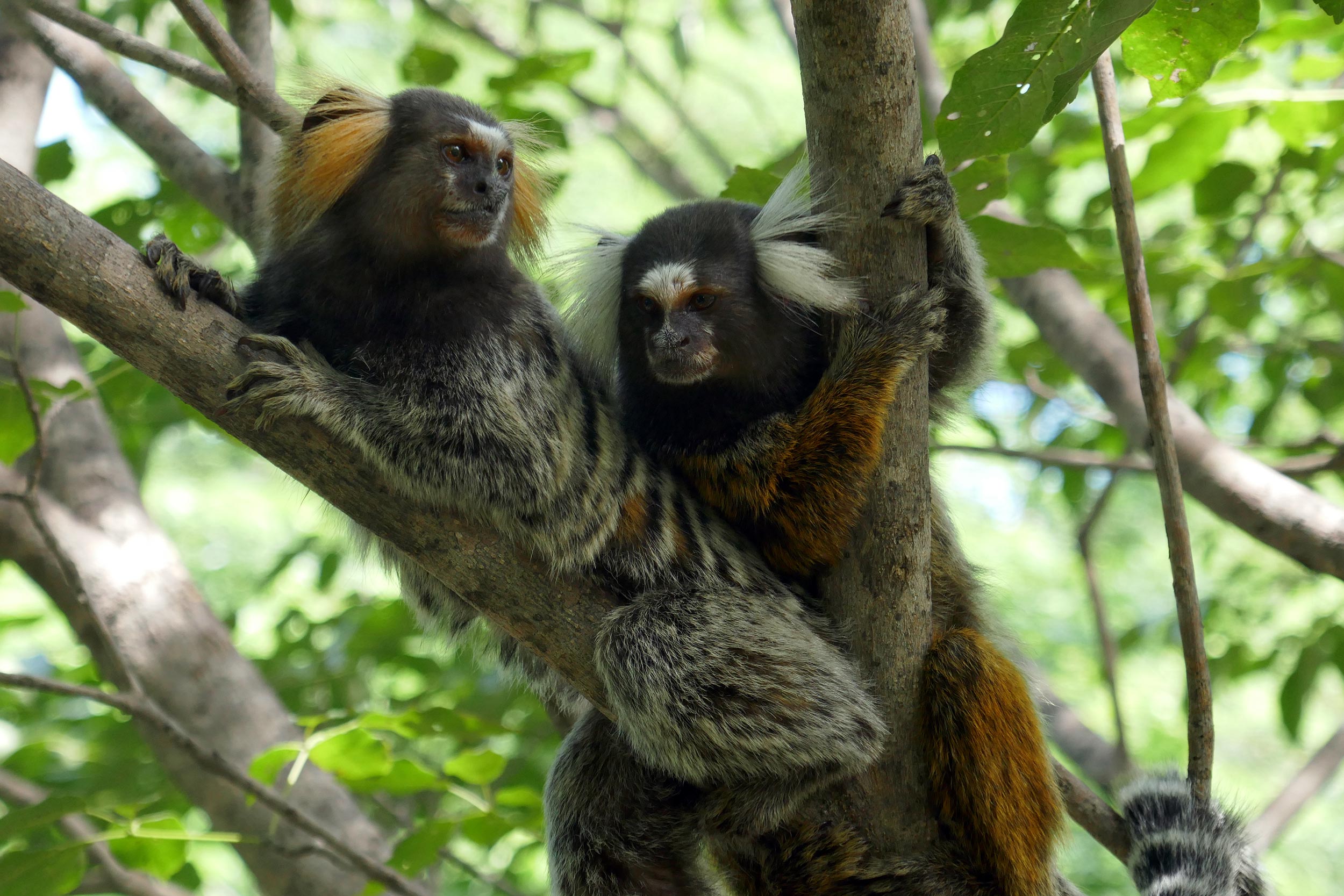
    Marmoset Monkeys
    Marmoset monkeys are not only passive observers of third-party interactions, but that they also interpret them. Credit: Judith M. Burkart, UZH

    University of Zurich researchers found marmosets can recognize and emotionally react to vocal interactions between others.

    Humans continuously observe and evaluate interactions between third parties to decide with whom to interact in the future. But it is difficult to measure what information animals gain when they eavesdrop on vocal interactions between conspecifics: If they do understand such conversations, they do not necessarily exhibit behavioral expressions that can be easily observed. To overcome this hurdle, anthropologists from the University of Zurich created a study combining call simulations, thermography methods, and behavioral preference measures.

    Using thermal imaging, the researchers were able to non-invasively measure temperature changes in the faces of marmoset monkeys to quantify subtle emotional responses. “We were able to use this technique to show that the marmosets did not perceive the vocal interactions between conspecifics as the mere sum of the single call elements but rather perceived them holistically, as a conversation,” says first author Rahel Brügger, PhD candidate at the Department of Anthropology of the University of Zurich.

    Distinguishing Dialogues From Monologues

    An animal experiencing an increase in emotional arousal will show a drop in facial surface temperature especially in the most exposed regions, namely the nose. Measuring the emitted infrared radiation by means of thermography makes it possible to record these changes. For their study the researchers used playbacks of vocal exchanges between marmosets as well as calls of individual animals who were not involved in an interaction. They played the corresponding playbacks from a hidden loudspeaker and used thermography to measure the monkeys’ reactions to the various simulations. “This showed that the response to call interactions was significantly different than the response to individual calls,” Brügger said. “Marmoset monkeys are thus able to distinguish a dialogue among conspecifics from a pure monologue.”

    Preference for Cooperators

    In the simulations, the researchers additionally distinguished between cooperative and competitive interactions. After the monkeys had heard the different interactions, they were given the opportunity to approach the sources of the sounds. The researchers observed that the marmosets preferred to approach the simulated conspecifics who had been involved in a cooperative interaction with a third party.

    This preference fits the social system and natural behavior of these small Brazilian new world monkeys who are cooperative breeders and depend on the cooperativeness of their group members. “This study adds to the growing evidence that many animals are not only passive observers of third-party interactions, but that they also interpret them,” concludes last author and professor of anthropology at UZH, Judith Burkart. “In addition, our study shows that thermography can help unveil how these social interactions are perceived by nonverbal subjects.”

    Reference: “Do marmosets understand others’ conversations? A thermography approach” by R. K. Brügger, E. P. Willems and J. M. Burkart, 3 February 2021, Sciences Advances.
    DOI: 10.1126/sciadv.abc8790

    Never miss a breakthrough: Join the SciTechDaily newsletter.
    Follow us on Google and Google News.

    Behavioral Science Evolution Language Learning Monkey University of Zurich
    Share. Facebook Twitter Pinterest LinkedIn Email Reddit

    Related Articles

    Bonobos Speak in Phrases: New Study Challenges Uniqueness of Human Language

    The Evolution of Communication: Chimpanzees Show Surprising Ability To Combine Calls

    Cracking Chimpanzee Culture – More Similar to Human Culture Than Often Assumed

    Monkeys May Have “Self-Domesticated” – Like Humans

    Chimpanzee Lip-Smacks Help Trace the Evolution of Human Speech Back to Ancient Ancestors

    Old World Monkeys Vocalizations May Be More Sophisticated Than Previously Realized

    A Natural Example of a Functioning Gear Mechanism Discovered in an Insect

    Drunken Larvae Learn Just As Well as Sober Larvae

    Human Y-Chromosome Has Enough Genes to Stay for Millions of Years

    Leave A Reply Cancel Reply

    • Facebook
    • Twitter
    • Pinterest
    • YouTube

    Don't Miss a Discovery

    Subscribe for the Latest in Science & Tech!

    Trending News

    Millions Take These IBS Drugs, But a New Study Finds Serious Risks

    Scientists Unlock Hidden Secrets of 2,300-Year-Old Mummies Using Cutting-Edge CT Scanner

    Bread Might Be Making You Gain Weight Even Without Eating More Calories

    Scientists Discover Massive Magma Reservoir Beneath Tuscany

    Europe’s Most Active Volcano Just Got Stranger – Here’s Why Scientists Are Rethinking It

    Alzheimer’s Symptoms May Start Outside the Brain, Study Finds

    Millions Take This Popular Supplement – Scientists Discover a Concerning Link to Heart Failure

    The Universe Is Expanding Too Fast and Scientists Can’t Explain Why

    Follow SciTechDaily
    • Facebook
    • Twitter
    • YouTube
    • Pinterest
    • Newsletter
    • RSS
    SciTech News
    • Biology News
    • Chemistry News
    • Earth News
    • Health News
    • Physics News
    • Science News
    • Space News
    • Technology News
    Recent Posts
    • U.S. Waste Holds $5.7 Billion Worth of Crop Nutrients
    • Scientists Say a Hidden Structure May Exist Inside Earth’s Core
    • Doctors Surprised by the Power of a Simple Drug Against Colon Cancer
    • Why Popular Diabetes Drugs Like Ozempic Don’t Work for Everyone: The “Genetic Glitch”
    • Scientists Create Improved Insulin Cells That Reverse Diabetes in Mice
    Copyright © 1998 - 2026 SciTechDaily. All Rights Reserved.
    • Science News
    • About
    • Contact
    • Editorial Board
    • Privacy Policy
    • Terms of Use

    Type above and press Enter to search. Press Esc to cancel.