
Close Menu
    Facebook X (Twitter) Instagram
    SciTechDaily
    • Biology
    • Chemistry
    • Earth
    • Health
    • Physics
    • Science
    • Space
    • Technology
    Facebook X (Twitter) Pinterest YouTube RSS
    SciTechDaily
    Home»Health»Effectiveness of Ultrasound Cancer Therapy Boosted by CRISPR/Cas9 Gene Editing
    Health

    Effectiveness of Ultrasound Cancer Therapy Boosted by CRISPR/Cas9 Gene Editing

    By American Chemical SocietyDecember 8, 2021No Comments3 Mins Read
    Facebook Twitter Pinterest Telegram LinkedIn WhatsApp Email Reddit
    Share
    Facebook Twitter LinkedIn Pinterest Telegram Email Reddit
    Ultrasound Irradiation Lipid Nanoparticle
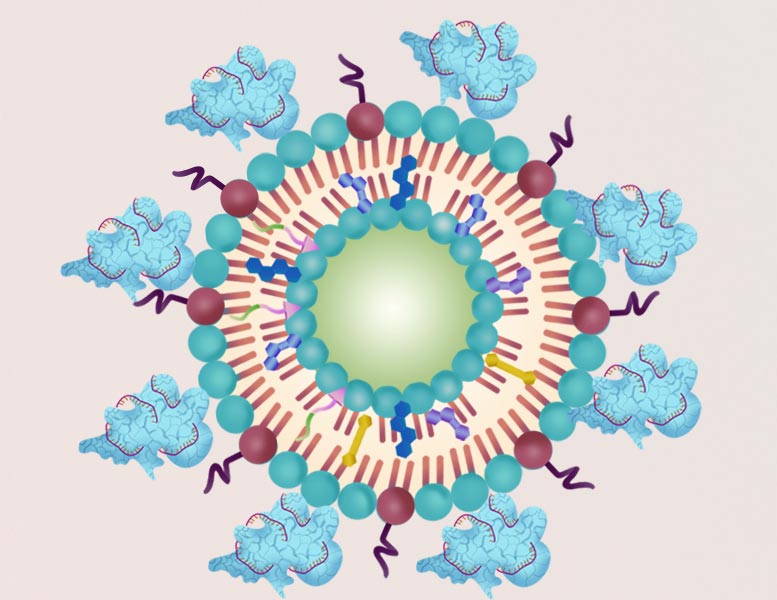
    Ultrasound irradiation of a tumor causes a lipid nanoparticle (drawing shown above) to release harmful ROS and a CRISPR/Cas9 gene-editing system. Credit: Adapted from ACS Central Science 2021, DOI: 10.1021/acscentsci.1c01143

    Researchers have combined CRISPR/Cas9 gene editing with sonodynamic therapy to overcome cancer cells’ natural antioxidant defenses, achieving a dramatic breakthrough in liver cancer treatment.

    Sonodynamic therapy uses ultrasound in combination with drugs to release harmful reactive oxygen species (ROS) at the site of a tumor. However, the treatment isn’t very effective because cancer cells can activate antioxidant defense systems to counteract it. Now, researchers reporting in ACS Central Science have breached these defenses with CRISPR/Cas9 gene editing, allowing sonodynamic therapy to effectively shrink tumors in a mouse model of liver cancer.

    Hepatocellular carcinoma, the most common form of liver cancer, has a poor prognosis, and surgical treatment by removing part of the liver or transplanting a healthy liver is not suitable for patients with more advanced disease. Because ultrasound can penetrate deep within tissues, sonodynamic therapy could be an effective, non-invasive way to treat hepatocellular carcinoma. But currently, cancer cells can quickly overcome the therapy by activating a gene called nuclear factor erythroid 2-related factor 2 (NFE2L2), which deploys the cells’ detoxification and antioxidant enzyme defenses. CRISPR/Cas9 gene-editing technology has been used to knock down gene expression in the lab. So, Wei Feng, Huixiong Xu, Yu Chen, and colleagues wondered if they could increase sonodynamic therapy’s effectiveness by using this technology to reduce NFE2L2 expression.

    Lipid Nanoparticles as Smart Carriers

    As a first step, the researchers encapsulated the CRISPR/Cas9 system and a ROS precursor molecule in lipid nanoparticles. Then, they treated hepatocellular carcinoma cells in a petri dish with the nanoparticles. The lipid nanoparticles were taken up by the cells’ lysosomes. Ultrasound treatment caused ROS formation, which ruptured lysosomes and allowed the CRISPR/Cas9 system to enter the nucleus and knock down NFE2L2 gene expression. The ROS also damaged other cellular components. As a result, significantly more cancer cells died from the sonodynamic therapy than without NFE2L2 gene editing.

    Next, the team injected the nanoparticle treatment into mice with implanted human hepatocellular carcinoma tumors. After 15 days of the combined nanoparticle and ultrasound treatment, all of the tumors in the mice disappeared and didn’t come back. Mice treated with sonodynamic therapy alone had fewer tumors than untreated mice, but the addition of the CRISPR/Cas9 system significantly improved the therapy’s effectiveness. Because gene editing occurs only in tumor tissues under ultrasound irradiation, it won’t cause gene mutations in healthy tissues, the researchers say.

    Reference: “Ultrasound-Controlled CRISPR/Cas9 System Augments Sonodynamic Therapy of Hepatocellular Carcinoma” by Haohao Yin, Liping Sun, Yinying Pu, Jifeng Yu, Wei Feng, Caihong Dong, Bangguo Zhou, Dou Du, Yan Zhang, Yu Chen and Huixiong Xu, 8 December 2021, ACS Central Science.
    DOI: 10.1021/acscentsci.1c01143

    The authors acknowledge funding from the National Natural Science Foundation of China and Shanghai Municipal Health Commission.

    Never miss a breakthrough: Join the SciTechDaily newsletter.
    Follow us on Google and Google News.

    American Chemical Society Cancer CRISPR Genetics Ultrasound
    Share. Facebook Twitter Pinterest LinkedIn Email Reddit

    Related Articles

    Not Just One Type – Identifying Cancer Genes’ Multiple Personalities

    Using CRISPR Gene Editing Technology as a Research Tool to Develop Cancer Treatments

    New Strategy for the Elimination of Cancer Stem Cells and Cancer Recurrence

    Neu5Gc Sugar is Related to the Appearance of Spontaneous Tumors in Humans

    Researchers Develop New Method for Making “Blood Biopsies”

    MIT Develops New Model To Speed Up Colon Cancer Research

    Yale Scientists Reveal ‘Major Player’ in Skin Cancer Genes

    A Link between Inflammation and Cancer

    Smoking Causes Chemical Alterations in Genes

    Leave A Reply Cancel Reply

    • Facebook
    • Twitter
    • Pinterest
    • YouTube

    Don't Miss a Discovery

    Subscribe for the Latest in Science & Tech!

    Trending News

    The Universe Is Expanding Too Fast and Scientists Can’t Explain Why

    “Like Liquid Metal”: Scientists Create Strange Shape-Shifting Material

    Early Warning Signals of Esophageal Cancer May Be Hiding in Plain Sight

    Common Blood Pressure Drug Shows Surprising Power Against Deadly Antibiotic-Resistant Superbug

    Scientists Uncover Dangerous Connection Between Serotonin and Heart Valve Disease

    Scientists Discover a “Protector” Protein That Could Help Reverse Hair Loss

    Bone-Strengthening Discovery Could Reverse Osteoporosis

    Scientists Uncover Hidden Trigger Behind Stem Cell Aging

    Follow SciTechDaily
    • Facebook
    • Twitter
    • YouTube
    • Pinterest
    • Newsletter
    • RSS
    SciTech News
    • Biology News
    • Chemistry News
    • Earth News
    • Health News
    • Physics News
    • Science News
    • Space News
    • Technology News
    Recent Posts
    • Scientists Overcome Major Quantum Bottleneck, Potentially Transforming Teleportation and Computing
    • Quantum Physics’ Strangest Problem May Hold the Key to Time Itself
    • Scientists Create “Liquid Gears” That Spin Without Touching
    • The Simple Habit That Could Help Prevent Cancer
    • Forgotten Medicinal Plant Shows Promise in Fighting Dangerous Superbugs
    Copyright © 1998 - 2026 SciTechDaily. All Rights Reserved.
    • Science News
    • About
    • Contact
    • Editorial Board
    • Privacy Policy
    • Terms of Use

    Type above and press Enter to search. Press Esc to cancel.