
Close Menu
    Facebook X (Twitter) Instagram
    SciTechDaily
    • Biology
    • Chemistry
    • Earth
    • Health
    • Physics
    • Science
    • Space
    • Technology
    Facebook X (Twitter) Pinterest YouTube RSS
    SciTechDaily
    Home»Technology»Energy From the Sky: How Drones Can Generate Electricity
    Technology

    Energy From the Sky: How Drones Can Generate Electricity

    By University of BristolMay 25, 2024No Comments3 Mins Read
    Facebook Twitter Pinterest Telegram LinkedIn WhatsApp Email Reddit
    Share
    Facebook Twitter LinkedIn Pinterest Telegram Email Reddit
    Kitemill Prototype Done
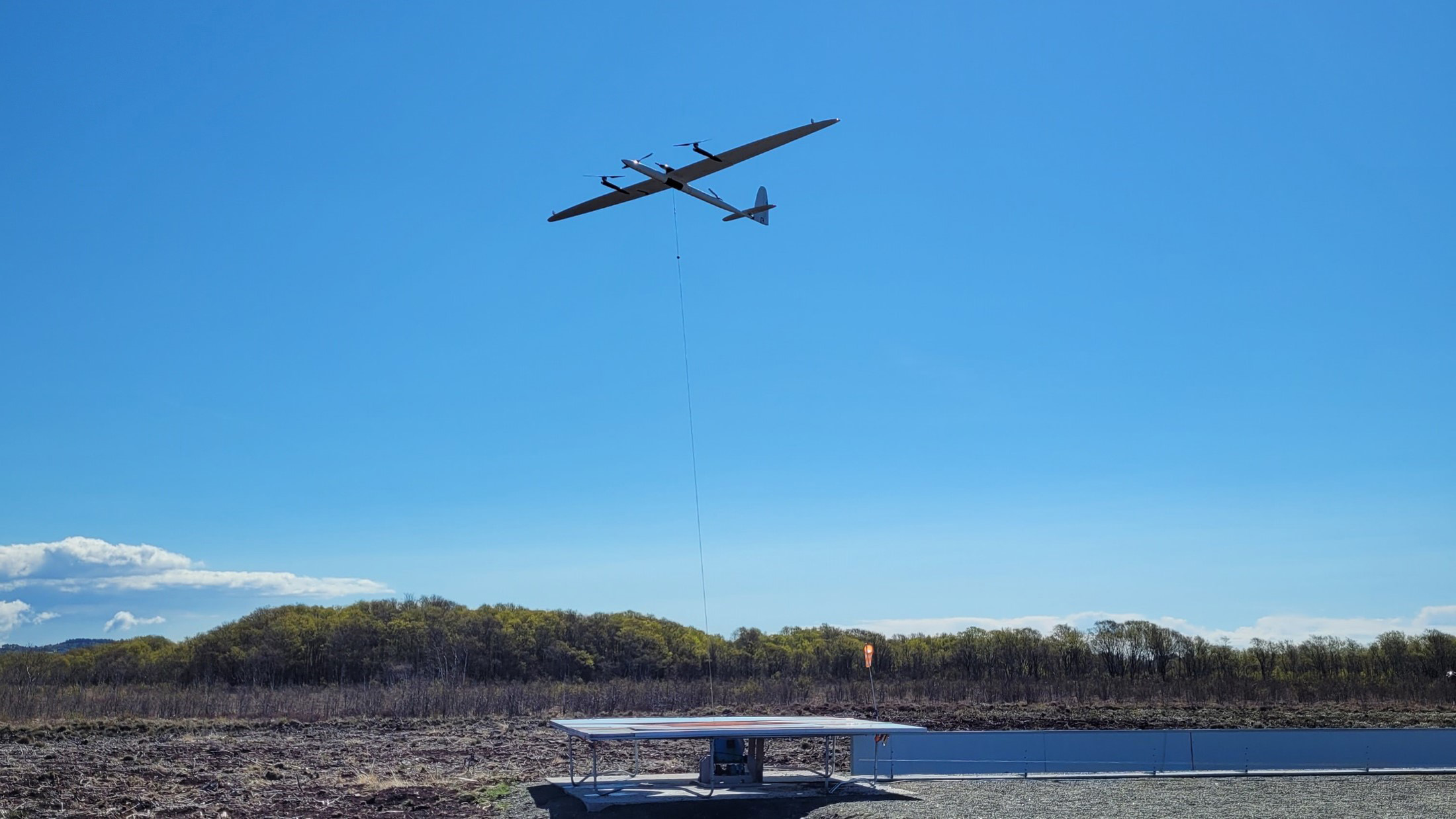
    New research into Airborne Wind Energy Systems, funded by a substantial EPSRC grant, seeks to harness high-altitude wind energy using drones, aiming to overcome challenges in system stability and enhance commercial viability, supporting the UK’s net-zero goals. Image of a prototype Kitemill drone in action. Credit: Kitemill

    Dr. Duc H. Nguyen has received funding to research Airborne Wind Energy Systems, aiming to improve their safety and efficiency for potential commercialization and a significant role in achieving the UK’s net-zero emissions.

    Drones could be crucial in achieving the UK’s net-zero objectives by harvesting wind energy. Dr. Duc H. Nguyen, a Lecturer in Flight Dynamics and Control at the University of Bristol, has received a £375,000 grant from the Engineering and Physical Sciences Research Council (EPSRC) to further explore Airborne Wind Energy Systems (AWES).

    By tethering a drone to a ground station, AWES harvests wind power at higher altitudes than conventional wind turbines. The high wind pulls the drone away from the ground station, driving the generator, and producing electricity.

    This technology can benefit the UK’s energy sector by reducing its carbon footprint, providing offshore and onshore flexibility, and enhancing the ability to operate in remote areas.

    To generate the most power, AWES must fly in intricate patterns while subjected to strong aerodynamic forces. This arrangement creates a complex system with delicate handling characteristics – a slight miscalculation could send the drone tumbling to the ground.

    This is the challenge that Dr Nguyen and his collaborators hope to solve during this project. By improving AWES safety and efficiency, he hopes the project will pave the way for AWES commercialization.

    Potential and Pitfalls of AWES

    Dr Nguyen, from the School of Civil, Aerospace and Design Engineering, explained: “Airborne wind energy has enormous potential and is anticipated to generate €70 billion per year worth of electricity by 2050. However, it is still an emerging technology. In many cases, a trade-off has been made: new designs have been rapidly deployed for test flights before their flying characteristics are fully understood. This has prevented many AWES prototypes from achieving full capacity in operation, leading to early termination of the program and hindering commercialization. This project seeks to address this challenge through the use of bifurcation and continuation methods.”

    Duc Nguyen, Jon Gjerde and Thomas Hårklau
    Dr. Duc Nguyen with Kitemill’s founders, Jon Gjerde (left) and Thomas Hårklau (right), at the Airborne Wind Energy 2024 conference. Credit: Kitemill/Dr Duc Nguyen

    These numerical techniques have been successfully used in aircraft dynamic studies to predict dangerous behaviors such as pilot-induced oscillation, flutter, and spin.

    Dr. Nguyen concluded: “By replacing existing techniques with bifurcation methods, AWES can achieve significant cost savings and improved performance that will ultimately bring this technology closer to commercialization.”

    In addition to the EPSRC funding, the project also benefits from collaborations with two leading players in the sector, Norwegian startup Kitemill and University Carlos the III of Madrid.

    Thomas Hårklau, co-founder and Chief Executive Officer of Kitemill, added: “The initiation and successful funding of this AWES project is an important development in the renewable energy sector. AWES technology, with its exceptional material efficiency and higher energy yields, has the potential to become a dominant force in the energy industry. We are excited to collaborate with Duc Nguyen and Bristol University on this initiative. This project not only advances the UK’s net-zero mission but also secures British competence in this emerging sector. Together, we aim to address current challenges and pave the way for the commercialization of AWES.”

    Never miss a breakthrough: Join the SciTechDaily newsletter.
    Follow us on Google and Google News.

    Drones Energy University of Bristol Wind Power
    Share. Facebook Twitter Pinterest LinkedIn Email Reddit

    Related Articles

    Electrified Graphene Serves as a Shutter for Terahertz and Infrared Wavelengths of Light

    PNNL Developed Small Solid Oxide Fuel Cell Achieves 57 Percent Efficiency

    Floating “Power Buoy” Creates Electricity from Ocean Waves

    NDCX-II, A Special-Purpose Particle Accelerator

    Berkeley Lab Software to Optimize Jail Microgrid

    Researchers Study the Use of Photosystem-I as Photovoltaic Panels

    Australia Stops Sea Shepherd From Using Drones

    Anti-Whaling Activists Use Drone to Track Japanese Fleet

    Scottish Wind Turbine Explodes

    Leave A Reply Cancel Reply

    • Facebook
    • Twitter
    • Pinterest
    • YouTube

    Don't Miss a Discovery

    Subscribe for the Latest in Science & Tech!

    Trending News

    One of the Universe’s Largest Stars May Be Getting Ready To Explode

    Scientists Discover Enzyme That Could Supercharge Ozempic-Like Weight Loss Drugs

    Popular Sweetener Linked to DNA Damage – “It’s Something You Should Not Be Eating”

    Ancient “Rock” Microbes May Reveal How Complex Life Began

    Researchers Capture Quantum Interference in One of Nature’s Rarest Atoms

    “A Plague Is Upon Us”: The Mass Death That Changed an Ancient City Forever

    Scientists Discover Game-Changing New Way To Treat High Cholesterol

    This Small Change to Your Exercise Routine Could Be the Secret to Living Longer

    Follow SciTechDaily
    • Facebook
    • Twitter
    • YouTube
    • Pinterest
    • Newsletter
    • RSS
    SciTech News
    • Biology News
    • Chemistry News
    • Earth News
    • Health News
    • Physics News
    • Science News
    • Space News
    • Technology News
    Recent Posts
    • After 60 Years, Scientists Uncover Unexpected Brain Effects of Popular Diabetes Drug Metformin
    • New Research Uncovers Hidden Side Effects of Popular Weight-Loss Drugs
    • Scientists Rethink Extreme Warming After Surprising Ocean Discovery
    • The Surprising Role of Asteroids in the Origin of Life
    • Scientists Raise Concerns Over Newly Recognized Pollutant Found Everywhere in the Air
    Copyright © 1998 - 2026 SciTechDaily. All Rights Reserved.
    • Science News
    • About
    • Contact
    • Editorial Board
    • Privacy Policy
    • Terms of Use

    Type above and press Enter to search. Press Esc to cancel.