
Menopause symptoms are widespread among female endurance athletes—and many say they’re quietly sabotaging training and performance.
A recent study reports that menopause symptoms are very common among female endurance athletes, and many women say these symptoms are interfering with both training and athletic performance. The research was published today (December 17, 2025) in the open-access journal PLOS One by Heather Hamilton of Old Dominion University, U.S., and her colleagues.
Physical Activity and Menopause: A Complex Relationship
Regular exercise is often linked to reduced menopause-related difficulties, especially those affecting muscles, joints, and overall quality of life. At the same time, the symptoms associated with menopause can make it harder to stay active, potentially limiting participation in sports and structured training.
Surveying Active Women Athletes
To explore this issue, the researchers surveyed 187 female runners, cyclists, swimmers, and triathletes between the ages of 40 and 60 years. All participants trained at least three days per week and logged a minimum of three total hours of sport each week. The women completed the Menopausal Rating Scale (MRS), a standardized tool used to evaluate menopause symptoms, and also described how those symptoms influenced their training and performance.
The results showed that menopause-related symptoms were widespread even in this highly active group. Sleep problems were reported by 88% of participants, followed by physical and mental exhaustion at 83%. Other frequently noted issues included sexual problems at 74%, anxiety at 72%, irritability at 68%, depressive mood at 67%, weight gain at 67%, hot flushes at 65%, and joint and muscular discomfort at 63%.
Symptoms That Most Affected Training and Performance
Joint and muscular discomfort, weight gain, sleep disturbances, and physical and mental exhaustion were identified as having the greatest negative impact on athletic activity. Among women experiencing joint or musculoskeletal discomfort, 97% said it harmed their training, and 91% reported a decline in performance.
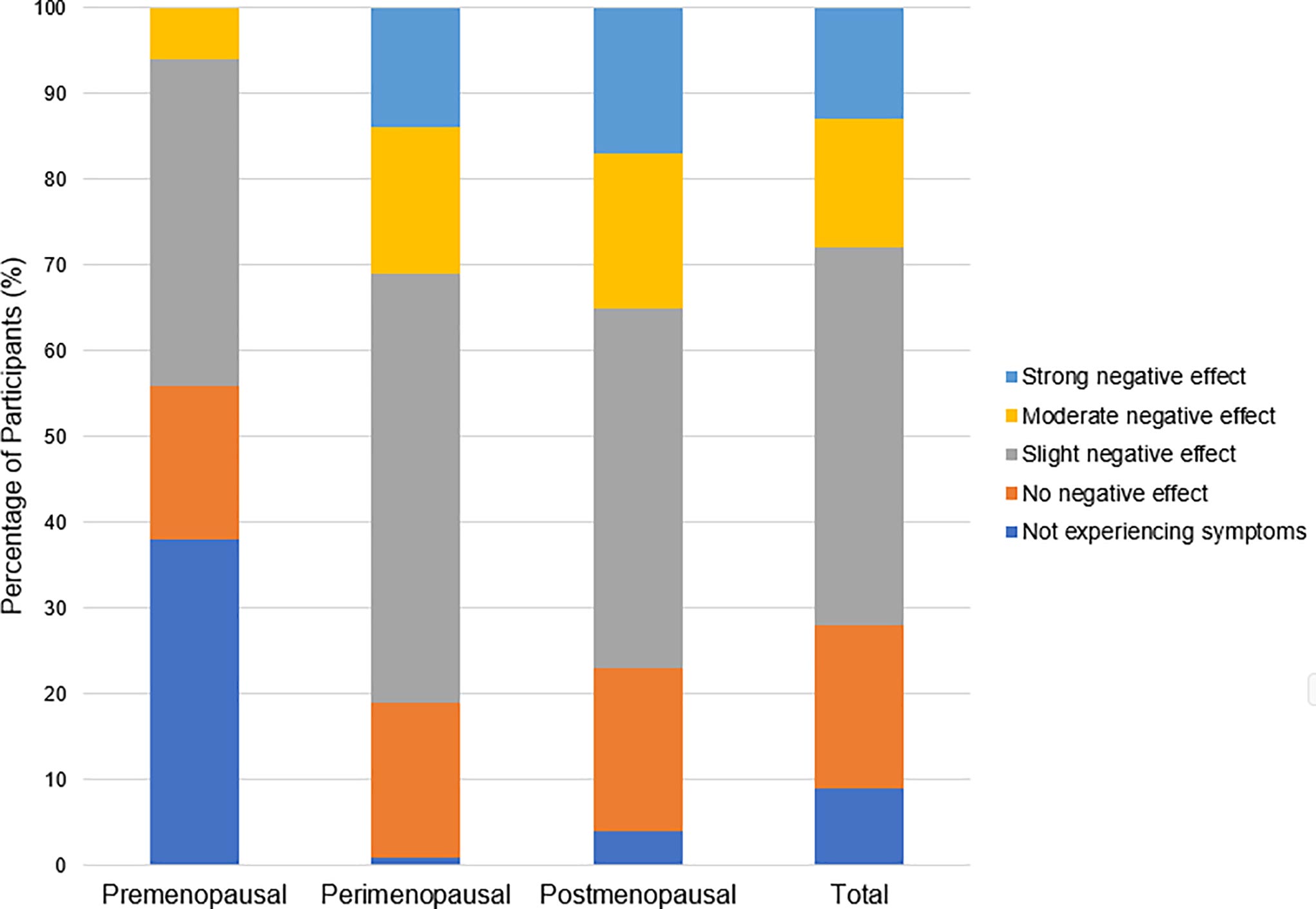
Overall, athletes with more severe symptoms were more likely to report substantial setbacks, with about one-third saying menopause had a moderate or strong negative effect on training and roughly one-quarter reporting a negative effect on performance.
Study Limitations and Broader Implications
The authors note that the study’s cross-sectional design and lack of detailed demographic data limit how widely the findings can be applied to other groups. Still, they conclude that menopause symptoms are highly prevalent among female endurance athletes, and that symptom severity appears similar to levels seen in the general population. Even with high levels of physical activity, the researchers emphasize that healthcare providers should address menopause-related symptoms to help women remain active.
The authors add: “We hope this work brings attention to a growing, yet understudied population that is eager for guidance in how to navigate the menopausal transition while continuing to participate in sport and exercise.”
Reference: “Frequency and perceived influence of menopausal symptoms on training and performance in female endurance athletes” by Heather M. Hamilton, Natalie M. Yarish and Kristin E. Heron, 17 December 2025, PLOS ONE.
DOI: 10.1371/journal.pone.0335738
Never miss a breakthrough: Join the SciTechDaily newsletter.
Follow us on Google and Google News.