
Close Menu
    Facebook X (Twitter) Instagram
    SciTechDaily
    • Biology
    • Chemistry
    • Earth
    • Health
    • Physics
    • Science
    • Space
    • Technology
    Facebook X (Twitter) Pinterest YouTube RSS
    SciTechDaily
    Home»Earth»Exploring Earth From Space: Rovaniemi, Lapland [Video]
    Earth

    Exploring Earth From Space: Rovaniemi, Lapland [Video]

    By European Space AgencyDecember 19, 2020No Comments3 Mins Read
    Facebook Twitter Pinterest Telegram LinkedIn WhatsApp Email Reddit
    Share
    Facebook Twitter LinkedIn Pinterest Telegram Email Reddit
    Rovaniemi Lapland
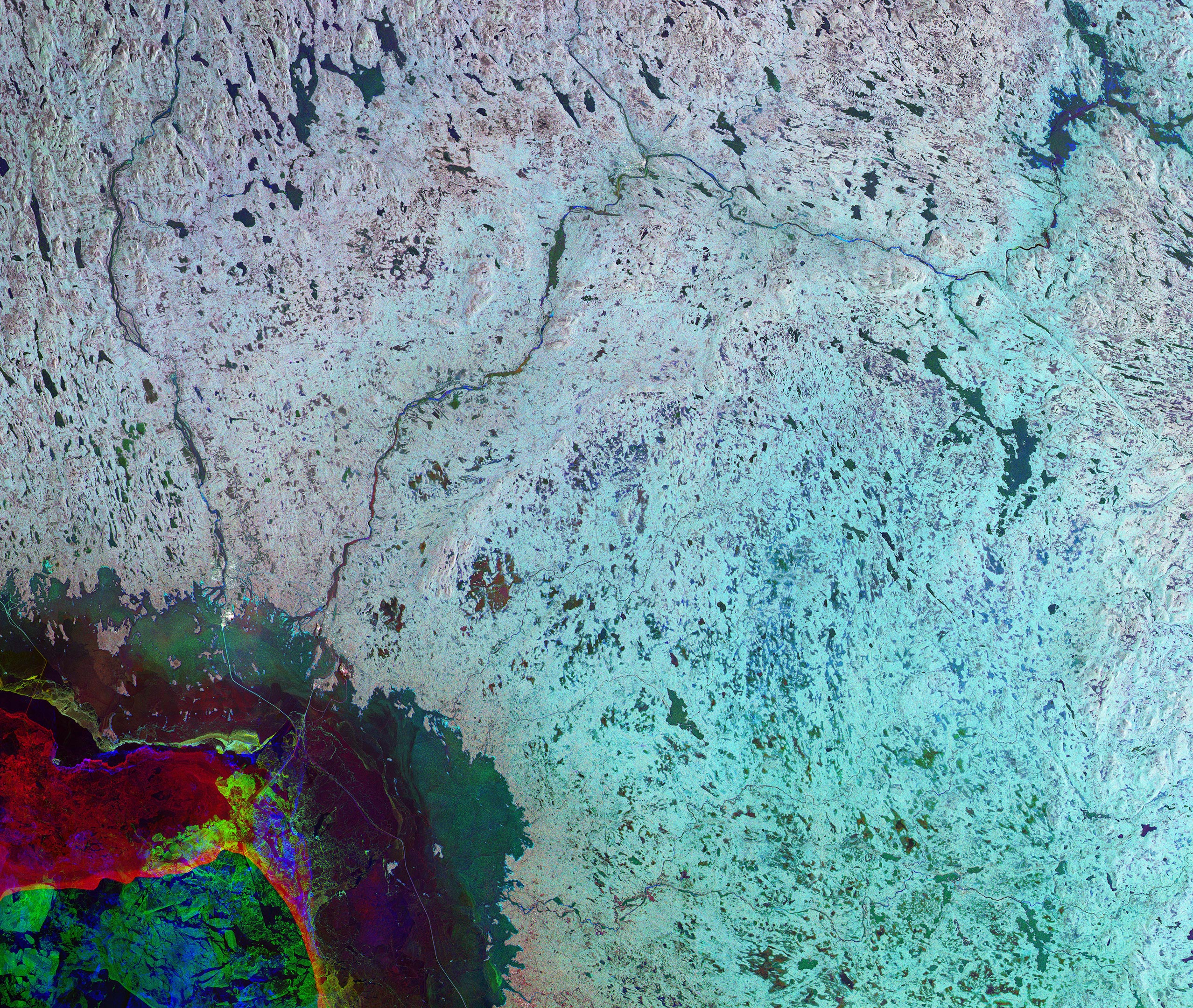
    This satellite image of Lapland combines three radar acquisitions from the Copernicus Sentinel-1 mission to show changes in land conditions over time. The first image from February 28, 2019, is associated with green, the second from March 11, 2019, is linked to red, and the third from April 4, 2019, depicts changes in blue. Credit: Contains modified Copernicus Sentinel data (2019), processed by ESA, CC BY-SA 3.0 IGO

    The Copernicus Sentinel-1 mission takes us over Lapland, the largest and northernmost region of Finland, just in time for Christmas.

    Located within the Arctic Circle, Lapland, also called Sápmi by the Sami people, stretches across northern Norway, Sweden and Finland, and into the Kola Peninsula of Russia. It is bound by the Norwegian Sea on the west, the Barents Sea on the north, and the White Sea to the east.

    Lapland during the winter months means snowfall, temperatures well below zero degrees and the Northern Lights, or the Aurora Borealis, lighting up the dark, night skies. Rovaniemi, the capital of Lapland, lies at the top of the image, and is considered the official hometown of Santa Claus.

    In Rovaniemi, the Arctic Circle runs through Santa Claus Village, located eight kilometers north of the city center. The Arctic Circle marks the southernmost latitude where the sun can stay continuously below or above the horizon for 24 hours – these phenomena are known as the Midnight Sun in the summer and the Polar Night in the winter.

    This image combines three radar acquisitions from the Copernicus Sentinel-1 mission to show changes in land conditions over time. The first image from February 28, 2019, is associated with green, the second from March 11, 2019, is linked to red, and the third from April 4, 2019, depicts changes in blue.

    The changes that took place over time in this image are largely seen in the bottom-left of the image, where sea ice in the Gulf of Bothnia has shifted substantially along the coast. The Gulf of Bothnia,  the northernmost arm of the Baltic Sea, is situated between Finland’s west coast and Sweden’s east coast. As it receives the water of so many rivers, including the Torne and Kemijoki rivers visible in the image, its salinity is extremely low, and ice cover is maintained for up to five months during the winter.

    There are many small islands, making navigation in the gulf difficult. For this reason, vessels traveling in the gulf receive icebreaker assistance on their journey in the ice-covered waters, and follow the straight lines easing their navigation. Straight lines can be seen coming from the Port of Röyttä and the Port of Ajos.

    As an advanced radar mission, Copernicus Sentinel-1 can image the surface of Earth through cloud and rain and regardless of whether it is day or night – making it an ideal mission to monitor areas often shrouded in darkness like the polar regions.

    Never miss a breakthrough: Join the SciTechDaily newsletter.
    Follow us on Google and Google News.

    Arctic European Space Agency Geography
    Share. Facebook Twitter Pinterest LinkedIn Email Reddit

    Related Articles

    Earth From Space: Magnificent Canadian Arctic Archipelago

    Flevoland, Netherlands From Space: One of the Largest Land Reclamation Projects in the World

    International Scientists on Red Alert As Arctic Grows Greener

    Earth From Space: Lake George, Uganda – A Center for Biological Diversity [Video]

    Deforestation in Bolivia Spied From Space Satellite

    Earth From Space: Japanese Archipelago [Video]

    Earth From Space: Faroe Islands [Video]

    Earth From Space: Tromsø, Norway [Video]

    Cryosat Mission Took Detailed Data of Polar Ice Caps

    Leave A Reply Cancel Reply

    • Facebook
    • Twitter
    • Pinterest
    • YouTube

    Don't Miss a Discovery

    Subscribe for the Latest in Science & Tech!

    Trending News

    First-of-Its-Kind Discovery: Homer’s Iliad Found Embedded in a 1,600-Year-Old Egyptian Mummy

    Beyond Inflammation: Scientists Uncover New Cause of Persistent Rheumatoid Arthritis

    A Simple Molecule Could Unlock Safer, Easier Weight Loss

    Scientists Just Built a Quantum Battery That Charges Almost Instantly

    Researchers Unveil Groundbreaking Sustainable Solution to Vitamin B12 Deficiency

    Millions of People Have Osteopenia Without Realizing It – Here’s What You Need To Know

    Researchers Discover Boosting a Single Protein Helps the Brain Fight Alzheimer’s

    World-First Study Reveals Human Hearts Can Regenerate After a Heart Attack

    Follow SciTechDaily
    • Facebook
    • Twitter
    • YouTube
    • Pinterest
    • Newsletter
    • RSS
    SciTech News
    • Biology News
    • Chemistry News
    • Earth News
    • Health News
    • Physics News
    • Science News
    • Space News
    • Technology News
    Recent Posts
    • After Decades, MIT Researchers Capture the First 3D Atomic View of a Mysterious Material
    • Your Favorite Fishing Spot Is Turning Brown – and the Fish Are Changing
    • 380-Million-Year-Old Fish Fossil Reveals Secrets of Life’s First Steps Onto Land
    • Mezcal “Worm” in a Bottle Mystery: DNA Testing Reveals a Surprise
    • Scientists Turn Red Lettuce Green, Unlocking Hidden Nutrients
    Copyright © 1998 - 2026 SciTechDaily. All Rights Reserved.
    • Science News
    • About
    • Contact
    • Editorial Board
    • Privacy Policy
    • Terms of Use

    Type above and press Enter to search. Press Esc to cancel.