
Close Menu
    Facebook X (Twitter) Instagram
    SciTechDaily
    • Biology
    • Chemistry
    • Earth
    • Health
    • Physics
    • Science
    • Space
    • Technology
    Facebook X (Twitter) Pinterest YouTube RSS
    SciTechDaily
    Home»Health»FDA-Approved Drug Halts Immune Reactions To Save Damaged Lungs – May Treat Severe COVID-19
    Health

    FDA-Approved Drug Halts Immune Reactions To Save Damaged Lungs – May Treat Severe COVID-19

    By Cold Spring Harbor LaboratoryFebruary 8, 20221 Comment4 Mins Read
    Facebook Twitter Pinterest Telegram LinkedIn WhatsApp Email Reddit
    Share
    Facebook Twitter LinkedIn Pinterest Telegram Email Reddit
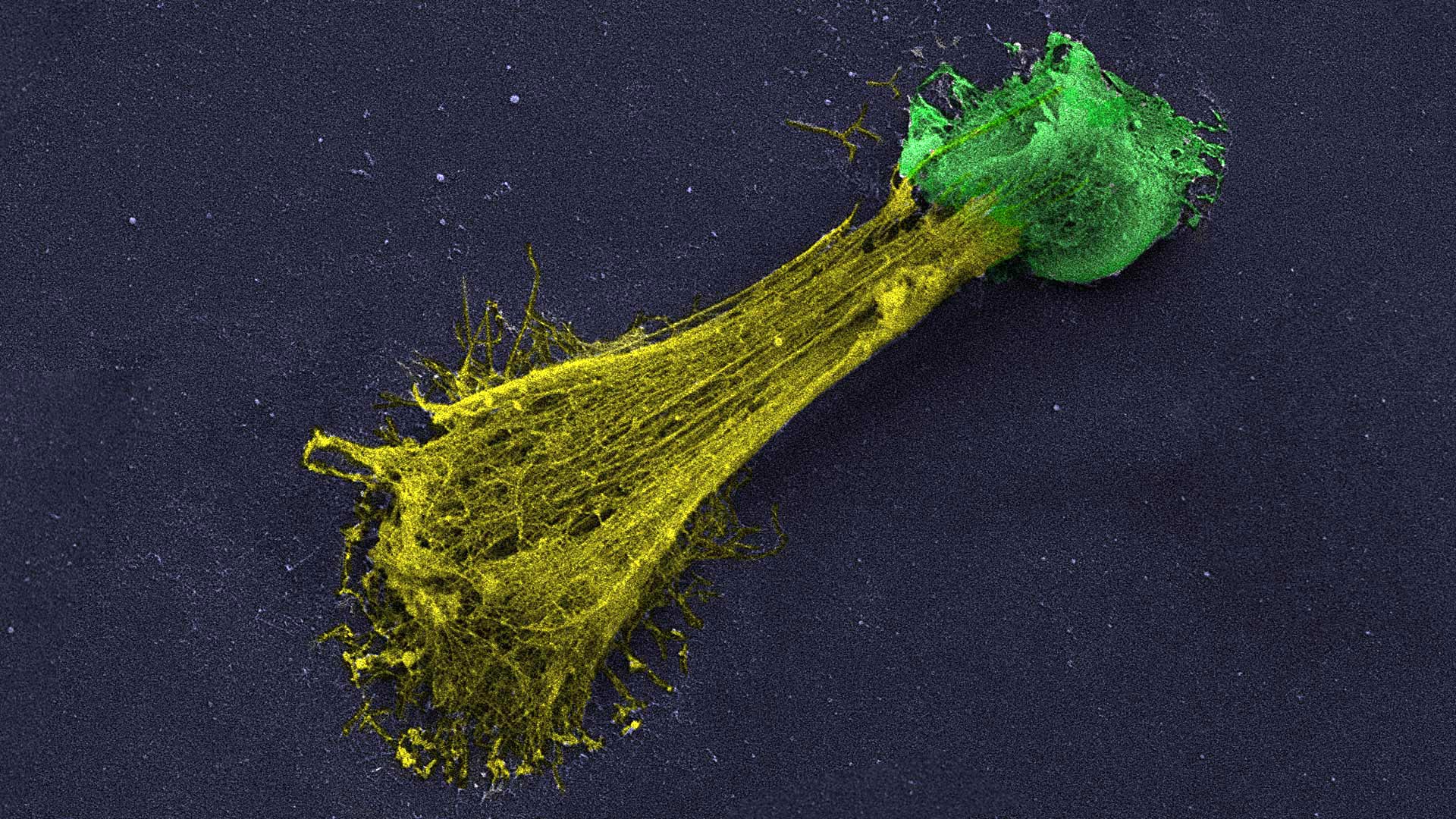
    Neutrophil Extracellular Trap (NET)
    A high resolution microscopic image of a neutrophil extracellular trap (NET). Neutrophils (colored green) are white blood cells that help the immune system fight off invaders. Neutrophils can commit suicide and spill out DNA and chemical signals into a sticky network of filaments (colored yellow). These networks or NETs can recruit additional neutrophils. Having too many neutrophils can lead to tissue damage. Credit: Jose M. Adrover/Egeblad lab/CSHL, 2022

    Cold Spring Harbor Laboratory scientists have found that disulfiram, traditionally used for treating alcoholism, can inhibit the production of neutrophil extracellular traps (NETs), potentially aiding in the treatment of severe respiratory diseases like COVID-19 by reducing lung damage.

    A team of scientists led by Cold Spring Harbor Laboratory (CSHL) have discovered that disulfiram, an FDA-approved drug, prevents the immune system from producing toxic webs known as neutrophil extracellular traps (NETs). Many scientists suspect NETs help drive the development of acute respiratory distress syndrome (ARDS) in patients with severe COVID-19 and other life-threatening lung injuries.

    Jose M. Adrover, a postdoctoral fellow in CSHL Professor Mikala Egeblad’s lab, explains that NETs are usually released during infections when immune cells, called neutrophils, confront a threat that is too large for the tiny cells to battle directly. To extend their reach, neutrophils spew a sticky web of DNA and toxins, which indiscriminately poisons pathogens and the body’s own cells. “They will damage everything, all around,” Adrover says.

    Because NETs can be so destructive, researchers in Egeblad’s lab have been searching for ways to block their formation. Disulfiram, which has been used since the 1950s as a treatment for alcohol use disorders, was a promising candidate. “Disulfiram interferes with gasdermin D, a molecule needed to produce NETs”, says Juliane Daßler-Plenker, a postdoctoral fellow in Egeblad’s lab.

    The team that included Weill Cornell Medicine (WCM), and Icahn School of Medicine at Mount Sinai (Mt. Sinai) investigated disulfiram’s effects on NET production. They found that the drug prevents neutrophils isolated from blood from generating NETs. Then, they gave disulfiram to mice with acute lung injuries: “By computerized tomography [CT scan], we saw a stark reduction of edema [fluid] in the lungs, and the drug dramatically improved survival,” says Scott Lyons, head of Animal Imaging at CSHL. Robert Schwartz’s team (WCM) and Benjamin tenOever’s team (Mt. Sinai) tested disulfiram in hamsters infected with the SARS-CoV-2 virus; NET production was blocked and lung injury was reduced.

    Disulfiram is the first FDA-approved drug that can block NET formation. In this study, Egeblad’s team dissects the drug’s ability to block NETs and change immune signaling in a way that may be beneficial for treating severe COVID-19. Their results are reported in JCI Insight.

    Clinical trials investigating disulfiram’s use in patients with symptomatic COVID-19 are underway, and while CSHL scientists are not involved in those studies, Egeblad says, “Our findings provide a reason to hope that disulfiram may be a useful treatment. We will continue exploring the drug’s potential in a variety of conditions. Just as important, we now have a tool to help us study the complex roles of NETs in lung injury, cancer, and other diseases that involve NETs.”

    Reference: “Disulfiram inhibits neutrophil extracellular trap formation protecting rodents from acute lung injury and SARS-CoV-2 infection” by Jose M. Adrover, Lucia Carrau, Juliane Daßler-Plenker, Yaron Bram, Vasuretha Chandar, Sean Houghton, David Redmond, Joseph R. Merrill, Margaret Shevik, Benjamin R. tenOever, Scott K. Lyons, Robert E. Schwartz and Mikala Egeblad, 8 February 2022, JCI Insight.
    DOI: 10.1172/jci.insight.157342

    Funding: Dr. Marcia Kramer Mayer, William C. and Joyce C. O’Neil Charitable Trust, CSHL Cancer Center, NIH/National Institute of General Medical Sciences, NIH/National Cancer Institute, NIH/National Institute of Diabetes and Digestive and Kidney Diseases, Department of Medicine, Weill Cornell Medicine, Irma Hirschl Trust Research Award.

    Never miss a breakthrough: Join the SciTechDaily newsletter.
    Follow us on Google and Google News.

    Cold Spring Harbor Laboratory COVID-19 Immunology Infectious Diseases Lungs Popular
    Share. Facebook Twitter Pinterest LinkedIn Email Reddit

    Related Articles

    Why Aging Lungs Turn Mild Infections Into Life-Threatening Illness

    Small Neutralizing Antibody Identified That May Prevent COVID-19 Infection

    Researchers Find Early Spread of COVID-19 Was Far Greater Than Reported

    Immune-System Paralyzed in Severe COVID-19 Cases

    Research Shows Exposure to Common Cold Coronaviruses Can Teach the Immune System to Recognize SARS-CoV-2

    Ancient Part of Immune System May Underpin Severe COVID-19 – Key May Be in Your Eyes

    Scientists Uncover Evidence That a Level of Pre-Existing COVID-19 / SARS-CoV-2 Immunity Is Present in the General Population

    Common Molecular Feature of Antibodies That Neutralize SARS-CoV-2 Discovered, Boosting COVID-19 Vaccine Prospects

    New Study Outlines a Roadmap for Effective Treatment of COVID-19

    1 Comment

    1. thomas w west on February 23, 2022 5:45 am

      This article is not true. The FDA approved drug Fostamatinib was shown to completely prevent NETosis in an NIH study last year!

      Reply
    Leave A Reply Cancel Reply

    • Facebook
    • Twitter
    • Pinterest
    • YouTube

    Don't Miss a Discovery

    Subscribe for the Latest in Science & Tech!

    Trending News

    Researchers Have Found a Dietary Compound That Increases Longevity

    Scientists Baffled by Bizarre “Living Fossil” From 275 Million Years Ago

    Your IQ at 23 Could Predict Your Wealth at 27, Study Finds

    320 Light-Years Away, a Planet Confirms a Fundamental Cosmic Assumption

    The Crown Jewel of Dentistry? Breakthrough Tech Could Transform Tooth Repair

    Python Blood Could Hold the Secret to Weight Loss Without Side Effects

    Naturally Occurring Bacteria Completely Eradicate Tumors in Mice With a Single Dose

    New “Nanozyme Hypothesis” Could Rewrite the Story of Life’s Origins

    Follow SciTechDaily
    • Facebook
    • Twitter
    • YouTube
    • Pinterest
    • Newsletter
    • RSS
    SciTech News
    • Biology News
    • Chemistry News
    • Earth News
    • Health News
    • Physics News
    • Science News
    • Space News
    • Technology News
    Recent Posts
    • 34-Million-Year-Old Snake Found in Wyoming Rewrites Our Understanding of Evolution
    • Prehistoric “Vomit Fossil” Reveals Never-Before-Seen Flying Reptile
    • Scientists Discover Bizarre Crocodile Relative That Walked on Two Legs
    • How Quantum Mechanics Went From Baffling Theory to Revolutionizing Modern Technology
    • Scientists May Have Found the Key to Jupiter and Saturn’s Moon Mystery
    Copyright © 1998 - 2026 SciTechDaily. All Rights Reserved.
    • Science News
    • About
    • Contact
    • Editorial Board
    • Privacy Policy
    • Terms of Use

    Type above and press Enter to search. Press Esc to cancel.