

Close Menu
    Facebook X (Twitter) Instagram
    SciTechDaily
    • Biology
    • Chemistry
    • Earth
    • Health
    • Physics
    • Science
    • Space
    • Technology
    Facebook X (Twitter) Pinterest YouTube RSS
    SciTechDaily
    Home»Chemistry»Feeding the Future: Artificial Photosynthesis Transforms CO2 Into Food
    Chemistry

    Feeding the Future: Artificial Photosynthesis Transforms CO2 Into Food

    By Technical University of Munich (TUM)May 1, 20233 Comments3 Mins Read
    Facebook Twitter Pinterest Telegram LinkedIn WhatsApp Email Reddit
    Share
    Facebook Twitter LinkedIn Pinterest Telegram Email Reddit
    Abstract Photosynthesis Concept
    Researchers at the Technical University of Munich have developed a sustainable method to create the essential amino acid L-alanine from CO2. This process uses artificial photosynthesis, converting CO2 to methanol and then to L-alanine. This new method requires less space than traditional agriculture, highlighting the potential of combining bioeconomy and hydrogen economy for a more sustainable future.

    Researchers Produce Important Amino Acid From Greenhouse Gas CO2

    • Growing demand for food in the world
    • Biotechnological process via methanol as intermediate product
    • Less ground required than for plant cultivation

    Ensuring the supply of food to the constantly growing world population and protecting the environment at the same time are often conflicting objectives. Now researchers at the Technical University of Munich (TUM) have successfully developed a method for the synthetic manufacture of nutritional protein using a type of artificial photosynthesis. The animal feed industry is the primary driver of high demand for large volumes of nutritional protein, which is also suitable for use in meat substitute products.

    A group led by Prof. Volker Sieber at the TUM Campus Straubing for Biotechnology and Sustainability (TUMCS) has succeeded in producing the amino acid L-alanine, an essential building block in proteins, from the environmentally harmful gas CO2. Their indirect biotechnological process involves methanol as an intermediate. Until now, protein for animal feed has been typically produced in the southern hemisphere with large-scale agricultural space requirements and negative consequences for biodiversity.
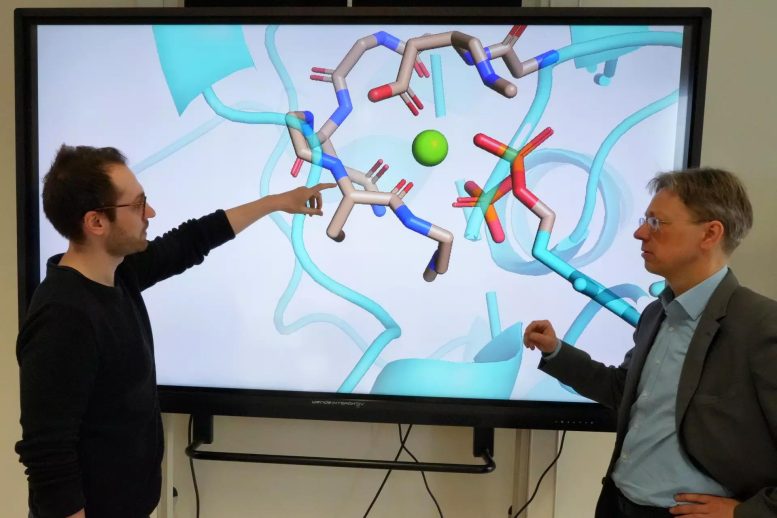
    Vivian Willers and Volker Sieber
    Artificial photosynthesis for environmentally friendly food production, from left: PhD student Vivian Willers und Prof. Volker Sieber. Credit: Otto Zellmer / TUM

    The CO2, which is removed from the atmosphere, is first turned into methanol using green electricity and hydrogen. The new method converts this intermediate into L-alanine in a multi-stage process using synthetic enzymes; the method is extremely effective and generates very high yields. L-alanine is one of the most important components of protein, which is essential to the nutrition of both humans and animals.

    Prof. Sieber, of the TUM Professorship for Chemistry of Biogenic Resources, explains: “Compared to growing plants, this method requires far less space to create the same amount of L-alanine, when the energy used comes from solar or wind power sources. The more efficient use of space means a kind of artificial photosynthesis can be used to produce the same amount of foodstuffs on significantly fewer acres. This paves the way for a smaller ecological footprint in agriculture.”

    Bioeconomy and Hydrogen Economy in Combination

    The manufacture of L-alanine is only the first step for the scientists. “We also want to produce other amino acids from CO2 using renewable energy and to further increase efficiency in the realization process,” says co-author Vivian Willers, who developed the process as a doctoral candidate at the TUM Campus Straubing. The researchers add that the project is a good example of how bioeconomy and hydrogen economy in combination can make it possible to achieve more sustainability.

    Reference: “Cell-free enzymatic L-alanine synthesis from green methanol” by Vivian Pascal Willers, Manuel Döring, Barbara Beer and Volker Sieber, 23 January 2023, Chem Catalysis.
    DOI: 10.1016/j.checat.2022.100502

    Never miss a breakthrough: Join the SciTechDaily newsletter.
    Follow us on Google and Google News.

    Catalysts Greenhouse Gas Photosynthesis Popular Technical University of Munich
    Share. Facebook Twitter Pinterest LinkedIn Email Reddit

    Related Articles

    New Catalysts Turn the Greenhouse Gas Methane Into Valuable Chemicals

    New Solar Technology Converts Greenhouse Gases Into Valuable Fuel

    More Efficient Than Natural Photosynthesis – New Photocatalytic System Converts Carbon Dioxide Into Valuable Fuel

    Extraordinary Discovery May Substantially Change Our Understanding of the Mechanism of Photosynthesis

    New “Artificial Photosynthesis” System Produces Methane With 10x Efficiency

    A Dirt Cheap Climate Change Solution? Common Clay Materials May Help Curb Methane Emissions

    Light-Powered Catalyst Mimics Photosynthesis To Improve the Yield of Reactions

    Artificial Photosynthesis Promises Clean, Sustainable Source of Energy

    Working to Recycle Greenhouse Gases

    3 Comments

    1. David smith on May 3, 2023 4:07 am

      Wow!
      How about we just let the plants do it?

      Reply
    2. Cyril E. Broderick, Sr. on May 4, 2023 9:11 am

      Excellent. The discovery is significant, especially when implemented. I will love to work with them. Thanks.

      Cyril E. Broderick, Sr.

      Reply
    3. [email protected] on May 8, 2023 5:21 pm

      Didnt the Chiese do something similar 2 years ago?

      Sept 24, 2021
      The world top academic journal Science published a major breakthrough in the artificial starch synthesis made by a research institute of the Chinese Academy of Sciences (CAS). The research is the first time in the world to achieve synthesis of starch from carbon dioxide. Scientists believe it will have a revolutionary impact on future agricultural production and bio-manufacturing.

      Reply
    Leave A Reply Cancel Reply

    • Facebook
    • Twitter
    • Pinterest
    • YouTube

    Don't Miss a Discovery

    Subscribe for the Latest in Science & Tech!

    Trending News

    Beyond Pain Relief: Scientists Discover a Protein That Could Stop Osteoarthritis in Its Tracks

    Scientists Discover Why Alcohol Prevents the Liver From Healing, Even After You Quit

    Scientists Stunned As Volcano Removes Methane From the Air

    Scientists Discover Signs Africa May Be Splitting Apart Beneath Zambia

    Common Blood Pressure Drug Supercharges Cancer Treatment in Surprising New Study

    540-Million-Year-Old Fossils Reveal a Huge Surprise About Early Life on Earth

    Scientists Reverse Stroke Damage Using Stem Cells in Breakthrough Study

    Eating One Egg a Day Could Cut Alzheimer’s Risk by 27%

    Follow SciTechDaily
    • Facebook
    • Twitter
    • YouTube
    • Pinterest
    • Newsletter
    • RSS
    SciTech News
    • Biology News
    • Chemistry News
    • Earth News
    • Health News
    • Physics News
    • Science News
    • Space News
    • Technology News
    Recent Posts
    • Scientists Uncover Hidden Biological Differences Between Men and Women’s Immune Systems
    • Scientists Challenge a Long-Held Belief About Why Human Childbirth Is So Difficult
    • Too Much Sleep May Age Your Body Faster, New Study Warns
    • Scientists Uncover Promising New Strategy To Stop Parkinson’s in Its Tracks
    • New Study Reveals How Vitamin D Could Calm Gut Inflammation
    Copyright © 1998 - 2026 SciTechDaily. All Rights Reserved.
    • Science News
    • About
    • Contact
    • Editorial Board
    • Privacy Policy
    • Terms of Use

    Type above and press Enter to search. Press Esc to cancel.