
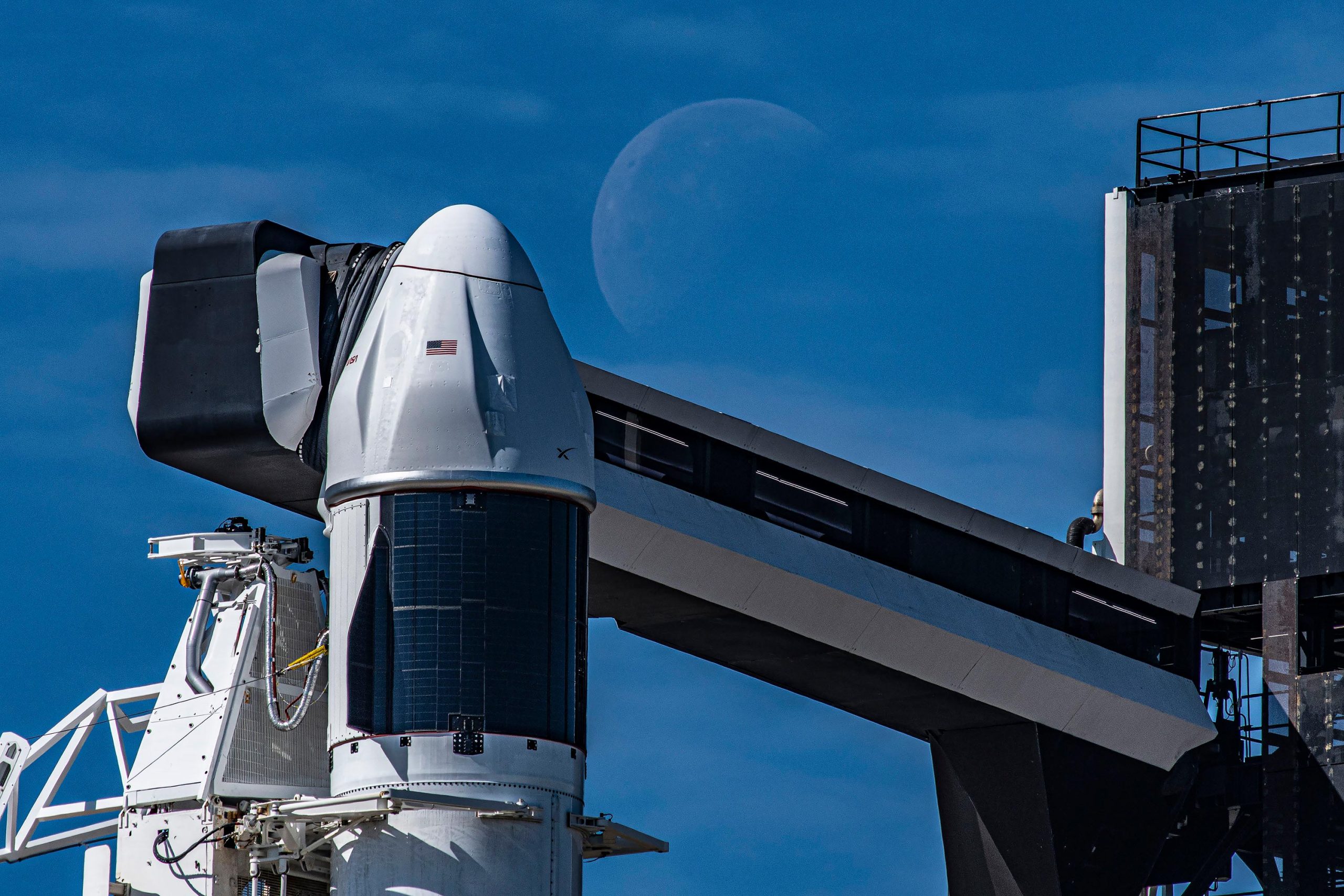
NASA’s SpaceX CRS-31 mission to the ISS includes studies on in-space manufacturing, cardiac health, and a method to repair spacecraft damaged by debris.
More than 25 payloads sponsored by the International Space Station (ISS) National Laboratory, including technology demonstrations, in-space manufacturing, student experiments, and multiple projects funded by the U.S. National Science Foundation (NSF), are set to reach the ISS. These investigations, launching aboard SpaceX’s 31st Commercial Resupply Services (CRS) mission for NASA, aim to advance life on Earth through innovative space-based research and to support a sustainable economy in low Earth orbit (LEO)—the region around Earth extending up to 2,000 km (1,200 miles) in altitude. The ISS itself orbits within LEO at roughly 250 miles above Earth.
The mission is scheduled to launch no earlier than Monday, November 4 at 9:29 p.m. EST from Launch Complex 39A at NASA’s Kennedy Space Center. Below are some of the ISS National Lab-sponsored projects on this mission.
- Bristol Myers Squibb (BMS) will build on its legacy of protein crystallization on the space station with a project, in collaboration with ISS National Lab Commercial Service ProviderImplementation Partners that own and operate commercial facilities for the support of research on the ISS or are developing future facilities. Redwire Space, seeking to crystallize model small molecule compounds to support the manufacturing of more effective therapeutics. Crystals grown in microgravityThe condition of perceived weightlessness created when an object is in free fall, for example when an object is in orbital motion. Microgravity alters many observable phenomena within the physical and life sciences, allowing scientists to study things in ways not possible on Earth. The International Space Station provides access to a persistent microgravity environment. are often larger and more well-ordered than those grown on the ground and could have improved morphology (geometric shape).
- NSF is funding four investigations launching on this mission, including a collaborative project from Oregon State University and Texas Tech University focused on cardiac health. This experiment will use 3D-bioprinted cardiac organoids to study microgravity-induced heart muscle atrophy. Results could lead to an increased understanding of heart muscle atrophy, which occurs in several conditions, such as cancer, muscle disease, muscular dystrophy, diabetes, sepsis, and heart failure.
- Multiple projects sponsored by the ISS National Lab and funded by NASA focus on in-space manufacturing. One investigation by Sachi Bioworks, working with ISS National Lab Commercial Service Provider Space Tango, could help advance the development of new therapeutics for neurodegenerative conditions. The project will use brain organoids in microgravity to test the effects of a novel drug on Alzheimer’s disease, Parkinson’s disease, and dementia.
- The Malta College of Arts, Science, and Technology is launching a project, with support from ISS National Lab Commercial Service Provider Voyager Space, to test a heatless method of welding. Cold welding is a process that bonds similar metallic materials using force or pressure instead of heat. This method could one day be used to safely repair space platforms and ensure their long-term viability, which would help to address the growing concern of space debris. In this project, the research team will test remote-operated, cold welding to apply metal patches to simulated spacecraft hull samples.
- The Student Spaceflight Experiment Program (SSEP) will send 39 student-led experiments on its 18th mission to the space station. SSEP aims to prepare the next generation of scientists and engineers by actively involving school communities in the development of scientific investigations to be conducted in microgravity. More than 35 communities took part in this SSEP mission, engaging hundreds of students in grades 5-12, junior college, and undergraduate studies.
Never miss a breakthrough: Join the SciTechDaily newsletter.
Follow us on Google and Google News.