
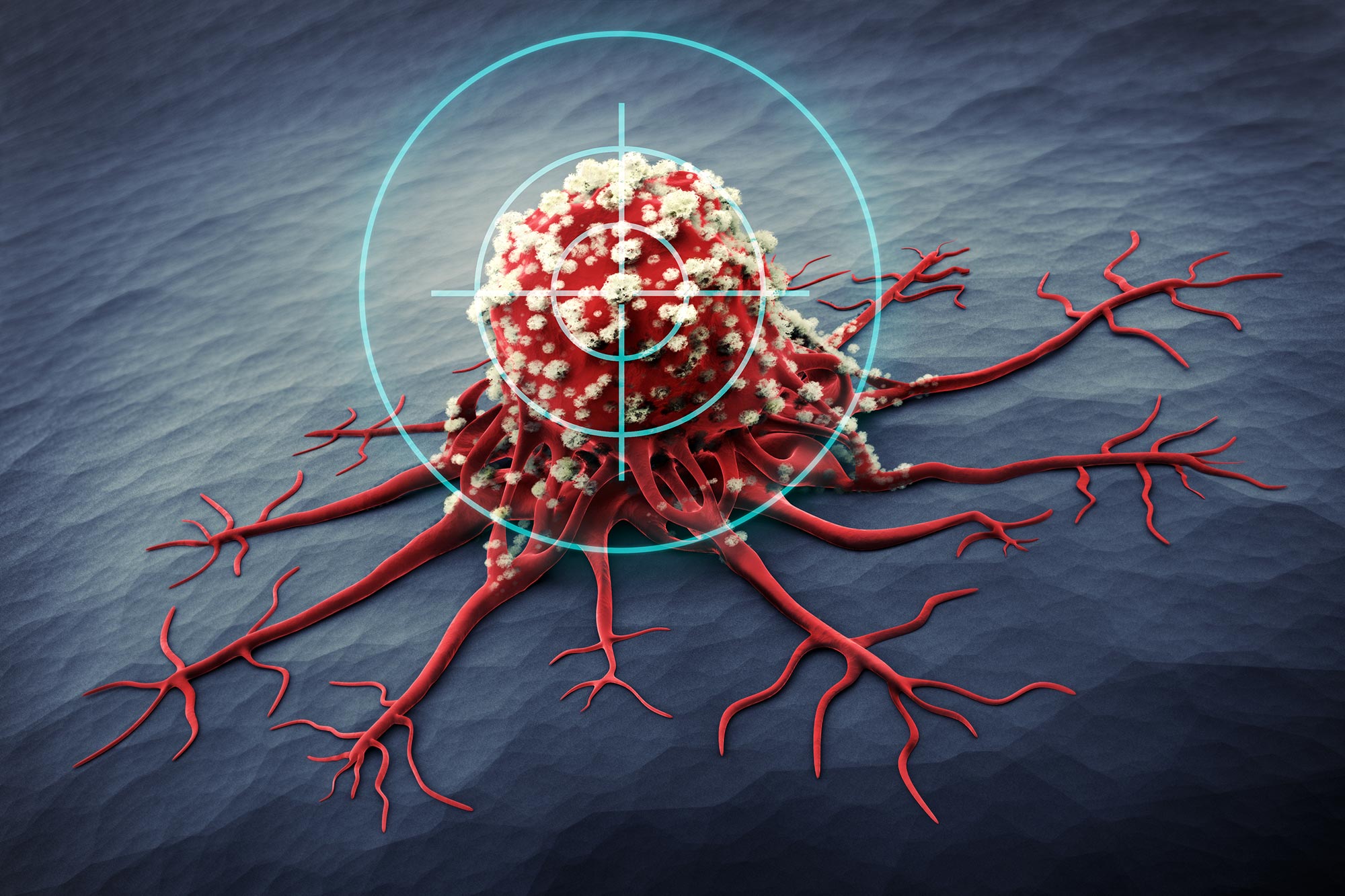
Combining phototherapy with chemotherapy may provide a more powerful approach to combat aggressive tumors effectively.
Patients with late-stage cancer often have to endure multiple rounds of different types of treatment, which can cause unwanted side effects and may not always help.
In hopes of expanding the treatment options for those patients, MIT researchers have designed tiny particles that can be implanted at a tumor site, where they deliver two types of therapy: heat and chemotherapy.
This approach could avoid the side effects that often occur when chemotherapy is given intravenously, and the synergistic effect of the two therapies may extend the patient’s lifespan longer than giving one treatment at a time. In a study of mice, the researchers showed that this therapy completely eliminated tumors in most of the animals and significantly prolonged their survival.
“One of the examples where this particular technology could be useful is trying to control the growth of really fast-growing tumors,” says Ana Jaklenec, a principal investigator at MIT’s Koch Institute for Integrative Cancer Research. “The goal would be to gain some control over these tumors for patients that don’t really have a lot of options, and this could either prolong their life or at least allow them to have a better quality of life during this period.”
Jaklenec is one of the senior authors of the new study, along with Angela Belcher, the James Mason Crafts Professor of Biological Engineering and Materials Science and Engineering and a member of the Koch Institute, and Robert Langer, an MIT Institute Professor and member of the Koch Institute. Maria Kanelli, a former MIT postdoc, is the lead author of the paper, which appears in the journal ACS Nano.
Dual therapy
Patients with advanced tumors usually undergo a combination of treatments, including chemotherapy, surgery, and radiation. Phototherapy is a newer treatment that involves implanting or injecting particles that are heated with an external laser, raising their temperature enough to kill nearby tumor cells without damaging other tissue.
Current approaches to phototherapy in clinical trials make use of gold nanoparticles, which emit heat when exposed to near-infrared light.
The MIT team wanted to come up with a way to deliver phototherapy and chemotherapy together, which they thought could make the treatment process easier on the patient and might also have synergistic effects. They decided to use an inorganic material called molybdenum sulfide as the phototherapeutic agent. This material converts laser light to heat very efficiently, which means that low-powered lasers can be used.

To create a microparticle that could deliver both of these treatments, the researchers combined molybdenum disulfide nanosheets with either doxorubicin, a hydrophilic drug, or violacein, a hydrophobic drug. To make the particles, molybdenum disulfide and the chemotherapeutic are mixed with a polymer called polycaprolactone and then dried into a film that can be pressed into microparticles of different shapes and sizes.
For this study, the researchers created cubic particles with a width of 200 micrometers. Once injected into a tumor site, the particles remain there throughout the treatment. During each treatment cycle, an external near-infrared laser is used to heat up the particles. This laser can penetrate to a depth of a few millimeters to centimeters, with a local effect on the tissue.
“The advantage of this platform is that it can act on demand in a pulsatile manner,” Kanelli says. “You administer it once through an intratumoral injection, and then using an external laser source you can activate the platform, release the drug, and at the same time achieve thermal ablation of the tumor cells.”
To optimize the treatment protocol, the researchers used machine-learning algorithms to figure out the laser power, irradiation time, and concentration of the phototherapeutic agent that would lead to the best outcomes.
That led them to design a laser treatment cycle that lasts for about three minutes. During that time, the particles are heated to about 50 degrees Celsius, which is hot enough to kill tumor cells. Also at this temperature, the polymer matrix within the particles begins to melt, releasing some of the chemotherapy drug contained within the matrix.
“This machine-learning-optimized laser system really allows us to deploy low-dose, localized chemotherapy by leveraging the deep tissue penetration of near-infrared light for pulsatile, on-demand photothermal therapy. This synergistic effect results in low systemic toxicity compared to conventional chemotherapy regimens,” says Neelkanth Bardhan, a Break Through Cancer research scientist in the Belcher Lab, and second author of the paper.
Eliminating tumors
The researchers tested the microparticle treatment in mice that were injected with an aggressive type of cancer cells from triple-negative breast tumors. Once tumors formed, the researchers implanted about 25 microparticles per tumor, and then performed the laser treatment three times, with three days in between each treatment.
“This is a powerful demonstration of the usefulness of near-infrared-responsive material systems,” says Belcher, who, along with Bardhan, has previously worked on near-infrared imaging systems for diagnostic and treatment applications in ovarian cancer. “Controlling the drug release at timed intervals with light, after just one dose of particle injection, is a game changer for less painful treatment options and can lead to better patient compliance.”
In mice that received this treatment, the tumors were completely eradicated, and the mice lived much longer than those that were given either chemotherapy or phototherapy alone, or no treatment. Mice that underwent all three treatment cycles also fared much better than those that received just one laser treatment.
The polymer used to make the particles is biocompatible and has already been FDA-approved for medical devices. The researchers now hope to test the particles in larger animal models, with the goal of eventually evaluating them in clinical trials. They expect that this treatment could be useful for any type of solid tumor, including metastatic tumors.
Reference: “A Machine Learning-Optimized System for Pulsatile, Photo- and Chemotherapeutic Treatment Using Near-Infrared Responsive MoS2-Based Microparticles in a Breast Cancer Model” by Maria Kanelli, Neelkanth M. Bardhan, Morteza Sarmadi, Behnaz Eshaghi, Shahad K. Alsaiari, William T. Rothwell, Apurva Pardeshi, Dhruv Varshney, Dominique C. De Fiesta, Howard Mak, Virginia Spanoudaki, Nicole Henning, Ashutosh Kumar, Jooli Han, Angela M. Belcher, Robert Langer and Ana Jaklenec, 27 October 2024, ACS Nano.
DOI: 10.1021/acsnano.4c07843
The research was funded by the Bodossaki Foundation, the Onassis Foundation, a Mazumdar-Shaw International Oncology Fellowship, a National Cancer Institute Fellowship, and the Koch Institute Support (core) Grant from the National Cancer Institute.
Never miss a breakthrough: Join the SciTechDaily newsletter.
Follow us on Google and Google News.
36 Comments
There’s hope..
How much does it cost,I have throat cancer I been through chemo and radiation therapy treatment
They’re just getting ready to do large animal trials. It’s not available for human trials yet. It was published in ACS Nano.
The sooner clinical trials are completed, this technique IA a game changer.
I have stage 4 metastatic crc to the liver,lungs peritoneal,bone,and lymphnodes. I’m 63 years old in 2 more hours and I would do anything to try to be the first person to beat my type of CANCER. As of now I have been given 1to 1 and a half years to live. I stay positive and know I am looking for a miracle. But it is better than being negative all the time. Prayers for all that are fighting the same cancer that I am.
I’m so sorry to hear of what you’re going through. My niece was diagnosed with stomach cancer of the periteneal. On January 2, 2025 she will have surgery to determine where the cancer cells are. On January 9th she will have cyto Resection Hypec surgery. Any internal organs with cancer cells will be removed and heated chemo therapy will be recirculating through her abdominal cavity. It is supposed to prolonged her life. I’m very fearful of her journey and her quality of life not ever being normal. Daniel, I wish you well on your journey. I too pray for a miracle. My niece is 44 with 3 children and her first grandson.
Have you learned about deworming protocols? Ivermectin, turpentine, etc., many have treated their cancer.
Try PICUR , SAMBACUR, MORINGACUR, CAP2020 all FDA Approved …
Propaganda……cure brings no profit to big Mafia pharmaceutical companies and hospitals.
There will never be a cure. They will buy every cure patent. Best you eat organic and no factory food , grow your food.
Miracle workers change our existence
My mom died of Stage 4 lung cancer in 2023. This could have saved or prolonged her life. This is so awesome!
Yeah my mom died also in 2023 of lung cancer. this is Awesome!
Actually…. Cancer Cells require Glucose & Glutamine as fuel for Ancient Fermentation Pathways to make ATP (energy for all cells). Fermentation is very inefficient.
Using a Zero Carbohydrate diet (humans don’t require carbohydrates to live) + “Pulses” of mild Chemotherapy that temporarily suppresses Glutamine fermentation… slowly STARVES all cancer cells…without the terrible sickness of standard Chemotherapy.
Glutamine is an essential Amino Acid that are needed for many essential bodily functions, but short intervals of chemicals that interfere with the fermentation of Glutamine cause virtually no harm unlike all other chemo agents.
See the work of Dr. Seyfried at Boston College (many YouTube Videos are available).
Clinics using this “Starvation” type treatments are getting great results. Some types of cancer “burn” mostly Glucose & a Zero Carb Diet alone can control or reverse the unregulated growth of the cancer cells.
Yet in many cases where patients need to regain weight lost due to disease and treatment they are fed intravenously. This is nothing but glucose which feeds the cancers instead of eliminating them.
The ability to prevent cancer brings profit to big pharma, as having the ability to cure cancer would bring money to them. There are always new people diagnosed and dying from cancer who would need a vaccine or treatment. To say NO cure will be found and used is an insult to those scientists who have made it a sacrificing goal to find a way to help others combat a terrible and death dealing disease.
Yes, it is good to eat organic, yet there are many ways we may get cancer that have nothing to do with our diet.
Scientists of cancer and benign tumours in spleen are still unrecognized diseases which researchers are still asleep ,i can say there is no good way of treating still now. The world has given an attention upon weapons only to overcome nations but zero pract8ce in research.
This should be changed. Governments should fund research activities but they should reward to those who invent new cure . It should not be given for nothing.
Watch Rockefellers speech called the secret covenant on you tube. It was published early 1900’s it explains what he wants to do.
“There will never be a cure.”
Can you provide any evidence to support your negative opinion? I gave up eating inorganic food a long time ago.
Completely Agree!
There will (and may have already been) be a cure.
They will never let it see the light of day. It they will moderate it to keep someone’s cancer at bay (ex: AIDS medications).
These slimeballs let their own kind die before they cut their profits.
You are so right. The best thing to do to stave off and even cure cancer is to eat nothing but vegetables and fruit.
It’s true. There is a man who was diagnosed with stage 4 cancer. He had the surgery to remove a tumor but decided to educate himself and to eat healthy giving his body the fuel to fight the cancer and it did just that! He is cancer free today. There are a few more who beat it. It takes dedication and most people are followers (sheep). They do what they are told or what the majority does. It is possible.
No meat, no processed foods, no sugar. Only veggies and fruit. The food we consume is what is killing us. There are too many people that drink absolutely zero water! WTH?
Need your website so I can read about this !my husband is in stage 4 cancer
They are years away from human trials. Unfortunately! I wish your husband the best. Sorry.
Have you learned about deworming protocols? Ivermectin, turpentine, etc., many have treated their cancer.
Amazing! Thank you all you wonderful scientist and everyone working to help eradicate cancer for patients!!!! 💜💜💜💜💜💜💜. You’re all Angels. Bless you always! It is so sad for humans to suffer. Thank you all. Love, Sharon
This is great to hear, but how can this treatment option be used on GBMs? It said in the study, paper that it is supposed to be able to be used on all solid tumors…wife has been battling brain cancer, GBM for the last 15 months, recurrence & regrowth has started, usual SOC has been mostly ineffective so going holistic/natural route now, blessings to all w/ GBM, cancer of all types…
Regards,
Kyle
[email protected]
Have you tried ivermectin and fenbendazole search Google to see from some people having good results
Have you heard about the ‘placebo effect?”
Cancer patients weigh quality of life vs the type of treatment and the side effects. This seems promising. I have metastatic melanoma. I faired well enough taking opdivo for a year in 2019. I had targeted radiation for two tumors in my lymph nodes, (5 treatments in 12 days), in my thigh and knee this year. The battle is long.
Have you learned about deworming protocols? Ivermectin, turpentine, etc., many have treated their cancer.
Unfortunately – this particular modality has yet to reach Clinical Trial Status. So the best-possible move at this point would be to relentlessly call & write/email the FDA in order to pressure them to place it on the Fast Track.
*Side Note: Would really like to see this one used in conjunction with Immunotherapy Protocols, as well.
My daughter has cervical cancer stage 4 metastatic I would like to know if she can participate in a clinical trial please
Liver cancer and 2 spots on lungs
Dr..Hadiyah-Nicole Green has a proven technology that eradicates cancer in lab animals with lasers and no harmful side effects and could eradicate other forms of diseases. Big Pharma and Cancer non profits know and do not do anything to contribute to her request for funding for clinical trials unless she signs over rights. Did Scitechdaily ever cover this?
Compatssionate use i believe is the term used to secure the treatments from the researchers
Liver and lung cancer
there is hope. Highly recommend reading a book on decision making (my recommendation: the undoing project). If possible, get 2nd opinion, 3rd. Opinion from different doctors. Doctors associated with clinical trials, even academics, research hospitals. Use chatGPT, Gemini to really understand pathology reports. Respectfully, challenge your oncologist. Do not blindly go with thier recommendations. Ask for all the possible treatments available and research using AI. Make sure the best decision is being made for your treatment. Research Histopripsy – FDA approved. Also, look into IRE/nano knife- talk to an interventional radiologist.