
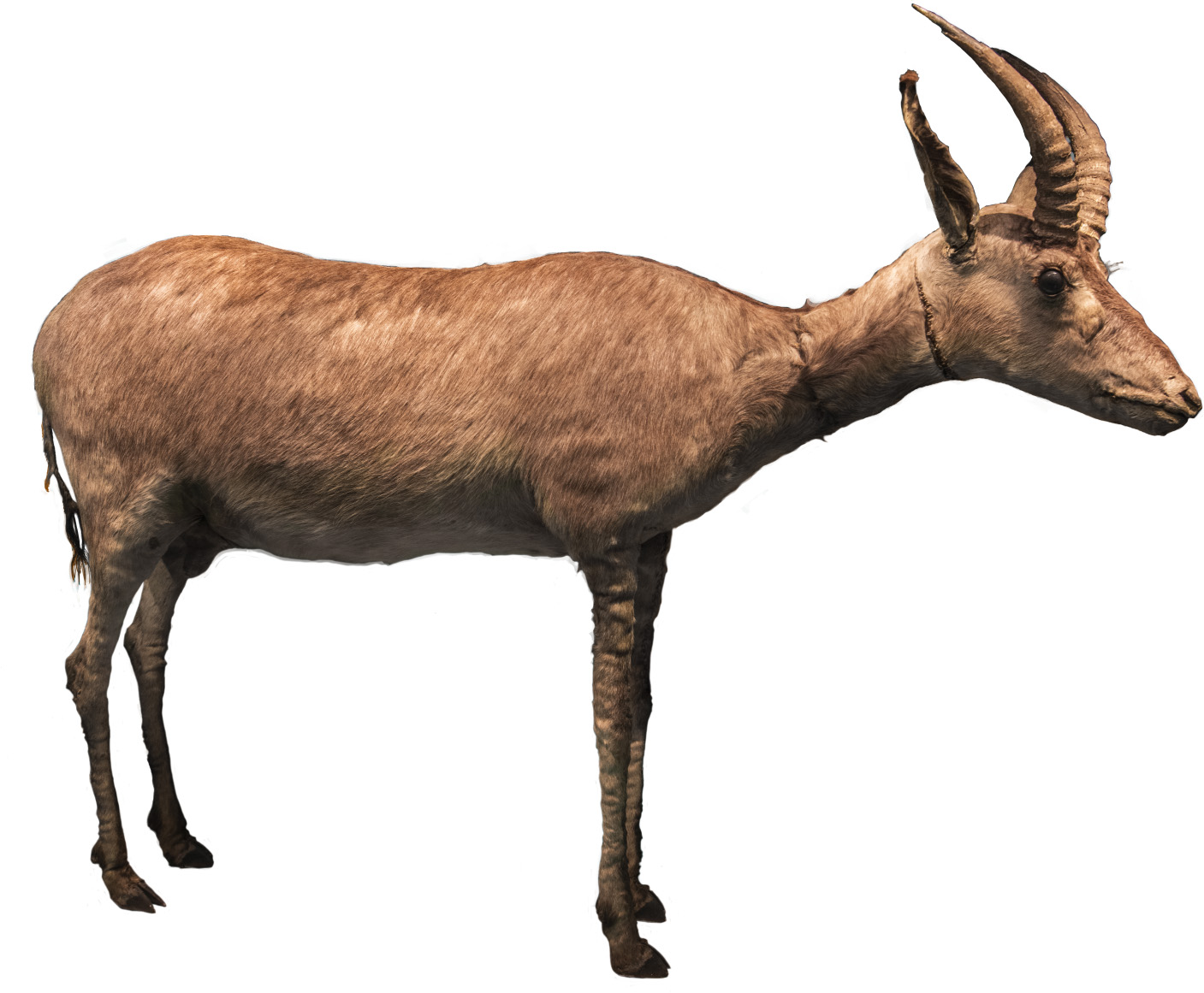
An international team of researchers led by the University of Potsdam has generated and analyzed the first high-coverage nuclear genome of the extinct blue antelope in cooperation with Colossal Biosciences and the Museum of Natural History Berlin. This genomic information provides insights into the evolutionary trajectory and the reasons behind the extinction of this species. The blue antelope holds the distinction of being the only large African mammal to have gone extinct in recent history.
The results of the study, which have now been published in Current Biology, show that the species was probably adapted to a small population size and survived like this for thousands of years. However, this also made them susceptible to sudden impacts like hunting, which increased after European colonization of southern Africa.
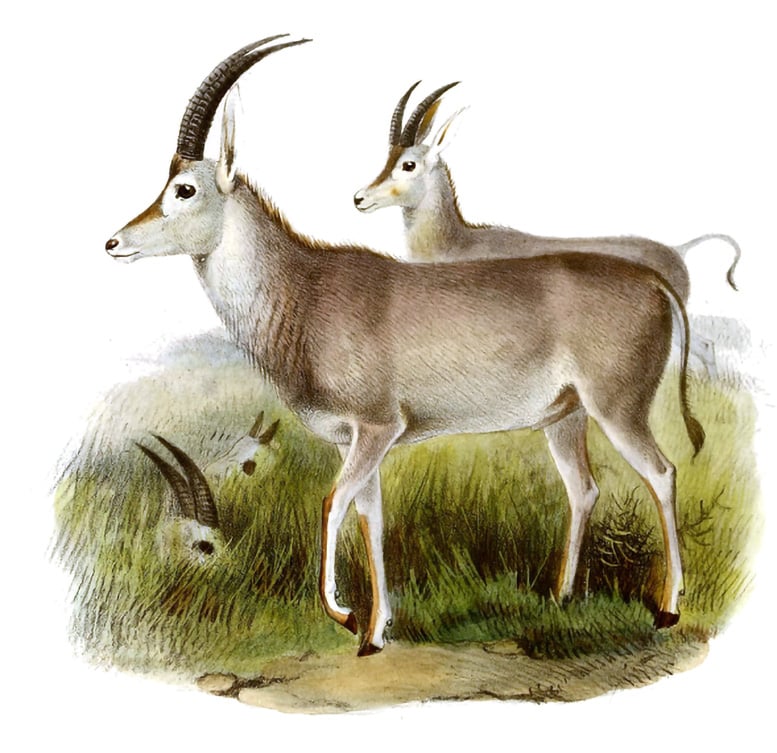
The blue antelope (Hippotragus leucophaeus) was an African antelope with a bluish-gray pelt, related to the sable and the roan antelope. The last blue antelope was shot around 1800, just 34 years after it was first described scientifically.
The research team, which included Potsdam evolutionary biologists led by Prof. Dr. Michael Hofreiter, has now succeeded in obtaining a 40-fold high-coverage genome from a specimen at the Swedish Museum of Natural History. This is one of only five DNA-validated historical museum specimens of the blue antelope.
Low genomic diversity and population size is often considered a disadvantage, as they can lead to a reduction in the fitness and adaptability of a species. “However, the blue antelope had a small population size for many millennia before it became extinct around 1800,” Michael Hofreiter explains. “The fact that no inbreeding and only a few detrimental mutations were detected indicates that the species was adapted to long-term low population size,” adds Elisabeth Hempel, who studied the blue antelope as part of her doctoral thesis at the University of Potsdam and the Museum of Natural History Berlin.
Impact of Environmental Changes
The analysis of the long-term population size also shows that it was not influenced by ice-age climate fluctuations. This is unexpected for a large herbivorous mammal, as these cycles should have led to changes in habitat availability. This result suggests that current models of long-term ecosystem dynamics in the region may need to be refined.
The researchers concluded from their results that species can survive for a long time with a small population size as long as they are not exposed to fast-acting disturbances. Consequently, the sudden human influence during European colonization of southern Africa in the 17th century likely played a central role in the extinction of the species.
In the course of the DNA analyses, two genes were also identified in the genome that could be responsible for the species’ blue pelt color to which the blue antelope owes its name. This was made possible with the help of state-of-the-art computational analysis software from the biotechnology company Colossal Bioscience, with which the researchers collaborated. “As part of Colossal’s ongoing focus on ancient DNA, genotype to phenotype relationships, and ecosystem restoration, we were honored to collaborate on the groundbreaking work of Professor Hofreiter and his team,” said Ben Lamm, co-founder and CEO of Colossal Bioscience. “The research objectives for the project allowed our teams to work together applying some of the latest Colossal ancient DNA and comparative genomic algorithms to learn what truly made the blue antelope the unique species it was.”
Reference: “Colonial-driven extinction of the blue antelope despite genomic adaptation to low population size” by Elisabeth Hempel, J. Tyler Faith, Michaela Preick, Deon de Jager, Scott Barish, Stefanie Hartmann, José H. Grau, Yoshan Moodley, Gregory Gedman, Kathleen Morrill Pirovich, Faysal Bibi, Daniela C. Kalthoff, Sven Bocklandt, Ben Lamm, Love Dalén, Michael V. Westbury and Michael Hofreiter, 12 April 2024, Current Biology.
DOI: 10.1016/j.cub.2024.03.051
Never miss a breakthrough: Join the SciTechDaily newsletter.
Follow us on Google and Google News.