
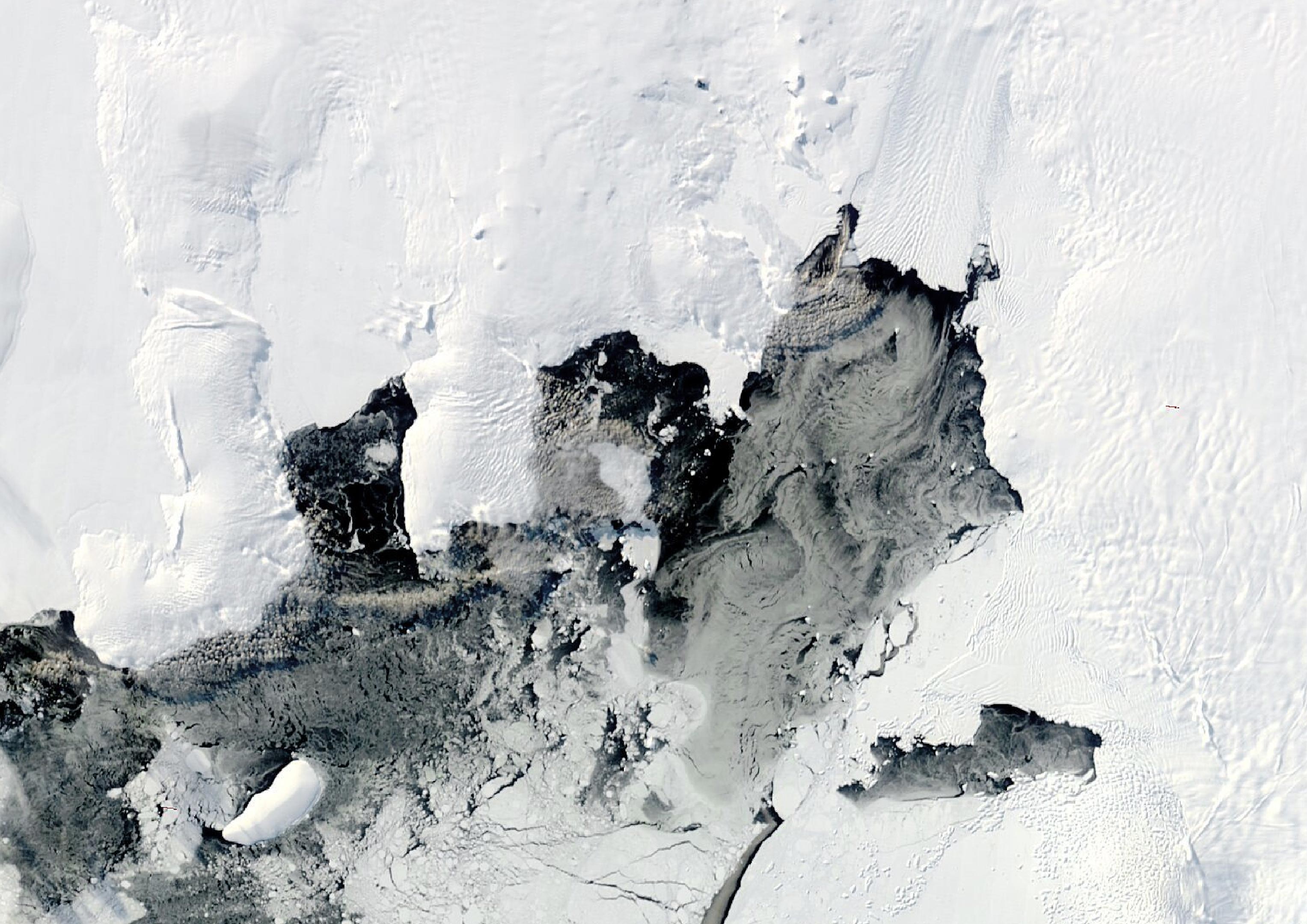
As autumn settled over Antarctica, sea ice began its seasonal return, with NASA capturing striking images of new growth in the Amundsen Sea.
The presence of persistent “grease ice” near Pine Island and Thwaites glaciers, both notorious for contributing to sea level rise, has scientists watching closely. Unusual longevity of ice in this region hints at deeper, less understood oceanic processes, like subsurface heat and ice jams, shaping the southernmost waters of the planet. The ice will only grow from here, playing a key role in buffering glaciers and supporting marine ecosystems.
Autumn Ushers in Antarctic Sea Ice Regrowth
As autumn arrived in the Southern Hemisphere in late March 2025, cooler air and water temperatures brought noticeable changes to Antarctica. One of the most significant was the regrowth of sea ice around the continent. NASA’s Terra satellite, using its MODIS (Moderate Resolution Imaging Spectroradiometer) instrument, captured a striking view of new ice forming over the Amundsen Sea in West Antarctica.
This fresh sea ice, likely a thin and slushy type known as “grease ice,” appears gray in satellite imagery. Much of it has developed near the fronts of the Pine Island and Thwaites glaciers—two massive glaciers known for their large and accelerating contributions to global sea level rise. Unlike glacial ice, however, sea ice is already floating and does not raise sea levels when it forms.
Grease ice is an early stage of sea ice formation consisting of a thin, soupy layer of small ice crystals on the ocean surface. It has a gray, oily appearance and forms when calm, cold conditions allow frazil ice (tiny needle-like crystals) to accumulate and clump together before solid ice sheets develop.
Unusual Persistence After Summer Melt
This new ice appeared just weeks after Antarctic sea ice hit its annual minimum, tying the second-smallest extent recorded by satellites. Despite the widespread summer melt around much of the continent, ice in the Amundsen Sea Embayment proved unusually persistent. Some of this longer-lasting ice, known as “multi-year ice,” can still be seen as cracked white patches drifting farther from the coast.
While scientists are unsure why the area’s sea ice had staying power this year, several factors might have played a role. For example, the flow of warm water into the bay from under the glaciers’ ice tongues affects the amount of melting to varying degrees from year to year. Also, residual ice from the past winter can simply jam the bay, preventing winds and currents from moving ice away.
Warm Waters and Winds Shape Ice-Free Zones
In contrast with the new and old sea ice, several areas of open water appear almost black, including the area immediately in front of Pine Island Glacier. These areas are likely ice-free due to a combination of relatively warm water that can well up below a glacier’s ice tongue and offshore winds capable of clearing out any ice that manages to grow there.
In the days after this image was acquired, sea ice grew even more widespread, and it will continue to thicken and expand through the dark, cold winter. Sea ice plays an important role around the margins of Antarctica, from providing habitat for animals to damping waves that can chip away at the floating fronts of adjacent glaciers and ice shelves.
NASA Earth Observatory image by Michala Garrison, using MODIS data from NASA EOSDIS LANCE and GIBS/Worldview. Story by Kathryn Hansen with image interpretation by Christopher Shuman/UMBC (retired).
Never miss a breakthrough: Join the SciTechDaily newsletter.
Follow us on Google and Google News.