
Researchers are working to advance the field of glycoscience, illuminating the essential role of carbohydrates for human health and disease.
In the narrowest sense, glycobiology is the study of the structure, biology, and evolution of glycans, the carbohydrates and sugar-coated molecules found in every living organism. As a recent symposium at MIT made clear, the field is in the midst of a renaissance that could reshape scientists’ understanding of the building blocks of life.
Originally coined in the 1980s to describe the merging of traditional research in carbohydrate chemistry and biochemistry, glycobiology has come to encompass a much broader and multidisciplinary set of ideas. “Glycoscience” may actually be a more appropriate name for the rapidly growing field, reflecting its broad application not just to biology and chemistry but also to bioengineering, medicine, materials science, and more.
“It’s becoming increasingly clear that these glycans have a very important role to play in health and disease,” says Laura Kiessling, the Novartis Professor of Chemistry. “It may seem daunting initially, but devising new tools and identifying new kinds of interactions requires exactly the sort of creative problem-solving skills that people have at MIT.”
The Sugar Coat of the Body
Glycans include a diverse set of molecules with linear and branched structures that are critical for basic biological functions. With no known exception, all cells in nature are coated with these sugar molecules — from the intricate chains of sugars surrounding most cellular surfaces to the conjugated molecules formed when sugars attach like scaffolding to lipids and proteins. They’re absolutely fundamental to life. For example, Kiessling points out that the most abundant organic molecule on the planet is the carbohydrate cellulose.
“Sperm-egg binding is mediated by an interaction between a protein and a carbohydrate,” she says. “None of us would exist without these interactions.”
Though talking about carbs and sugars might leave some people focused on their diet, glycans are actually among the most important biomolecules out there. They store energy and, in some cases like cellulose, provide the structural framework for multicellular organisms. They mediate communication between cells; influence interactions like that between a host and parasite; and shape immune responses, disease progression, development, and physiology.
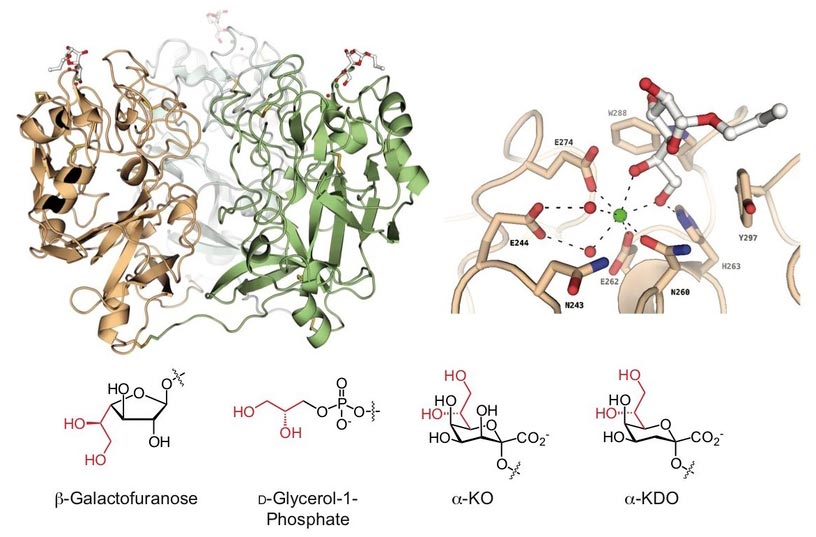
“It turns out that some of these structures, which we didn’t even know existed in the body in such abundance until recently, have so many different biological functions,” says Andrew and Erna Viterbi Professor of Biological Engineering Katharina Ribbeck. “With this rapid expansion of knowledge, it feels like we’re just beginning to understand how diverse and important those functions are to biology.”
With a better understanding of how ubiquitous and critical these molecules are, researchers in applied fields like biotechnology and medicine have turned their attention to glycoscience as a tool to pinpoint the drivers of disease.
Many conditions have been linked to defects in how glycans are produced in the body or issues with glycosylation, the process by which carbohydrates attach to proteins and other molecules. That includes certain forms of cancer. Cancer cells have even been shown to cloak themselves in certain glycoproteins to evade an immune response.
On the flip side, glycans may be a repository of potential therapeutics. The blood thinner Heparin, one of the world’s best-selling prescription drugs, for example, is a carbohydrate-based drug.
Glycans and sugar-binding proteins like lectins even help influence the exchange of microbes across mucus layers in the human body, from the brain to the gut. Glycans dangling off mucus interact with microbes, letting good ones in and reducing the virulence of problematic ones by interrupting cell signaling or stopping pathogens from releasing toxins.
New Tools To Advance Old Science
Despite how crucial this “sugar coat” is, for a long time, molecular biologists focused on nucleic acids and proteins, paying relatively little attention to the sugars that coated them.
“The tools we have to examine the functions of other molecules are largely absent for glycans,” says Kiessling, who is also an institute member of the Broad Institute of MIT and Harvard.
For example, the DNA and RNA sequences of a cell predict what proteins that cell makes, so scientists can track where a protein is and what it’s doing using a genetically-encoded tag. But the structure of glycans isn’t so obviously encoded in a cell’s DNA, and a single protein can be decorated with many different chains of carbohydrates.
In addition, the immense diversity of forms carbohydrates can take, and the fact that they break down quickly in the bloodstream, has made it challenging to synthesize glycans or target them for drug development. So, creative new methods are needed to track them.
It’s a classic chicken-and-egg situation. As scientists better understand the importance of glycans for so many biological processes, it has incentivized them to develop better tools for studying glycans, in turn, producing even more data on just what these molecules can do. In 2022, in fact, the Nobel Prize was awarded to Carolyn Bertozzi at Stanford University, a pioneer in glycobiology, for her work on tracking molecules in cells, which she and others have applied to glycans.
But artificial intelligence could facilitate an evolutionary leap in the field.
“I think glycobiology is, more than almost any other field, ripe and ready for an AI interpretation,” Ribbeck says, explaining how AI might enable scientists to read the “glycan code” in the same way they have with the human genome. That would allow researchers to predict the actual function of a glycan based on data about its structure. From there, they could identify what changes lead to disease or increase disease susceptibility — and, most importantly, come up with ways to repair those defects.
An Inter- and Trans-Disciplinary Effort
The increasing interest in computation reflects the inherent interdisciplinarity that has defined glycoscience from the beginning.
Just at MIT, for example, related research is happening across the Institute. Kiessling describes MIT as a “playground for interdisciplinary research,” which has enabled significant advances in the field with applications to biotechnology, cancer research, brain science, immunology, and more.
In the Department of Chemistry, Kiessling is studying carbohydrate-binding proteins, and how their interactions with glycans affect the immune system. She’s also working with Bryan Bryson, an associate professor in the Department of Biological Engineering, and Deborah Hung, a core faculty member at The Broad Institute of MIT and Harvard, using carbohydrate analogs to test differences in strains of tuberculosis in South Africa. Meanwhile, assistant professor of biological engineering Jessica Stark is pioneering approaches to better understand the roles of glycans in the immune system. Tobi Oni, a fellow at the Whitehead Institute for Biomedical Research, is looking to glycans to help detect and target tumors in pancreatic cancer. Barbara Imperiali, the Class of 1922 Professor of Biology and Chemistry, is studying the carbohydrates that envelop the cells of microbes like bacteria, and Professor Matthew Shoulders in the Department of Chemistry is studying the role of glycans in synthesizing and folding proteins.
“We’re at a very exciting and unique position combining disciplines to address and answer entirely new questions relevant for disease and health,” says Ribbeck.”The field in and of itself is not new, but what is new is the contribution that MIT, in particular, could make with a creative combination of science, engineering, and computation.”
Never miss a breakthrough: Join the SciTechDaily newsletter.
Follow us on Google and Google News.
1 Comment
Awesome post!