
Close Menu
    Facebook X (Twitter) Instagram
    SciTechDaily
    • Biology
    • Chemistry
    • Earth
    • Health
    • Physics
    • Science
    • Space
    • Technology
    Facebook X (Twitter) Pinterest YouTube RSS
    SciTechDaily
    Home»Health»Groundbreaking Study Reveals Potential Treatment for COVID-19 Brain Fog
    Health

    Groundbreaking Study Reveals Potential Treatment for COVID-19 Brain Fog

    By Emily Stone, University of Illinois ChicagoApril 3, 20241 Comment4 Mins Read
    Facebook Twitter Pinterest Telegram LinkedIn WhatsApp Email Reddit
    Share
    Facebook Twitter LinkedIn Pinterest Telegram Email Reddit
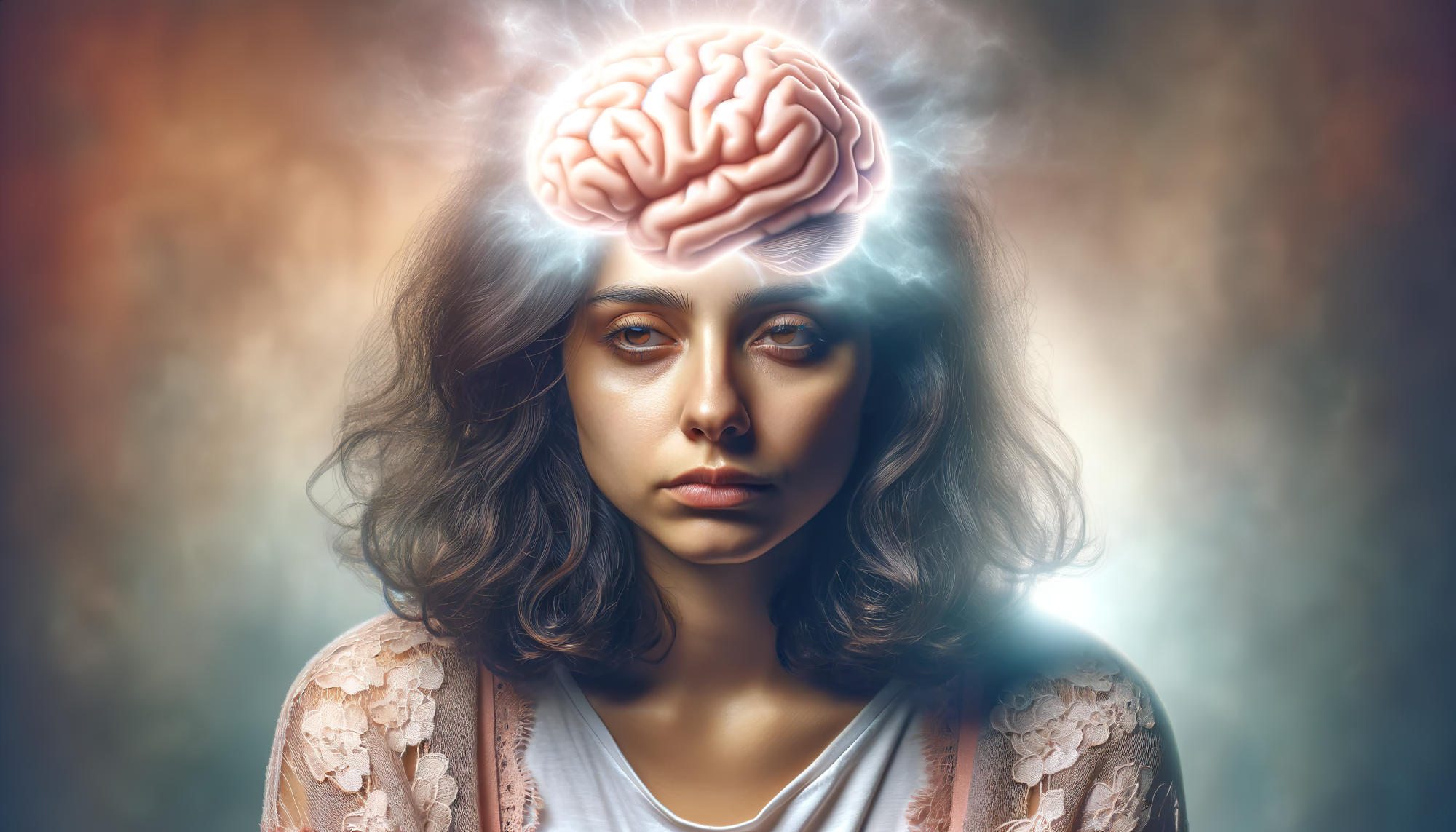
    Exhausted Woman Brain Fog
    A study by the University of Illinois Chicago has discovered a mechanism behind cognitive impairments in mice with COVID-19 and tested a gene therapy that improves symptoms. Focusing on the blood-brain barrier and a specific signaling pathway, the research offers a hopeful avenue for preventing post-COVID-19 cognitive issues in humans by enhancing barrier integrity.

    Memory loss and learning difficulties are among the many confounding symptoms observed in individuals recovering from COVID-19. Yet little is known about the mechanisms of cognitive impairments like these, commonly called brain fog.

    In a new study, researchers at the University of Illinois Chicago have identified a mechanism that causes neurological problems in mice infected with SARS-CoV-2, the virus behind COVID-19. The researchers also found a treatment that helped prevent these changes. Sarah Lutz, assistant professor of anatomy and cell biology in the College of Medicine, led the research, which was published in the journal Brain.

    The team focused on the blood-brain barrier, which plays a role in other neurological diseases, such as multiple sclerosis. Normally, this barrier protects the brain from potentially harmful cells or molecules circulating in the bloodstream. But the infected mice, researchers found, had leaky blood-brain barrier vessels and impaired memory or learning.

    To understand why, the researchers looked at blood vessels from the brains of infected mice to see which genes were most altered. They found a significant decrease in a signaling pathway called Wnt/beta-catenin, which helps maintain the health of the blood-brain barrier and protects the brain from damage.

    Promising Gene Therapy Findings

    With these results, the team explored whether a gene therapy that stimulates the Wnt/beta-catenin pathway could prevent brain damage in mice who were infected with SARS-CoV-2.

    Indeed, it did just that.

    “They had less blood-brain barrier leakage and less immune cell infiltration of the brain, which led to improvements in learning and memory,” Lutz said.
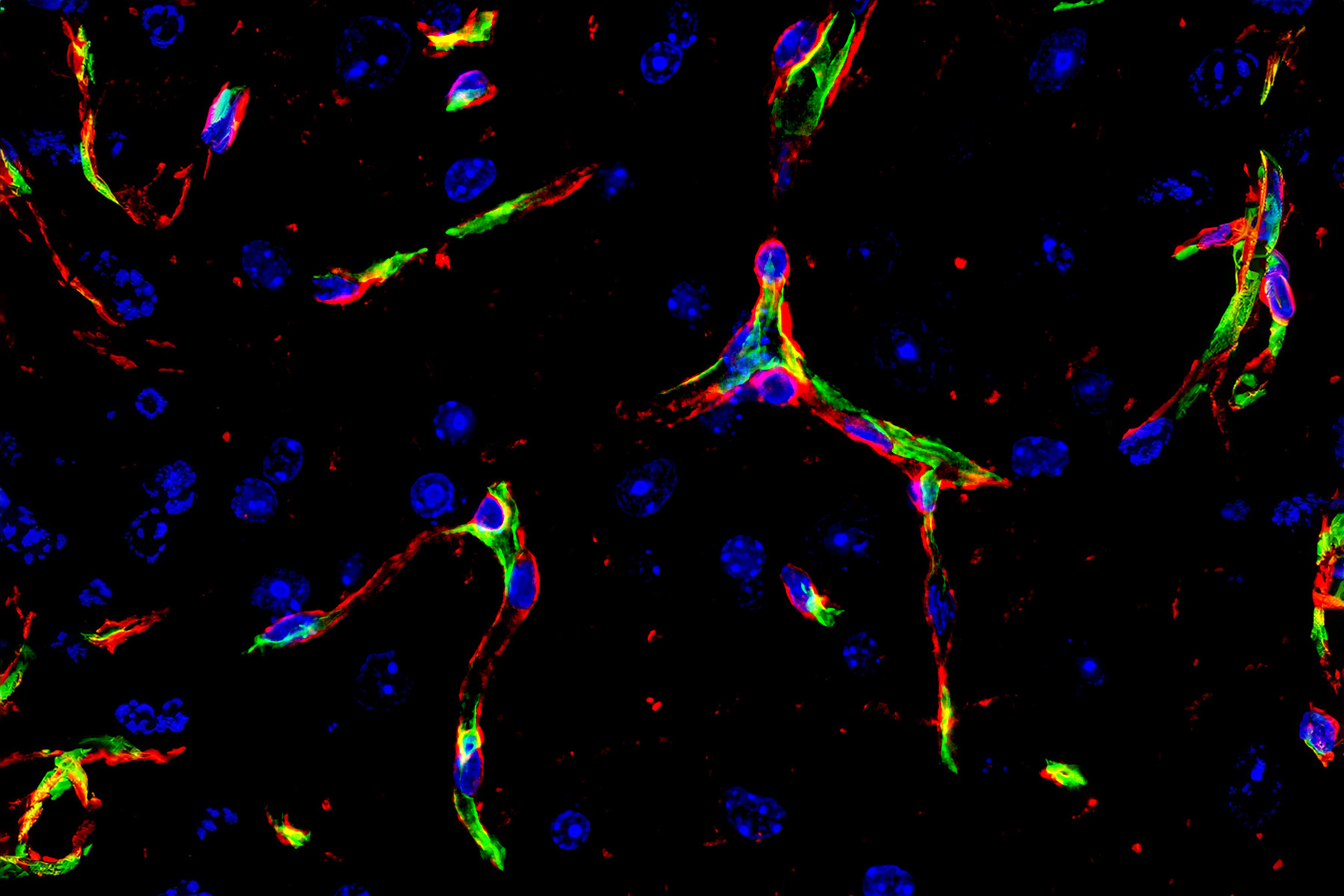
    Blood Vessel Endothelial Cells and Basement Membrane in the Brain
    Blood vessel endothelial cells (green) and basement membrane (red) in the brain. Credit: Sarah Lutz

    Because age is a risk factor for cognitive impairment in humans with COVID-19, the team focused on older mice in their research. They specifically tracked mild infections in the mice. Mild, rather than severe, infections account for most COVID-19 cases in humans today, thanks to the vaccine. Yet even mild infections can cause cognitive impairment, Lutz said.

    While the research is a long way from establishing a therapy for humans to prevent post-infection cognitive impairments, this study is an important step on that path, Lutz said.

    “Anytime you can identify a molecular mechanism that contributes to a disease, you’re learning about basic biology and what causes disease in general,” she said. “This research suggests that improving blood-brain barrier integrity could have benefits in preventing complications of COVID-19.”

    One major lesson from the COVID-19 pandemic is that even mild infections can profoundly affect organs, including the brain, explained Dr. Jalees Rehman, the Benjamin Goldberg Professor and head of the UIC Department of Biochemistry and Molecular Genetics and a co-author on the study.

    “There is a need for more research on respiratory infections that can affect the brain,” Rehman said. “The good news is that by studying the molecular signals activated by the infection as well as during the subsequent inflammation when the immune system responds to infection, one can develop new targeted therapies which prevent further damage to the brain and other organs.”

    Reference: “Engineered Wnt7a ligands rescue blood–brain barrier and cognitive deficits in a COVID-19 mouse model” by Troy N Trevino, Avital B Fogel, Guliz Otkiran, Seshadri B Niladhuri, Mark A Sanborn, Jacob Class, Ali A Almousawi, Benoit Vanhollebeke, Leon M Tai, Jalees Rehman, Justin M Richner and Sarah E Lutz, 2 February 2024, Brain.
    DOI: 10.1093/brain/awae031

    The study was funded by the National Institutes of Health and the University of Illinois Institutional Funds.

    Never miss a breakthrough: Join the SciTechDaily newsletter.
    Follow us on Google and Google News.

    Brain COVID-19 Popular University of Illinois at Chicago
    Share. Facebook Twitter Pinterest LinkedIn Email Reddit

    Related Articles

    Neurologist Explores Link Between COVID and “Brain Fog,” Memory Loss and Dementia

    COVID-19 Associated With Long-Term Cognitive Dysfunction, Acceleration of Alzheimer’s Symptoms

    New Research Shows COVID-19 Alters Gray Matter Volume in the Brain

    How COVID-19 Worms Its Way Into the Brain – Explaining Baffling Neurological Symptoms

    Coronavirus Does Not Infect the Brain, but Still Inflicts Significant Neurological Damage

    Century of Data Shows COVID-19 Likely to Impact the Brain Long-Term

    NIH Researchers Uncover Brain Damage in COVID-19 Patients, Despite No Infection of the Brain

    “You Do Not Want to Mess With This Virus” – Research Strongly Suggests COVID-19 Virus Enters the Brain

    Specialized Scanning Reveals Brain Damage in COVID-19 Patients

    1 Comment

    1. Paul on April 15, 2024 3:51 pm

      Interesting research. Could possibly be useful in the reverse direction to develop drugs to make the barrier more permeable to treatment pharmaceuticals.

      Reply
    Leave A Reply Cancel Reply

    • Facebook
    • Twitter
    • Pinterest
    • YouTube

    Don't Miss a Discovery

    Subscribe for the Latest in Science & Tech!

    Trending News

    Your Blood Pressure Reading Could Be Wrong Because of One Simple Mistake

    Astronomers Stunned by Ancient Galaxy With No Spin

    Physicists May Be on the Verge of Discovering “New Physics” at CERN

    Scientists Solve 320-Million-Year Mystery of Reptile Skin Armor

    Scientists Say This Daily Walking Habit May Be the Secret to Keeping Weight Off After Dieting

    New Therapy Rewires the Brain To Restore Joy in Depression Patients

    Giant Squid Detected off Western Australia in Stunning Deep-Sea Discovery

    Popular Sugar-Free Sweetener Linked to Liver Disease, Study Warns

    Follow SciTechDaily
    • Facebook
    • Twitter
    • YouTube
    • Pinterest
    • Newsletter
    • RSS
    SciTech News
    • Biology News
    • Chemistry News
    • Earth News
    • Health News
    • Physics News
    • Science News
    • Space News
    • Technology News
    Recent Posts
    • Key Magic Mushroom Ingredient Increases Laziness and Reduces Aggression
    • Researchers Solve 15-Year Mystery Behind Cancer-Causing Gut Toxin
    • One of the World’s Most Popular Weedkillers May Be Fueling Deadly Superbugs
    • Scientists Create Laser “Whirlpools” That Spin Tiny Cells Without Touching Them
    • Scientists Discover “Hidden” Materials That Could Transform Clean Energy and Batteries
    Copyright © 1998 - 2026 SciTechDaily. All Rights Reserved.
    • Science News
    • About
    • Contact
    • Editorial Board
    • Privacy Policy
    • Terms of Use

    Type above and press Enter to search. Press Esc to cancel.