
Close Menu
    Facebook X (Twitter) Instagram
    SciTechDaily
    • Biology
    • Chemistry
    • Earth
    • Health
    • Physics
    • Science
    • Space
    • Technology
    Facebook X (Twitter) Pinterest YouTube RSS
    SciTechDaily
    Home»Biology»Gut Bacteria May Be an Important Factor in Blood Pressure Medicine Resistance
    Biology

    Gut Bacteria May Be an Important Factor in Blood Pressure Medicine Resistance

    By Experimental BiologyApril 5, 2022No Comments3 Mins Read
    Facebook Twitter Pinterest Telegram LinkedIn WhatsApp Email Reddit
    Share
    Facebook Twitter LinkedIn Pinterest Telegram Email Reddit
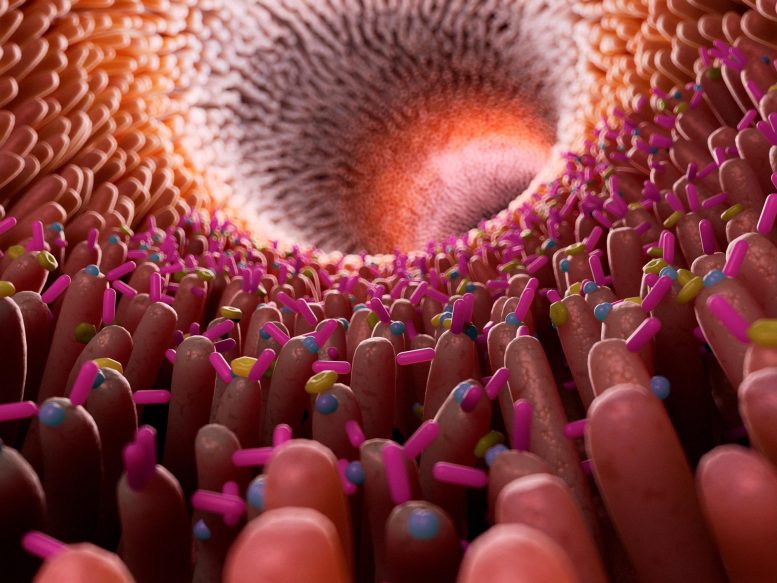
    Human Gut Microbiome Illustration
    Illustration of the human gut microbiome.

    A gut bacterium, Coprococcus comes, may reduce the effectiveness of ACE inhibitors, leading to treatment-resistant hypertension. This finding could help develop personalized treatments based on gut microbial composition.

    Almost half of the U.S. adult population has high blood pressure — or hypertension — and about 20% of these patients have treatment-resistant hypertension. The reason why some people are resistant to treatment has been a mystery, but new study results show that a certain gut bacterium may be an important factor.

    “Today, doctors treat resistant hypertension by adding or substituting medications, which can contribute to overdoses, more side effects, and noncompliance,” said Tao Yang, PhD, assistant professor at the University of Toledo. “A better understanding of the relationship between gut microbes and drug efficacy could lead to new treatment approaches for people who don’t respond to blood pressure medication. This could include new drugs or modulating gut microbiota with probiotics, antibiotics, and other methods.”

    By studying the gut microbes of rats, Yang and colleagues discovered that a bacteria known as Coprococcus comes contributes to resistance to ACE inhibitors, one of the primary drug classes used to treat high blood pressure.

    Coprococcus Comes and ACE Inhibitor Resistance

    Yang will present the new research at the American Society for Pharmacology and Experimental Therapeutics annual meeting during the Experimental Biology (EB) 2022 meeting, to be held on April 2-5, 2022, in Philadelphia.
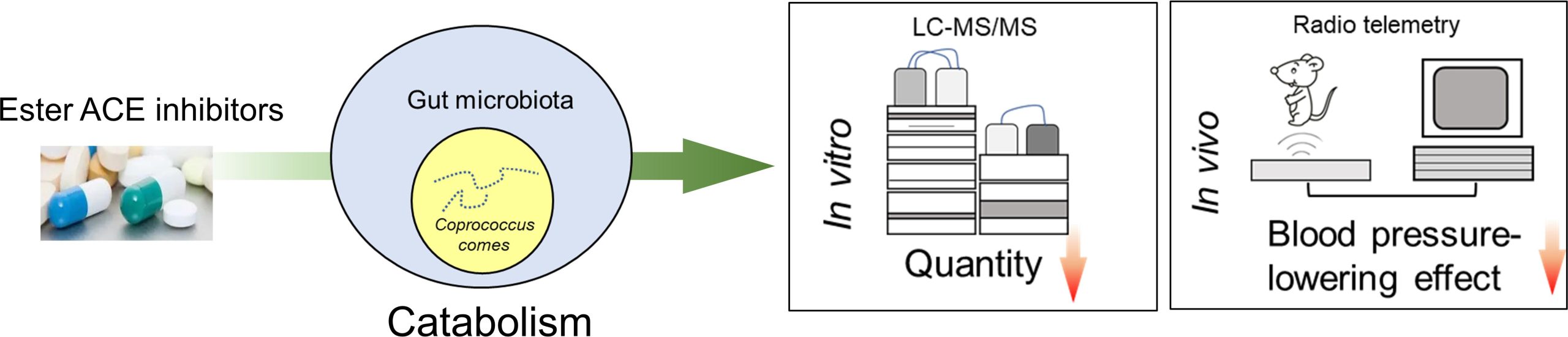
    Blood Pressure Medicine Resistance
    Researchers discovered that a bacterium known as Coprococcus comes may contribute to resistance to ACE inhibitors. They used studies involving liquid chromatography–mass spectrometry and blood pressure readings recorded via radio telemetry from a rat model of hypertension. Credit: Tao Yang, Department of Physiology and Pharmacology, University of Toledo

    “Our ultimate goal is to find a link between gut microbial composition and enzymatic activity and drug response effectiveness because this will provide a foundation for applying precision medicine to treat resistant hypertension,” Yang said.

    Research has shown that the microorganisms in our gut — collectively known as the gut microbiota — contain a variety of enzymes that can affect drug metabolism.

    To find out if gut microbiota might play a role in resistance to blood pressure medicine, Yang and colleagues administered a single dose of the ACE inhibitor quinapril to rats with high blood pressure. They found that quinapril was more effective at lowering blood pressure in hypertensive rats with a lower gut microbiota load. When they analyzed the composition of the gut microbiota, C. comes emerged as an important player.

    Through additional experiments, the researchers found that C. comes can actually break down quinapril. They also observed that giving C. comes and quinapril to hypertensive rats reduced blood pressure less than administering quinapril alone.

    Future Directions in Precision Medicine

    “We are still in the early stages of determining the interactions between gut bacteria and antihypertensive medications,” said Yang. “However, our current findings suggest that the same drug may not be appropriate for everyone because each person has a unique gut microbial composition with a unique profile of enzymatic activities.”

    The researchers are now performing similar experiments using other types of gut bacteria and additional blood pressure medications to further explore how the gut microbiota modulates the effectiveness of antihypertensive drugs.

    Tao Yang will present this research on from 10 a.m.–12 p.m., Tuesday, April 5, in Exhibit/Poster Hall A-B, Pennsylvania Convention Center (Poster Board Number B166) (abstract). Contact the media team for more information or to obtain a free press pass to attend the meeting.

    Meeting: Experimental Biology 2022

    Never miss a breakthrough: Join the SciTechDaily newsletter.
    Follow us on Google and Google News.

    Blood Pressure Hypertension Microbiology Microbiome
    Share. Facebook Twitter Pinterest LinkedIn Email Reddit

    Related Articles

    Pooping Out Miracles: Successful Mechanism Behind Fecal Microbiota Transplantation Revealed

    Childhood Diet Has Lifelong Impact – You Are What You Eat AND What You Ate as a Child

    Analyzing Ancient DNA From 50,000-Year-Old Poop Reveals Secrets of Neanderthals’ Gut Microbiota

    New Research Shows Poor Gut Health Connected to Severe COVID-19 – Probiotics May Help Patients

    Pioneering Research Reveals Certain Human Genes Relate to Gut Bacteria

    Mystery Solved: Why Food Poisoning Bacteria Are So Good at Swimming Through Your Gut

    Birds and Bats Have Strange Gut Microbiomes — Why? Scientists Have a Theory

    A Matchmaker for Microbiomes – Identifying Relationships of Microbes and Metabolites

    Strains of E. Coli Have Been Linked to Cancer in Mice

    Leave A Reply Cancel Reply

    • Facebook
    • Twitter
    • Pinterest
    • YouTube

    Don't Miss a Discovery

    Subscribe for the Latest in Science & Tech!

    Trending News

    Scientists Uncover Potential Brain Risks of Popular Fish Oil Supplements

    Scientists Discover a Surprising Way To Make Bread Healthier and More Nutritious

    After 60 Years, Scientists Uncover Unexpected Brain Effects of Popular Diabetes Drug Metformin

    New Research Uncovers Hidden Side Effects of Popular Weight-Loss Drugs

    Scientists Rethink Extreme Warming After Surprising Ocean Discovery

    Landmark Study Links Never Marrying to Significantly Higher Cancer Risk

    Researchers Discover Unknown Beetle Species Just Steps From Their Lab

    Largest-Ever Study Finds Medicinal Cannabis Ineffective for Anxiety, Depression, PTSD

    Follow SciTechDaily
    • Facebook
    • Twitter
    • YouTube
    • Pinterest
    • Newsletter
    • RSS
    SciTech News
    • Biology News
    • Chemistry News
    • Earth News
    • Health News
    • Physics News
    • Science News
    • Space News
    • Technology News
    Recent Posts
    • Powerful Lasers Reveal How Matter Becomes Plasma in Trillionths of a Second
    • A Simpler Path to Super-Resolution: Scientists Reinvent Microscopy
    • Scientists Uncover Hidden Genetic Cause of Diabetes in Babies
    • Amazonian Chocolate Could Become the Next Superfood, Scientists Say
    • Challenging the Narrative: New Study Shows U.S. Life Expectancy Is Rising Across All States
    Copyright © 1998 - 2026 SciTechDaily. All Rights Reserved.
    • Science News
    • About
    • Contact
    • Editorial Board
    • Privacy Policy
    • Terms of Use

    Type above and press Enter to search. Press Esc to cancel.