
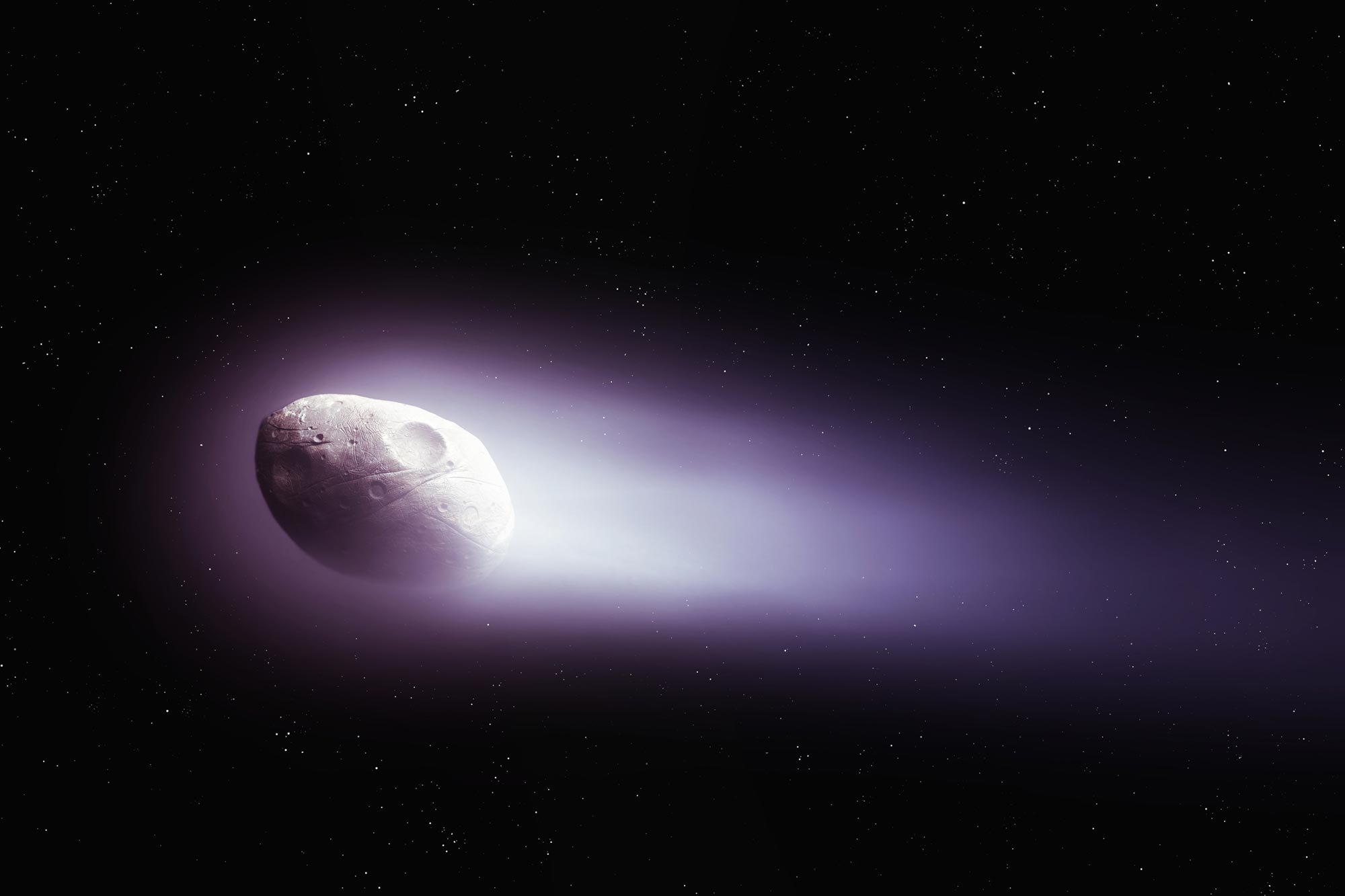
Evidence from medieval chronicles suggests that the periodic nature of Halley’s Comet was recognized centuries earlier than previously believed.
Edmond Halley is widely associated with identifying the repeating path of the comet that carries his name, but new research suggests he was not the first to recognize its cycle. According to work by Professor Simon Portegies Zwart and other scholars, a medieval monk made this connection centuries earlier. In the 11th century, Eilmer of Malmesbury appears to have realized that two comet sightings decades apart were of the same object.
Accounts of these observations appear in writings by William of Malmesbury, a chronicler from the 12th century. Despite being preserved in historical texts, this evidence was largely overlooked by modern researchers until now. Portegies Zwart and his coauthor Lewis argue that Eilmer, also known as Aethelmaer, personally witnessed both appearances of the comet. Their analysis is presented in the book ‘Dorestad and Everything After. Ports, townscapes & travellers in Europe, 800-1100’.
Halley identifies the comet’s periodicity
Several centuries later, Edmond Halley used systematic observation and calculation to demonstrate that a bright comet recorded in 1531, 1607, and 1682 was the same object returning on a regular schedule.
This comet, later designated 1P/Halley, follows an orbit that brings it back to the inner solar system roughly every 76 years, a finding that marked a major step forward in astronomical science.
Worldwide observations in 1066
One of the comet’s earlier returns occurred in 1066 and was recorded far beyond Europe. Chinese astronomers observed it for more than two months, providing some of the most detailed early records. The comet reached peak brightness on April 22, 1066, though observers in Brittany and the British Isles did not see it until April 24.
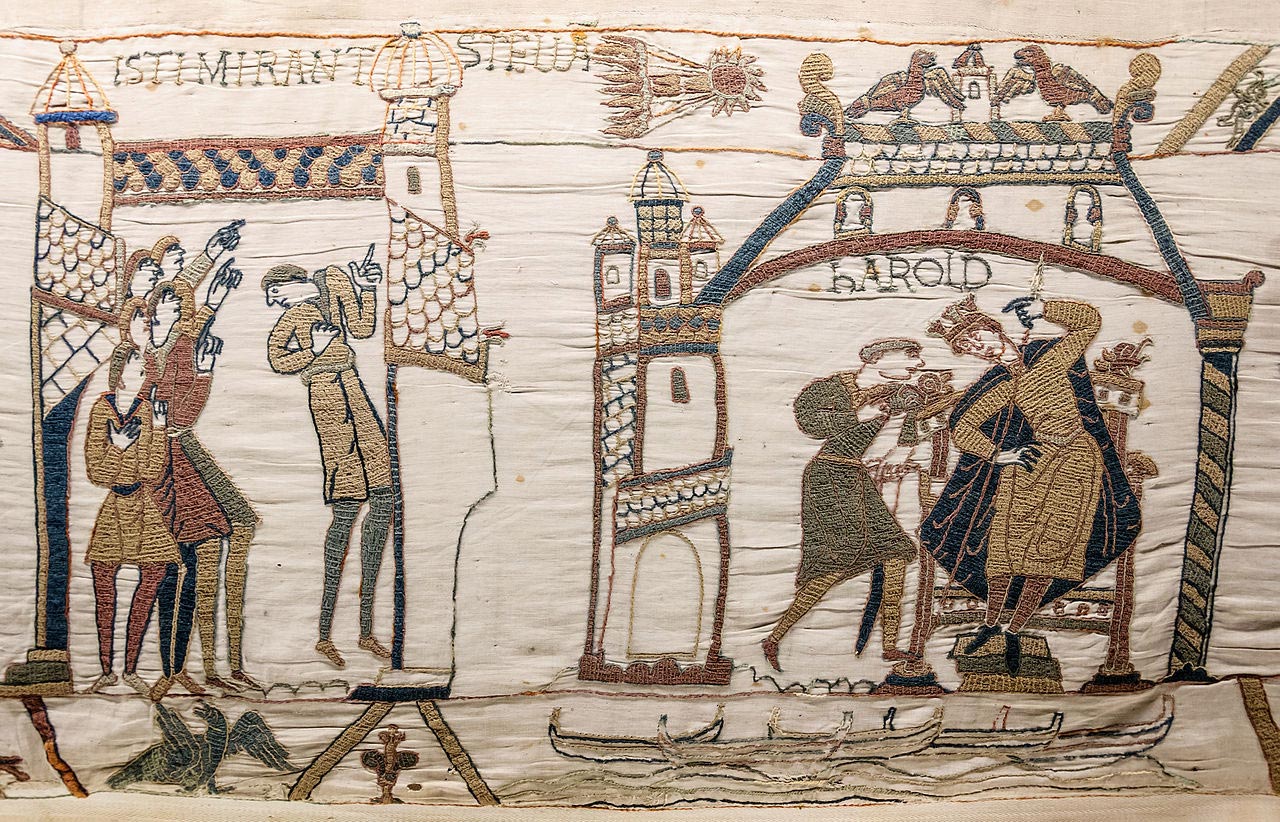
Its appearance was later immortalized in the Bayeux Tapestry, where it is shown as part of the visual record of the dramatic events of that year.
Comet appearances as omens in medieval chronicles
The comet appeared during the brief reign of King Harold Godwinson, from January 6 to October 14, 1066. Source research by Portegies Zwart and Lewis shows that a comet was seen five times in the centuries around this date. In oral tradition, these appearances are associated with the deaths of kings, war, or famine in the British Isles.
A comet not mentioned in the chronicles, said to precede the death of Archbishop Sigeric of Canterbury in 995, may be interpreted as a historical equivalent of fake news, or as an exaggeration of events, probably intended to frighten the British population with God’s wrath over the sins of the people.
The monk Eilmer – or Aethelmaer – of Malmesbury must already have been elderly when he saw Halley’s Comet for the second time in 1066. He realized that he had seen the same comet earlier, in 989. Once again, as was customary at the time, the king was warned of impending disaster.
Call for reassessment and further research
The researchers argue that Halley’s Comet should be given a different name, as it had already been observed twice centuries earlier. Portegies Zwart says: “This research was great fun to do, but I also found it challenging to work within such an interdisciplinary project alongside a historian. Nevertheless, we plan to carry out further research into this kind of periodic comet.”
Never miss a breakthrough: Join the SciTechDaily newsletter.
Follow us on Google and Google News.
4 Comments
Assuming that any proposed name change were to be adopted (and that’s not likely), it should only be to add the name of Eilmer to that of Halley, rather than replacing it. Halley made a considerable effort to study previous appearances of comets and also predicted the next appearance of his comet (1758), though he did not live to see it. Halley’s name deserves to be associated with that comet.
It would he “right” in ways that feel “fair”. It would be wrong as a whole lot of literature would have to be modified to keep records correct in the scientific sense. IMAO this is a dragon best left sleeping.
{o.o}
Having seen the comet just twice, Eilmer was just guessing that it was the same one. The critical insight was noticing that the comet returned periodically, and for that at least three observations are necessary.
The Halley’s Comet has had the name, and known by
The same name for the length of time? To change it
Now, would be incorrectly to call it something or by
Someone’s else’s name now !!!
This was proven science observation, and deserves
The proper care giving by the Astronomer Edmund
Halley.
This is same miscarriage of justice giving our planetary delusion that pluto isn’t a planet, we’re
Taught for years there’s 9 planets in our system and
Now there’s not because, they decided it’s not a
Planet anymore? No wonder, our children/ grandchildren don’t know about the wonderful
Galaxy we live in they don’t teach it anymore