
Close Menu
    Facebook X (Twitter) Instagram
    SciTechDaily
    • Biology
    • Chemistry
    • Earth
    • Health
    • Physics
    • Science
    • Space
    • Technology
    Facebook X (Twitter) Pinterest YouTube RSS
    SciTechDaily
    Home»Biology»Healthy Sleep Linked to Earthquake-Like Brain-Wave Bursts of Intrinsic Arousal Activations
    Biology

    Healthy Sleep Linked to Earthquake-Like Brain-Wave Bursts of Intrinsic Arousal Activations

    By PLOSNovember 14, 2019No Comments3 Mins Read
    Facebook Twitter Pinterest Telegram LinkedIn WhatsApp Email Reddit
    Share
    Facebook Twitter LinkedIn Pinterest Telegram Email Reddit
    Earthquake-like Bursts of Intrinsic Arousal Activations in the Brain Found to be Essential for Sleep and Sleep-Stage Transitions
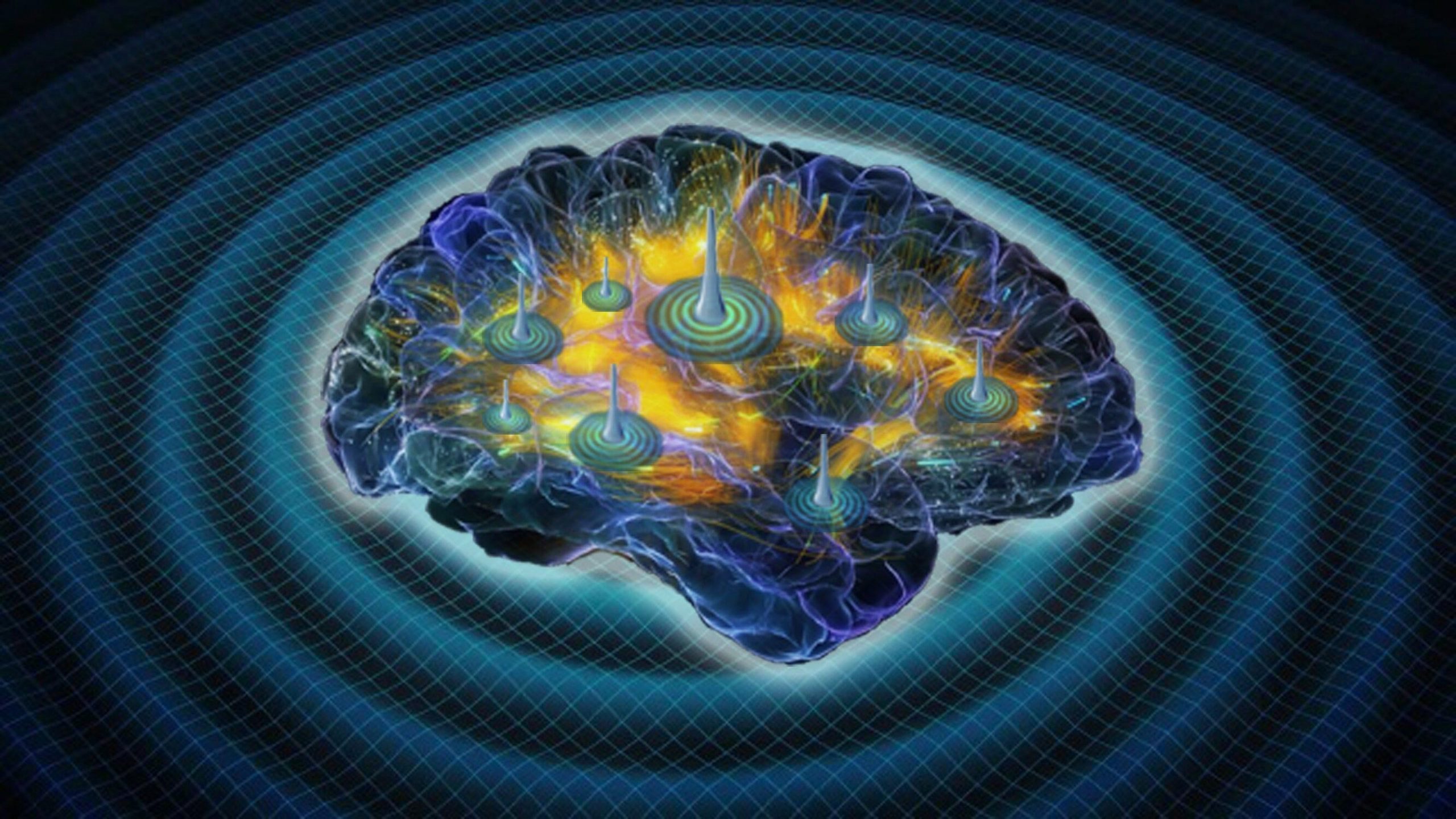
    Findings link healthy sleep to brain-wave bursts that mathematically mimic earthquakes. Credit: Ivanov et al.

    Findings link healthy sleep to brain-wave bursts that mathematically mimic earthquakes.

    New research in rats shows that cortical arousals and brief awakenings during sleep exhibit non-equilibrium dynamics and complex organization across time scales necessary for spontaneous sleep-stage transitions and for maintaining healthy sleep. Prof. Plamen Ch. Ivanov of Boston University and colleagues present these findings in PLOS Computational Biology.

    Sleep is traditionally considered to be a homeostatic process that resists deviation from equilibrium. In that regard, brief episodes of waking are viewed as perturbations that lead to sleep fragmentation and related sleep disorders. While addressing aspects of sleep regulation related to consolidated sleep and wake and the sleep-wake cycle, the homeostatic paradigm does not account for the dozens of abrupt sleep-stage transitions and micro-states within sleep stages throughout the night. Ivanov and colleagues hypothesized that, while sleep is indeed homeostatic at time scales of hours and days, non-equilibrium dynamics and criticality underlie sleep micro-architecture at shorter time scales.

    To test this hypothesis, the researchers collected electroencephalogram (EEG) recordings of brain activity over multiple days in normal rats and in rats with injuries to the parafacial zone, a brain region that helps regulate sleep. They analyzed the bursting dynamics of brain activity patterns known as theta waves and delta waves, which are seen in both sleeping rats and humans.

    Their empirical findings and modeling indicate that arousals from sleep are a manifestation of an intrinsic non-equilibrium sleep regulatory mechanism related to self-organization of neuronal assemblies. This mechanism acts at time scales of seconds and minutes and stays on track via continuous bursts in brain wave rhythms.

    The study also suggests that maintaining a non-equilibrium critical state is essential for the sleep-regulation system’s flexibility to spontaneously activate multiple transitions between different sleep stages and between sleep and brief wakefulness throughout the sleep period. Such critical state is also necessary for the complex sleep micro-architecture that is increasingly recognized to be characteristic of healthy sleep. The observed critical behavior in sleep draws parallels to other non-equilibrium systems at criticality, such as earthquakes.

    “Paradoxically, we find that the ‘resting’ state of healthy sleep is maintained through bursts in cortical rhythm activity that obey similar temporal organization, statistics, and mathematical laws as earthquakes,” Ivanov says. “Our findings serve as building blocks to better understand sleep, and could help improve detection and treatment of sleep disorders.”

    ###

    Reference: “Non-equilibrium critical dynamics of bursts in θ and δ rhythms as fundamental characteristic of sleep and wake micro-architecture” by Jilin W. J. L. Wang, Fabrizio Lombardi, Xiyun Zhang, Christelle Anaclet and Plamen Ch. Ivanov, 14 November  2019, PLOS Computational Biology.
    DOI: 10.1371/journal.pcbi.1007268

    Never miss a breakthrough: Join the SciTechDaily newsletter.
    Follow us on Google and Google News.

    Brain Neuroscience Sleep Science
    Share. Facebook Twitter Pinterest LinkedIn Email Reddit

    Related Articles

    Decoding Daydreams: Harvard Scientists Unlock the Mysteries of the Brain

    Astrocytes: The Secret to Staying Awake Without Costs to Cognition and Health?

    Unveiling Sleep Secrets – How a Tiny Brain Nucleus Impacts REM Sleep and Aging

    Recovering “Hidden Knowledge” – How an Asthma Medication Could Restore Memories

    Scientists Discover a New Daily Rhythm Providing Insight Into How Brain Activity Is Fine-Tuned

    Evidence of Sleep-Dependent Brain Activity in Clearing Toxic Proteins and Preventing Alzheimer’s Disease

    Scientists Uncover Brain Mechanism That May Explain Why Sleep Helps You Learn

    Intense Brain Activity Drives Need for Sleep, Not Just How Long You’ve Been Awake

    Traumatic Memories Manipulated in Sleeping Mice

    Leave A Reply Cancel Reply

    • Facebook
    • Twitter
    • Pinterest
    • YouTube

    Don't Miss a Discovery

    Subscribe for the Latest in Science & Tech!

    Trending News

    Scientists Warn That This Common Pet Fish Can Wreck Entire Ecosystems

    Scientists Make Breakthrough in Turning Plastic Trash Into Clean Fuel Using Sunlight

    This Popular Supplement May Interfere With Cancer Treatment, Scientists Warn

    Scientists Finally Solved One of Water’s Biggest Mysteries

    Could This New Weight-Loss Pill Disrupt the Entire Market? Here’s What You Should Know About Orforglipron

    Earth’s Crust Is Tearing Open in Africa, and It Could Form a New Ocean

    Breakthrough Bowel Cancer Trial Leaves Patients Cancer-Free for Nearly 3 Years

    Natural Compound Shows Powerful Potential Against Rheumatoid Arthritis

    Follow SciTechDaily
    • Facebook
    • Twitter
    • YouTube
    • Pinterest
    • Newsletter
    • RSS
    SciTech News
    • Biology News
    • Chemistry News
    • Earth News
    • Health News
    • Physics News
    • Science News
    • Space News
    • Technology News
    Recent Posts
    • Why Your Dreams Feel So Real Sometimes and So Strange Other Times
    • Scientists Debunk 100-Year-Old Belief About Brain Cells, Rewriting Textbooks
    • This Simple Home Device May Boost Brain Power in Adults Over 40
    • Ancient Roman Ship Coating Reveals Secrets Hidden for 2,200 Years
    • Enormous Prehistoric Insects Puzzle Scientists
    Copyright © 1998 - 2026 SciTechDaily. All Rights Reserved.
    • Science News
    • About
    • Contact
    • Editorial Board
    • Privacy Policy
    • Terms of Use

    Type above and press Enter to search. Press Esc to cancel.