
Close Menu
    Facebook X (Twitter) Instagram
    SciTechDaily
    • Biology
    • Chemistry
    • Earth
    • Health
    • Physics
    • Science
    • Space
    • Technology
    Facebook X (Twitter) Pinterest YouTube RSS
    SciTechDaily
    Home»Biology»Hidden in Plain Sight: Marine Biologists Discover New Clam Species in South Africa
    Biology

    Hidden in Plain Sight: Marine Biologists Discover New Clam Species in South Africa

    By Pensoft PublishersAugust 15, 2024No Comments3 Mins Read
    Facebook Twitter Pinterest Telegram LinkedIn WhatsApp Email Reddit
    Share
    Facebook Twitter LinkedIn Pinterest Telegram Email Reddit
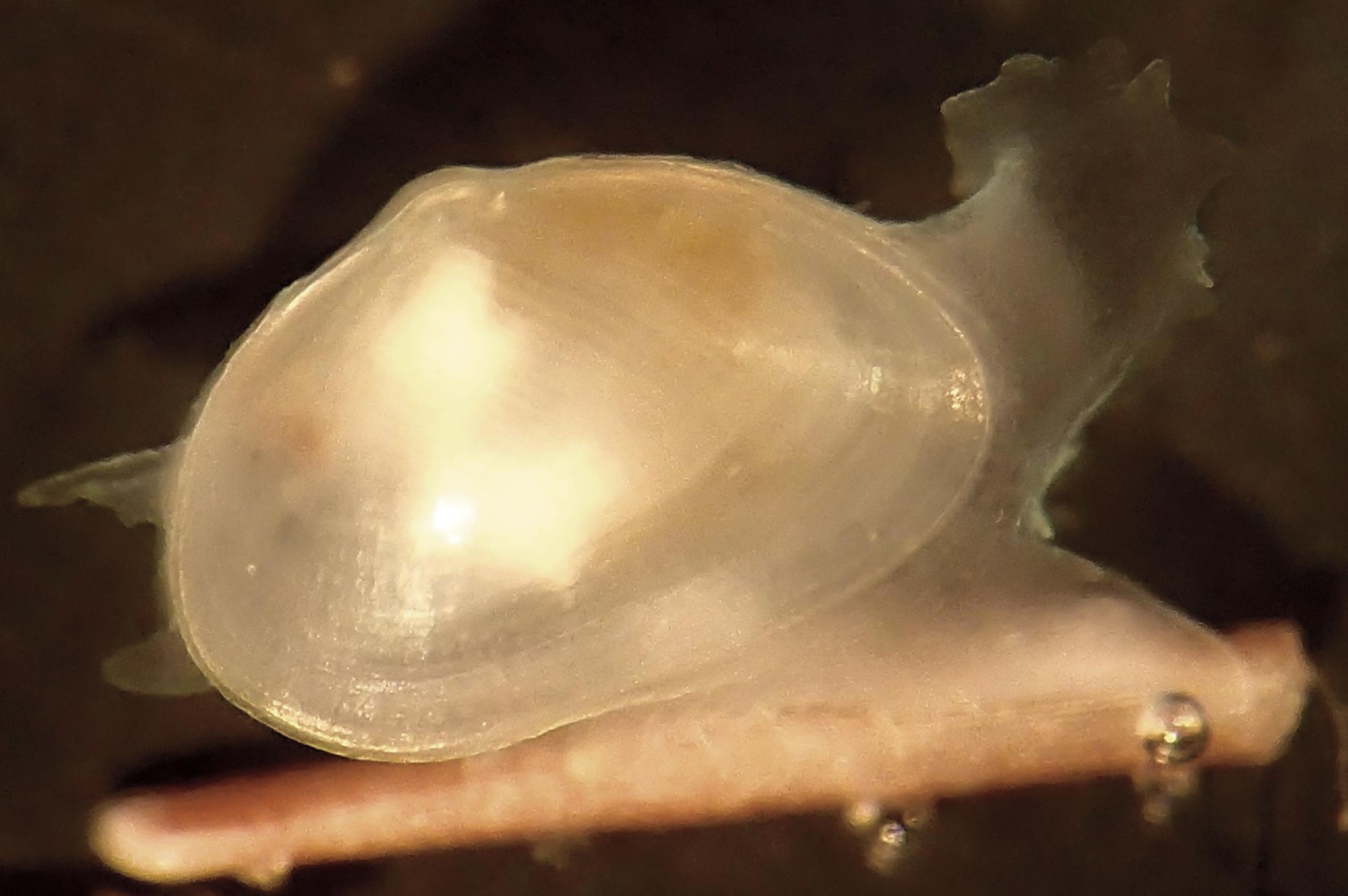
    Brachiomya ducentiunus
    A comprehensive study led by Paul Valentich-Scott from the Santa Barbara Museum of Natural History has uncovered new aspects of galeommatoidean bivalves in South Africa. The research reveals a new species and highlights the unique symbiotic relationships these bivalves maintain with sea urchins. The findings enhance our understanding of marine biodiversity and emphasize the need for the conservation of these lesser-known marine organisms. The image above depicts the newly discovered species, Brachiomya ducentiunus, crawling on a sea urchin spine. Credit: Craig Foster

    Researchers discovered a new species of marine bivalve in South Africa, providing new insights into the biodiversity of the region and emphasizing conservation.

    Galeommatoidean bivalves are a highly diverse, yet poorly known, group of marine mollusks. Now, a study led by Paul Valentich-Scott from the Santa Barbara Museum of Natural History, along with collaborators from the University of Cape Town, Sea Change Trust, Stellenbosch University, and the University of Colorado Boulder, has uncovered new insights into the habitats, symbiotic relationships, and taxonomy of these fascinating animals.

    Discovery of New Species

    In the study, recently published in the scientific journal ZooKeys, the researchers collected four species of galeommatoidean bivalves collected from the Western Cape region of South Africa. Among these is one new species, Brachiomya ducentiunus. This small clam, which is only 2 mm (less than 1/8th inch) in length, spends its life crawling between the spines of sea urchins.

    The new species has so far only been found in one locality in False Bay, South Africa, where it was found attached to the burrowing sea urchin Spatagobrissus mirabilis in coarse gravel at a depth of about 3 m. It has not been observed free-living, without the host urchin.

    Brachiomya ducentiunus was discovered while preparing and working on the 1001 Seaforest Species project, a research and storytelling program aimed at increasing awareness of regional kelp bed ecosystems colloquially referred to as ‘the Great African Seaforest’.
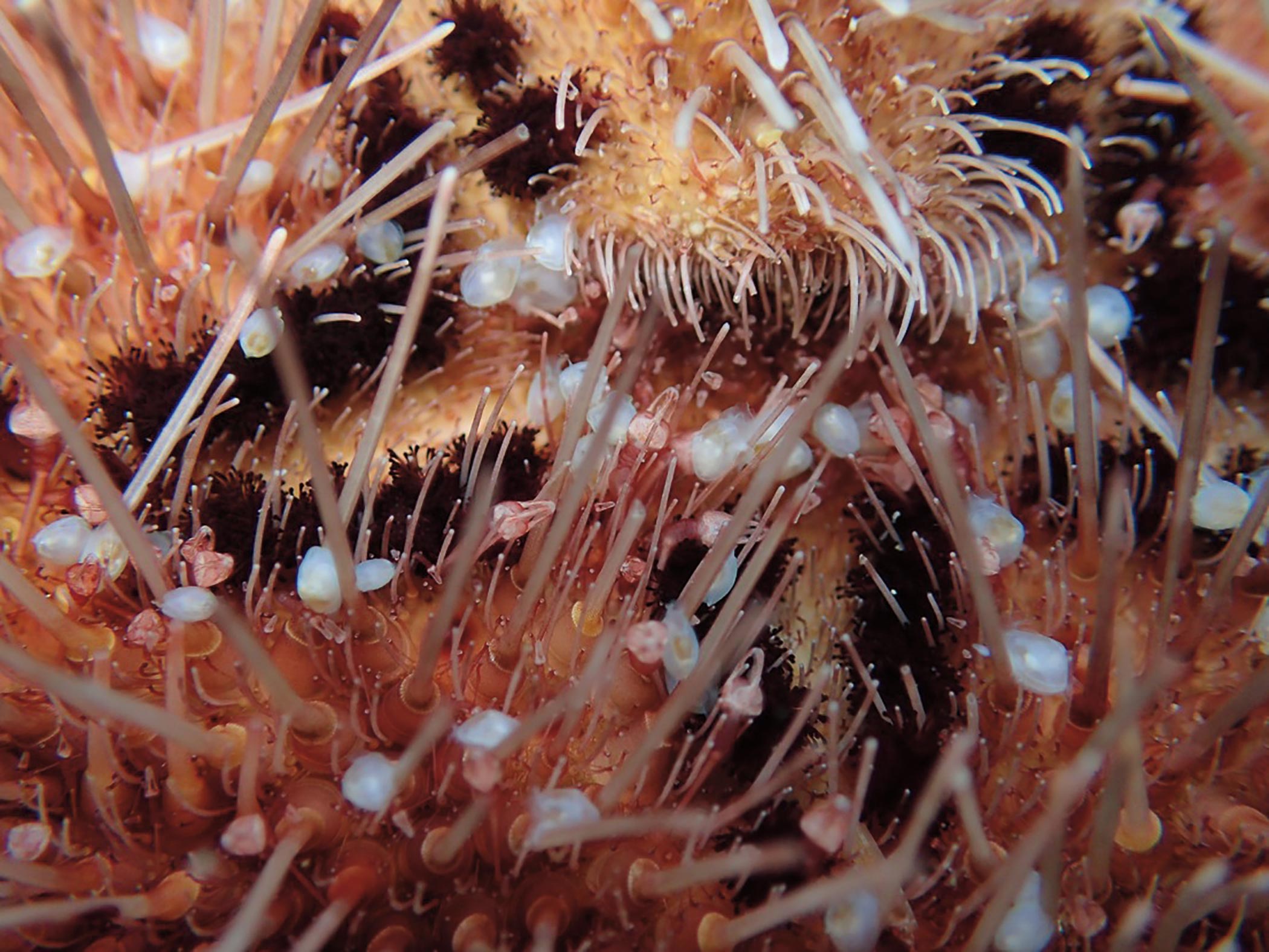
    Brachiomya ducentiunus Crawling on Sea Urchin
    Dozens of Brachiomya ducentiunus crawling on the surface of a sea urchin. Credit: Charles Griffiths

    Impact on Biodiversity Knowledge

    “This study marks a significant advancement in our understanding of the biodiversity and ecological interactions of galeommatoidean bivalves,” says Valentich-Scott. “By uncovering the hidden lives of these small but ecologically important organisms, we hope to contribute to the broader knowledge of marine biodiversity and the conservation of these unique habitats.”

    Importance of Regional Marine Research

    Co-author Charles L. Griffiths, emeritus professor at the University of Cape Town, says, “A large proportion of smaller marine invertebrates remain undescribed in western South Africa and almost any project that samples specialized habitats turns up many new records and species.”

    In a similar vein, co-author Jannes Landschoff, a marine biologist at the Sea Change Trust, says “Creating foundational biodiversity knowledge is a most important step to the humbling realization of how fascinating and uniquely diverse a place is. I see this every day through our work in the rich coastal waters of Cape Town, where an extensive underwater kelp forest, the ‘Great African Seaforest,’ grows.”

    Reference: “Bivalves of superfamily Galeommatoidea (Mollusca, Bivalvia) from western South Africa, with observations on commensal relationships and habitats” by Paul Valentich-Scott, Charles Griffiths, Jannes Landschoff, Ruiqi Li and Jingchun Li, 22 July 2024, ZooKeys.
    DOI: 10.3897/zookeys.1207.124517

    Never miss a breakthrough: Join the SciTechDaily newsletter.
    Follow us on Google and Google News.

    Biodiversity Marine Biology Pensoft Publishers
    Share. Facebook Twitter Pinterest LinkedIn Email Reddit

    Related Articles

    “Ghost” 7-Foot Great White Shark Caught in the Mediterranean Sparks 160-Year Investigation

    The Internet Just Named a Brand-New Deep-Sea Creature Found Nearly 3 Miles Deep

    The “Popcorn” Parasite: Scientists Discover 14 Bizarre New Marine Species

    Scientists Discover Bizarre “Darth Vader” Sea Creature

    Scientists Discover “Grumpy” New Fish Species in the Red Sea

    The Quick and the Curious: Discover the Mysterious New Creatures of the Deep Sea

    Presence of Cryptic and Elusive Tiny Creatures Betrayed by Facebook and Instagram

    New Deep-Water Coral Discovered in Part of Unexplored Marine Ecosystem

    At Least a Third of All Marine Species Are Still Unknown

    Leave A Reply Cancel Reply

    • Facebook
    • Twitter
    • Pinterest
    • YouTube

    Don't Miss a Discovery

    Subscribe for the Latest in Science & Tech!

    Trending News

    New Study Reveals Why Ozempic Works Better for Some People Than Others

    Climate Change Is Altering a Key Greenhouse Gas in a Way Scientists Didn’t Expect

    New Study Suggests Gravitational Waves May Have Created Dark Matter

    Scientists Discover Why the Brain Gets Stuck in Schizophrenia

    Scientists Engineer “Tumor-Eating” Bacteria That Devour Cancer From Within

    Even “Failed” Diets May Deliver Long-Term Health Gains, Study Finds

    NIH Scientists Discover Powerful New Opioid That Relieves Pain Without Dangerous Side Effects

    Collapsing Plasma May Hold the Key to Cosmic Magnetism

    Follow SciTechDaily
    • Facebook
    • Twitter
    • YouTube
    • Pinterest
    • Newsletter
    • RSS
    SciTech News
    • Biology News
    • Chemistry News
    • Earth News
    • Health News
    • Physics News
    • Science News
    • Space News
    • Technology News
    Recent Posts
    • The Surprising Reason You Might Want To Sleep Without a Pillow
    • Household Cats Could Hold the Secret to Fighting Breast Cancer
    • Scientists Say This Natural Hormone Reverses Obesity by Targeting the Brain
    • This 15,000-Year-Old Discovery Changes What We Know About Early Human Creativity
    • 35-Million-Year-Old Mystery: Strange Arachnid Discovered Preserved in Amber
    Copyright © 1998 - 2026 SciTechDaily. All Rights Reserved.
    • Science News
    • About
    • Contact
    • Editorial Board
    • Privacy Policy
    • Terms of Use

    Type above and press Enter to search. Press Esc to cancel.