
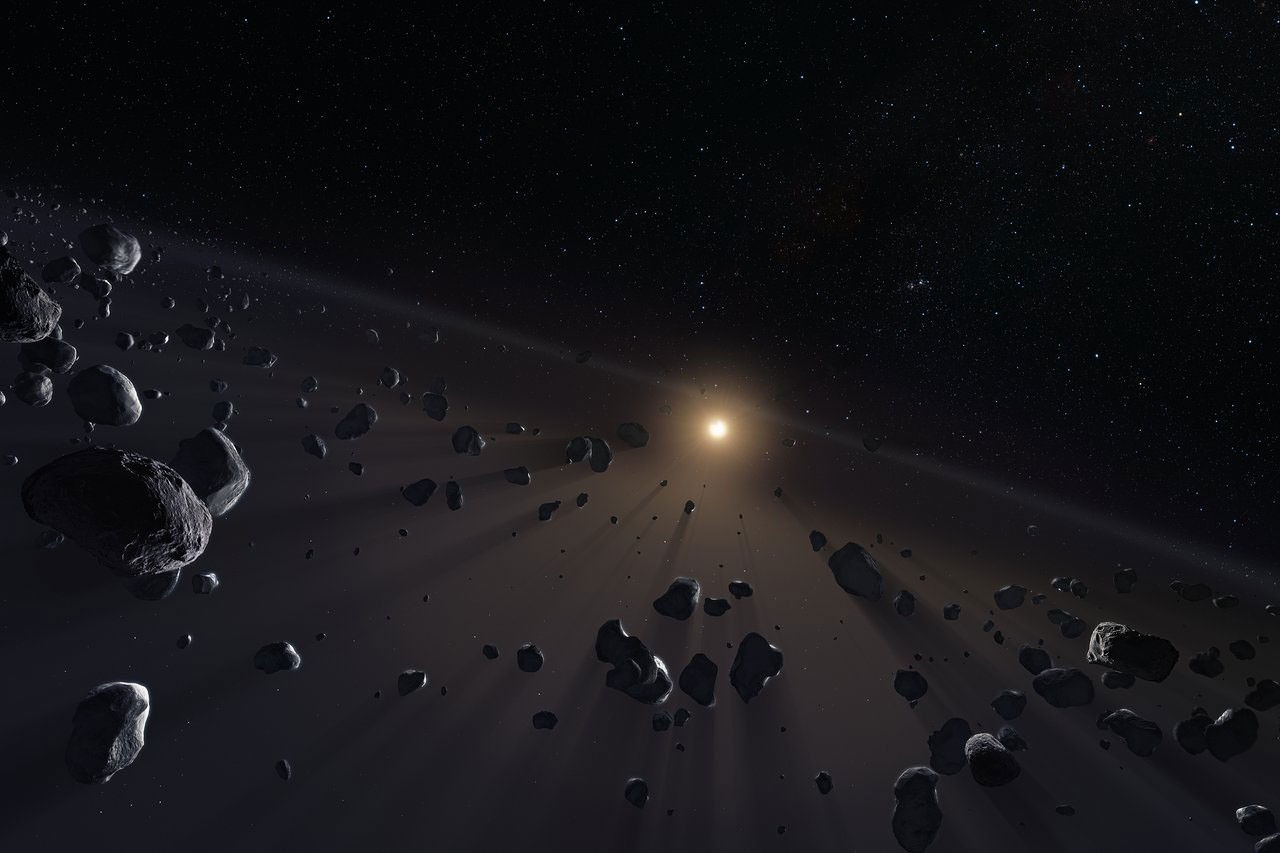
Recent observations from the Subaru Telescope, combined with the New Horizons spacecraft, have suggested the presence of undiscovered Kuiper Belt objects, possibly revolutionizing our understanding of the Solar System’s formation.
Ground and space-based telescopes have unveiled potential clusters of objects at great distances, offering new insights into the primordial solar nebula and the planet formation process.
Discovering the Unknown: Kuiper Belt’s New Frontiers
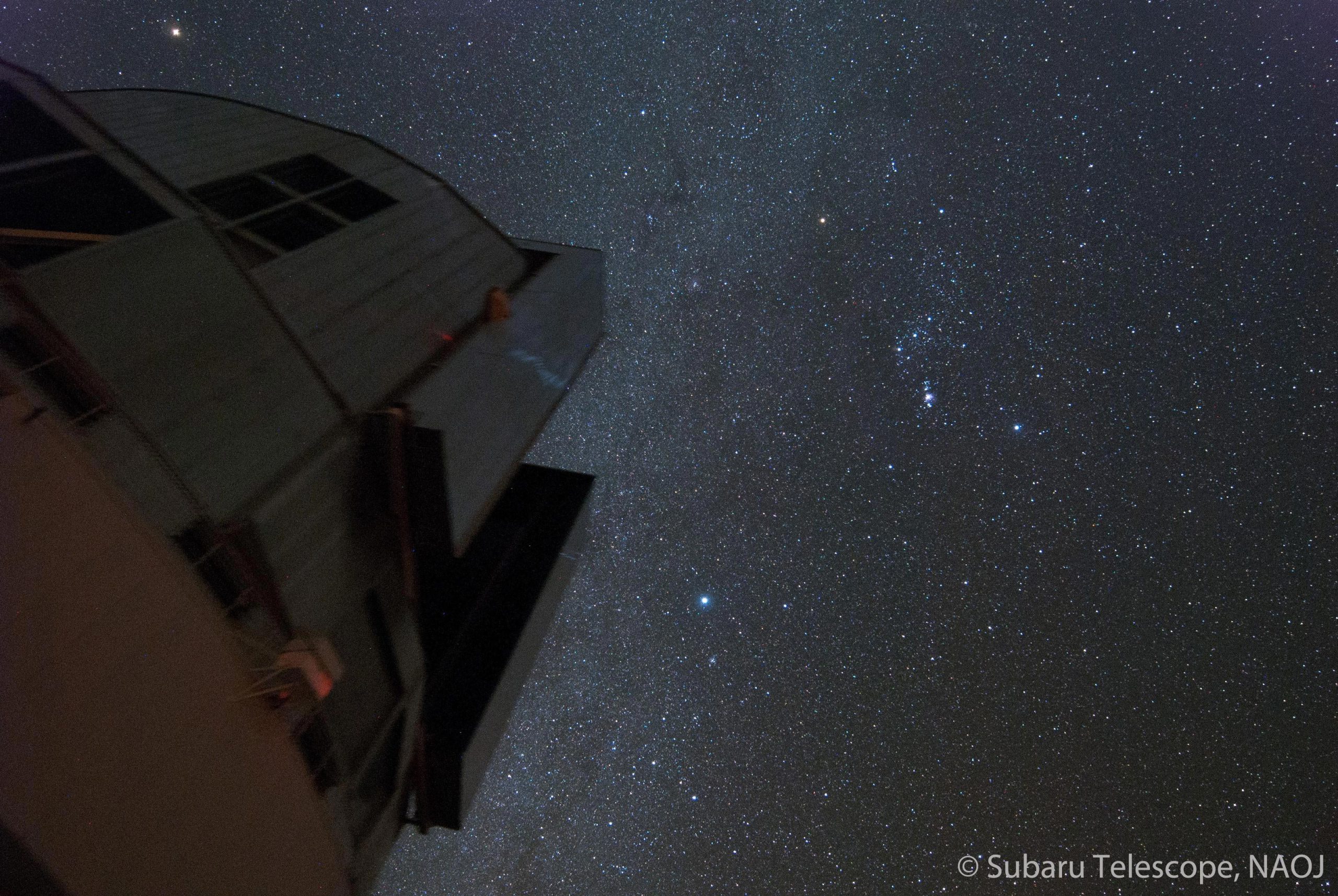
Survey observations using the Subaru Telescope’s ultra-widefield prime focus camera have revealed that there may be a population of small bodies further out in the Kuiper Belt waiting to be discovered. The results, which are important for understanding the formation of the Solar System, were obtained through an international collaboration between the Subaru Telescope and the New Horizons spacecraft traveling through the outer Solar System.
NASA’s New Horizons spacecraft was launched in 2006 with the critical mission of observing the surfaces of outer Solar System bodies up close for the first time in human history; it successfully completed a flyby of the Pluto system in 2015, and in 2019 it made a flyby of one of the Kuiper Belt objects, (486958) Arrokoth. There have been five spacecraft that have flown to the outer Solar System (including New Horizons), but New Horizons is the only spacecraft that has flown through the Kuiper Belt while observing Kuiper Belt objects.[1]
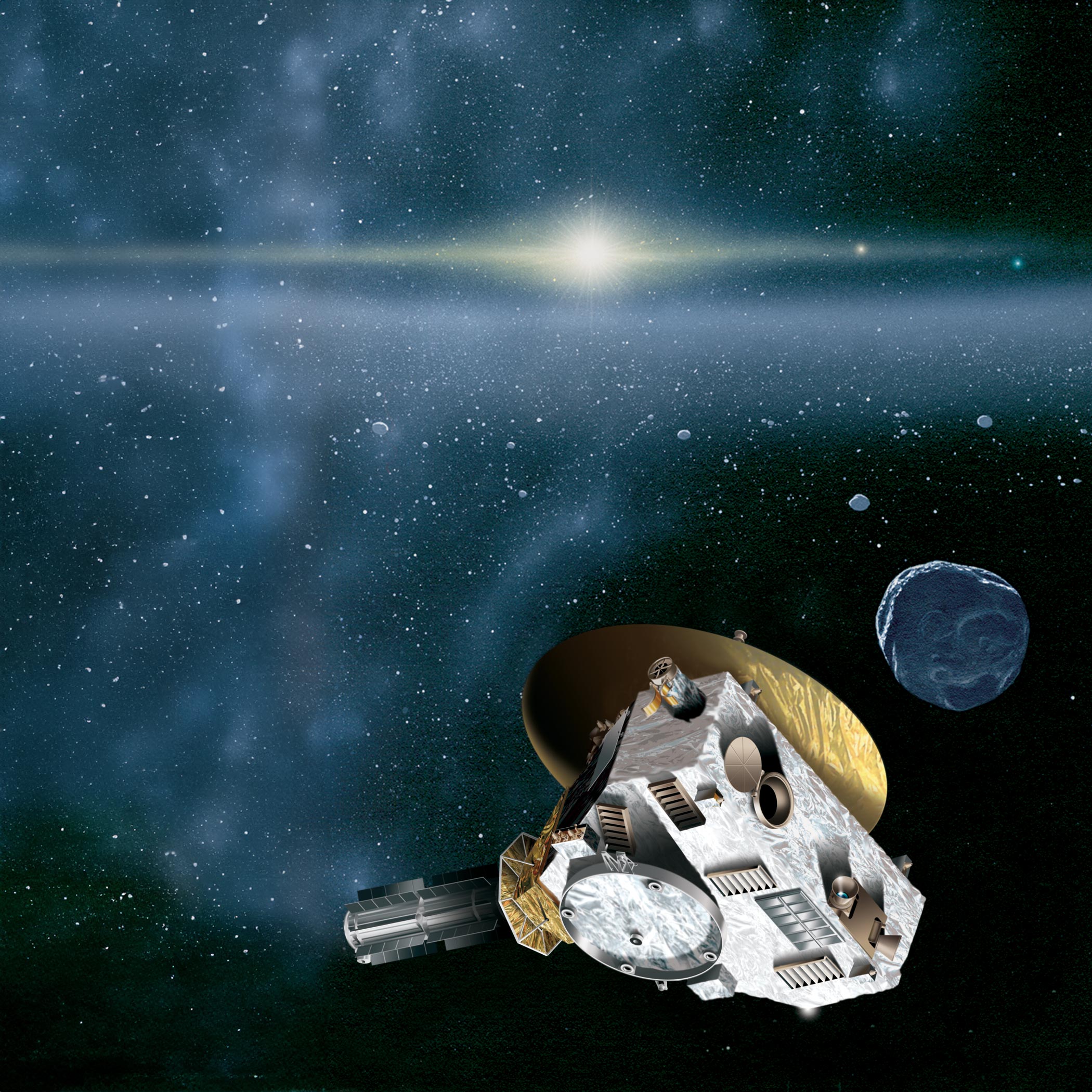
When observing Kuiper Belt objects from the ground, we can only observe them at small solar phase angles (the angle between the sun, the object, and the observer). On the other hand, when observing a Kuiper Belt object from a spacecraft in the Kuiper Belt, the same object can be observed at various phase angles and its reflection characteristics can be used to estimate the surface properties of the object. This is something only New Horizons can do.
Telescopic Collaborations Enhance Space Missions
However, the camera on the spacecraft has a narrow field of view and cannot discover Kuiper Belt objects on its own. This is where the Subaru Telescope comes in. The Subaru Telescope uses its wide-field camera to find many Kuiper Belt objects and then narrow down the list of objects that the spacecraft can fly by and observe. This collaboration between New Horizons and the Subaru Telescope began in 2004.
For observations conducted during 2004-2005 with Subaru Telescope’s prime focus camera (Suprime-Cam), due to the orbital relationship between Pluto and the spacecraft, an area near the center of the Milky Way Galaxy got caught in the background of the search area for Kuiper Belt objects. Although it was extremely difficult to search for Solar System objects with many background stars, the research team was able to find 24 Kuiper Belt objects (for more information, see Reference 1 Buie et al. 2024).
The Quest for Distant Kuiper Belt Objects Continues
Unfortunately, the Kuiper belt objects so far found during this observation require too much fuel for the spacecraft to flyby, but new ones at great distances may fall within the available fuel reach of New Horizons. In 2020, deeper observations began with Hyper Suprime-Cam (HSC) on the Subaru Telescope, and by 2023, there had been 239 Kuiper Belt objects discovered (for more information, see Reference 2 Fraser et al. 2024).
The Surprising Discoveries Beyond Known Boundaries
“The most exciting part of the HSC observations was the discovery of 11 objects at distances beyond the known Kuiper Belt,” says team member Dr. Fumi Yoshida (University of Occupational and Environmental Health Sciences; Planetary Exploration Research Center, Chiba Institute of Technology).
Many of the objects discovered with HSC are located at distances of 30-55 astronomical units (au) from the Sun (1 au corresponds to the distance between the Sun and Earth) and are thought to be within the known Kuiper Belt. On the other hand, the team was not expecting what appears to be a cluster of objects in the 70-90 au region and a valley between 55 au and 70 au (where only a small number of objects are distributed) (Figure 1). Such a valley had not been reported in other observations.

Implications for Understanding Solar System Formation
There may be a new population of Kuiper Belt objects at 70-90 au. “If this is confirmed, it would be a major discovery. The primordial solar nebula was much larger than previously thought, and this may have implications for studying the planet formation process in our Solar System,” says Dr. Yoshida.
New Horizons mission Principal Investigator Dr. Alan Stern says, “This is a groundbreaking discovery revealing something unexpected, new, and exciting in the distant reaches of the Solar System; this discovery probably would not have been possible without the world-class capabilities of Subaru observatory.”
The Ongoing Adventure in the Outer Solar System
To determine the exact orbits of the objects discovered in this study, the research team is continuing observations with HSC. “I think the discovery of distant objects and the determination of their orbital distribution are important as a stepping stone to understanding the formation history of the Solar System, comparing it with exoplanetary systems, and understanding universal planet formation,” Dr. Yoshida says of the significance of the study.
New Horizons is currently traveling further out, 60 au from the Sun. There must be many more distant objects that we have not yet discovered. The research team is excited to see what the Subaru Telescope and the New Horizons spacecraft will discover beyond the Kuiper Belt.
These results will be published in two scientific papers in the Planetary Science Journal.
For more on this discovery:
Notes
- The Kuiper Belt is a ring-shaped region of asteroids and other celestial bodies (small objects) located beyond Neptune, about 30 to 55 au from the Sun. Small objects distributed in the Kuiper Belt are called “Kuiper Belt Objects.”
References:
- “The New Horizons Extended Mission Target: Arrokoth Search and Discovery” by Marc W. Buie, John R. Spencer, Simon B. Porter, Susan D. Benecchi, Alex H. Parker, S. Alan Stern, Michael Belton, Richard P. Binzel, David Borncamp, Francesca DeMeo, S. Fabbro, Cesar Fuentes, Hisanori Furusawa, Tetsuharu Fuse, Pamela L. Gay, Stephen Gwyn, Matthew J. Holman, H. Karoji, J. J. Kavelaars, Daisuke Kinoshita, Satoshi Miyazaki, Matt Mountain, Keith S. Noll, David J. Osip, Jean-Marc Petit, Neill I. Reid, Scott S. Sheppard, Mark Showalter, Andrew J. Steffl, Ray E. Sterner, Akito Tajitsu, David J. Tholen, David E. Trilling, Harold A. Weaver, Anne J. Verbiscer, Lawrence H. Wasserman, Takuji Yamashita, Toshifumi Yanagisawa, Fumi Yoshida and Amanda M. Zangari, Accepted, Planetary Science Journal.
arXiv:2403.04927 - “Candidate Distant Trans-Neptunian Objects Detected by the New Horizons Subaru TNO Survey” by Wesley C. Fraser, Simon B. Porter, Lowell Peltier, JJ Kavelaars, Anne J. Verbiscer, Marc W. Buie, S. Alan Stern, John R. Spencer, Susan D. Benecchi, Tsuyoshi Terai, Takashi Ito, Fumi Yoshida, David W. Gerdes, Kevin J. Napier, Hsing Wen Lin, Stephen D. J. Gwyn, Hayden Smotherman, Sebastien Fabbro, Kelsi N. Singer, Amanda M. Alexander, Ko Arimatsu, Maria E. Banks, Veronica J. Bray, Mohamed Ramy El-Maarry, Chelsea L. Ferrell, Tetsuharu Fuse, Florian Glass, Timothy R. Holt, Peng Hong, Ryo Ishimaru, Perianne E. Johnson, Tod R. Lauer, Rodrigo Leiva, Patryk S. Lykawka, Raphael Marschall, Jorge I. Núñez, Marc Postman, Eric Quirico, Alyssa R. Rhoden, Anna M. Simpson, Paul Schenk, Michael F. Skrutskie, Andrew J. Steffl and Henry Throop, Accepted, Planetary Science Journal.
arXiv:2407.21142
Never miss a breakthrough: Join the SciTechDaily newsletter.
Follow us on Google and Google News.
2 Comments
What is there to be discovered about the forming of the solar systems that has not been reported? Scrutiny of the why-fors
Is a waste of resources. Any intelligent human knows that the ” heavens and the earth” were created. Spend your efforts knocking on the door of information from the creator. You are unable to replicate nor observe the original process, and what problems of mankind have been resolved by looking into the heavens? It is like yeast peering through the dough seeking the baker.
Proverbs 25:2 says it’s the glory of God to conceal a matter, and the “glory of kings” to seek it out.
It seems God hides things for us to search out, and God takes pleasure in our discovery of them.