
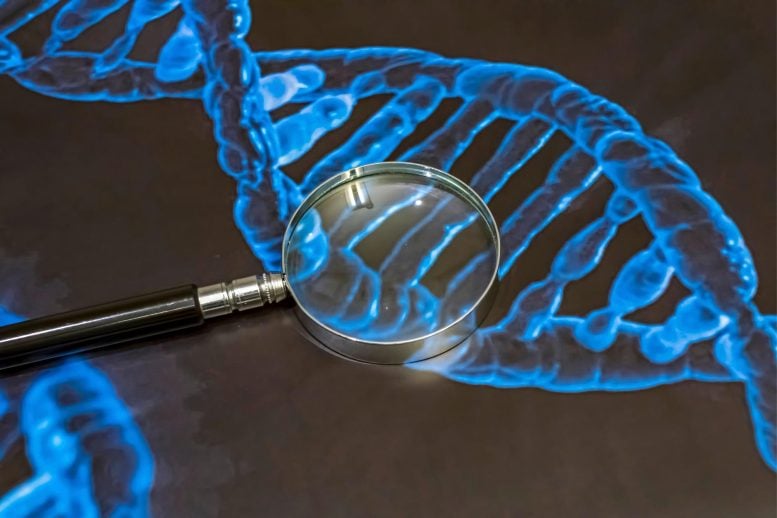
Researchers at EMBL Heidelberg found that inversions in the human genome are more common than previously thought, which impacts our understanding of certain genetic diseases.
Our DNA serves as a blueprint for the cellular machinery that allows cells, organs, and even whole organisms to work. However, mutations in our DNA can cause genetic illnesses. Point mutations at a single site, as well as deletions, duplications, and inversions, are examples of such DNA mutations.
Inversion refers to a piece of DNA inverting its orientation in the genome. Because inversions are more difficult to analyze than other forms of mutations, they are poorly understood. Scientists from EMBL Heidelberg, working with colleagues from the University of Washington in the United States and Heinrich Heine University Düsseldorf in Germany, have determined that inversions are one of the most common mutational processes in humans.
Recurrent ‘Flip-Flopping’ Inversions
The researchers uncovered how inversions are formed and investigated in detail a set of 40 inversions that form recurrently in the genome, where the DNA sequence flips back and forth. These ‘flip-flopping’ inversions typically lie in regions linked to the development of certain human diseases called genomic disorders.
“We found that inversions form at a much higher rate than previously thought. In humans, at least 0.6% of the genome repeatedly changes direction, making inversion one of the fastest mutational processes in humans,” said Jan Korbel, EMBL Senior Scientist and Head of Data Science. “At these sites, the genome is not stable – the direction of the DNA code continues to switch back and forth.”
These unstable areas are home to the many essential human genes. Scientific studies of long-distance gene regulation or epigenetics must now take into account this flipping behavior of genomic regions.

New Tools for Studying Complex Genomic Regions
Inversions are also relevant for the development of human diseases, such as developmental delays in children or neuropsychiatric disorders in adults. “Despite their importance, these regions have been very difficult to study before because of their complexity. Showing that these inversions indeed flip-flop back and forth required a new set of computational methods,” said Tobias Marschall, Director of the Institute of Medical Biometry and Bioinformatics and the Heinrich Heine University Düsseldorf. “We can now provide human geneticists with a new tool to understand the origin of disease in their patients.”
Evan Eichler, group leader at the University of Washington, said: “We showed for the first time that inversions can be associated with rare genomic rearrangements found in pediatric autism, developmental delay, and epilepsy. The question now is why? We hypothesize that certain configurations at the flanks of the inversions either predispose or protect individuals and their offspring from disease-associated rearrangements. This could have a practical application in the clinic, where it could be used to identify families at risk for developing these disorders.”
Reference: “Recurrent inversion polymorphisms in humans associate with genetic instability and genomic disorders” by David Porubsky, Wolfram Höps, Hufsah Ashraf, PingHsun Hsieh, Bernardo Rodriguez-Martin, Feyza Yilmaz, Jana Ebler, Pille Hallast, Flavia Angela Maria Maggiolini, William T. Harvey, Barbara Henning, Peter A. Audano, David S. Gordon, Peter Ebert, Patrick Hasenfeld, Eva Benito, Qihui Zhu, Human Genome Structural Variation Consortium (HGSVC), Charles Lee, Francesca Antonacci, Matthias Steinrücken, Christine R. Beck, Ashley D. Sanders, Tobias Marschall, Evan E. Eichler and Jan O. Korbel, 6 May 2022, Cell.
DOI: 10.1016/j.cell.2022.04.017
Never miss a breakthrough: Join the SciTechDaily newsletter.
Follow us on Google and Google News.
2 Comments
Does this effect how we understand evolution?
Does this also affect how we understand time distance to most common ancestor
The distances not being so far as thought.