

Researchers explored how Vibrio cholerae bacteria cause intense gut contractions through immune system activation, potentially offering new insights into digestive diseases like inflammatory bowel disease.
Their findings, which observed enhanced muscle activity in zebrafish, could also inform broader understanding of gut health interactions between the immune and nervous systems.
Understanding Gut Reactions to Bacterial Infections
Eating questionable seafood or drinking contaminated water can introduce harmful bacteria that push your digestive system into overdrive. This triggers intense spasms and contractions in the intestines, rapidly expelling everything inside — bacteria and waste alike.
Researchers at the University of Oregon have uncovered how Vibrio cholerae, a specific type of bacteria, causes these painful gut contractions by activating the immune system. Their findings also shed light on a broader mechanism the gut uses to clear out harmful invaders, offering potential insights into chronic conditions like inflammatory bowel disease.
Research Insights on Vibrio Cholerae
“This isn’t a specific nefarious activity of the Vibrio bacteria,” said Karen Guillemin, a microbiologist at the UO who collaborated on the work with biophysicist Raghu Parthasarathy. “The gut is a system where the default is, when there’s damage, you flush.”
The research, published recently in the journal mBio, was led by Julia Ngo, a now-graduated doctoral student in Guillemin and Parthasarathy’s labs.
Vibrio cholerae is best known for causing cholera, a severe illness that infects millions of people per year, often via contaminated water. A related Vibrio species is frequently linked to food poisoning from shellfish.
Mechanisms of Gut Contractions Revealed
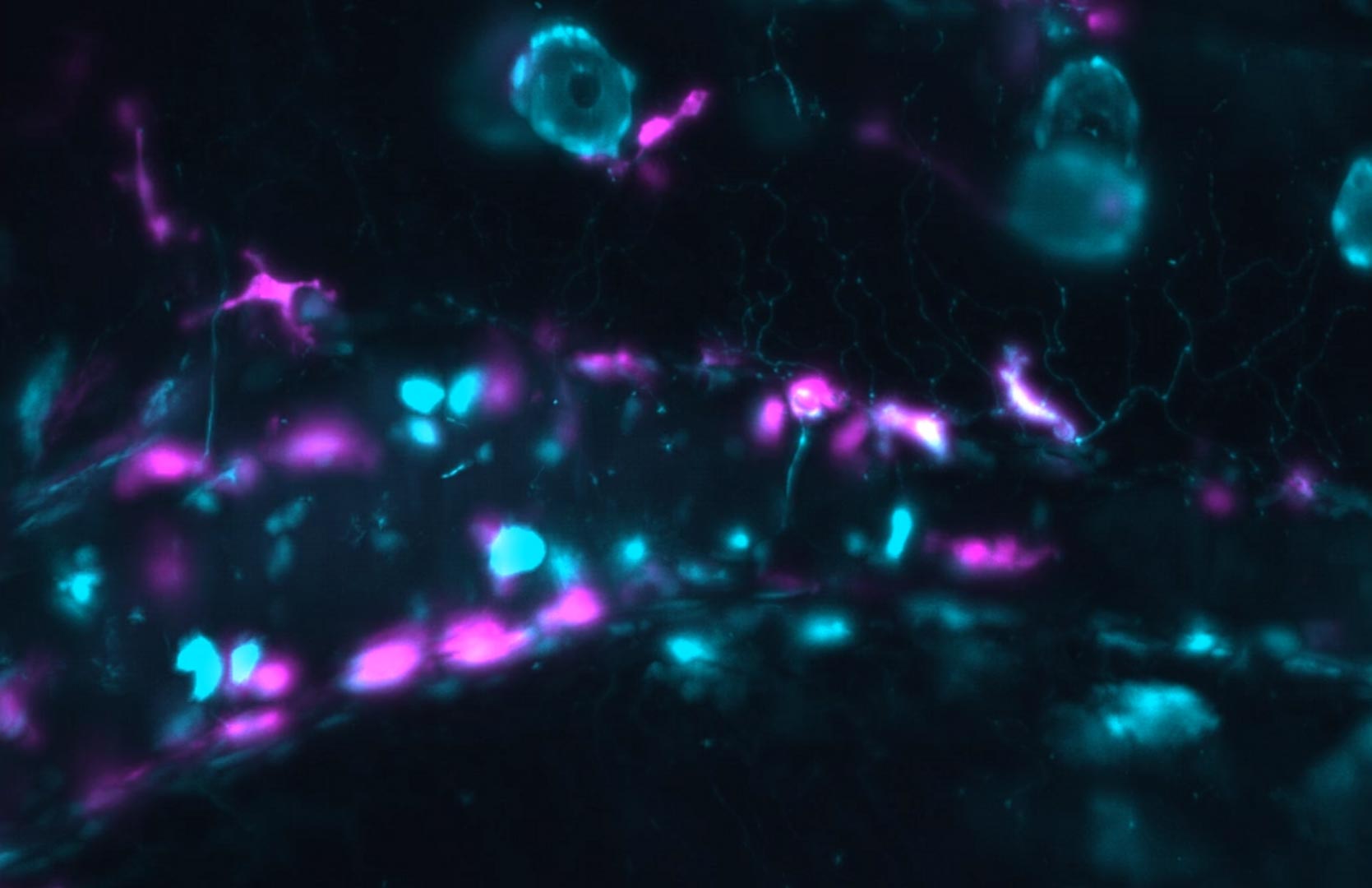
In past work, Parthasarathy’s lab has shown that Vibrio cholerae bacteria amped up the strength of gut contractions in zebrafish. These fish, which are transparent as larvae, are a powerful tool for studying the dynamics of microbes in the gut because scientists can visualize what’s happening in real time.
The team pinned the effect on a sword-like surface appendage that Vibrio bacteria usually use as a weapon against other microbes. Disarming the bacteria calmed the gut contractions — but they weren’t sure how or why.
Immune Response and Gut Health
The key, they show in this new research, is a type of immune cell called a macrophage.
Normally, macrophages tamp down the activity of neurons in the gut, keeping them calm and allowing things to move through the gut at a normal speed. But in response to tissue damage from the bacteria, the macrophages leave their posts and flock to the site of calamity, leaving the neurons unattended. Without macrophages to keep things in check, the neurons end up in overdrive, triggering strong contractions.
“It’s amazing how dynamic all these cells are, the macrophages racing across the fish, the neurons and muscles pulsing with activity,” Parthasarathy notes. “Without the ability to observe these phenomena in live animals, tracking cells and measuring gut contractions, we wouldn’t have figured any of this out.”
Those enhanced gut contractions are beneficial for the host, whether zebrafish or human.
“If the macrophages have to go deal with an injury, then it actually makes a lot of sense for the neurons to freak out and just push everything out of the gut,” Guillemin said. “If there’s something in the gut that’s causing injury, you want to get it out of there.”
The gut flushing is probably beneficial for the bacteria, too, giving them speedy access to new hosts. But Guillemin cautions against giving too much agency to microbes. The fact that Vibrio’s weaponry against other bacteria also triggers this strong intestinal response probably isn’t an exquisite adaptation, she said, but rather a convenient coincidence.
The study also highlights how cross talk between the immune and nervous systems might play an underappreciated role in gut health, Parthasarathy suggested. Deciphering how microbes influence that cross talk might give scientists new insights into a range of puzzling diseases.
Reference: “The Vibrio type VI secretion system induces intestinal macrophage redistribution and enhanced intestinal motility” by Julia S. Ngo, Piyush Amitabh, Jonah G. Sokoloff, Calvin Trinh, Travis J. Wiles, Karen Guillemin and Raghuveer Parthasarathy, 22 November 2024, mBio.
DOI: 10.1128/mbio.02419-24
This work was supported by the National Science Foundation and the National Institutes of Health.
Never miss a breakthrough: Join the SciTechDaily newsletter.
Follow us on Google and Google News.
1 Comment
Yes am glad about the science teaching how to someone get more knowledge I Was trying for many years to be a Doctor in Health science .