
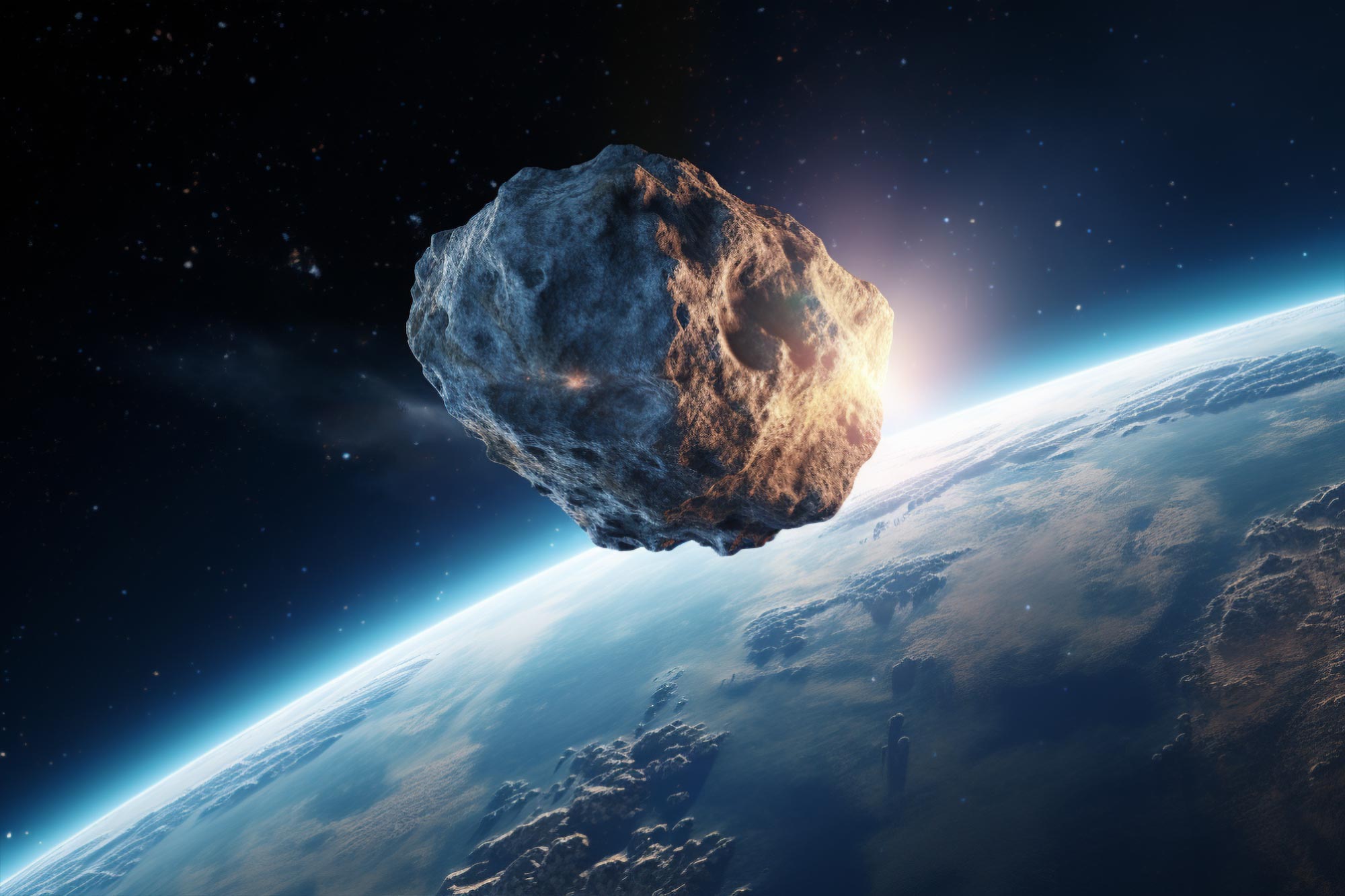
New research indicates that the Taurid swarm contains fewer large asteroids than anticipated, suggesting a lower threat level.
This finding from observations using the Zwicky Transient Facility telescope informs both planetary defense strategies and our understanding of how comets and asteroids evolve.
Discovering the Taurid Swarm’s Secrets
Astronomers have promising news about potentially hazardous asteroids near Earth: there aren’t as many as previously thought.
Using the Zwicky Transient Facility (ZTF) telescope to scan large sections of the sky, a research team led by the University of Maryland examined a stream of space debris known as the Taurid swarm, which drifts close to Earth. The Taurid swarm, believed to be fragments of a large comet called Encke, appears from Earth as striking meteor showers each October and November. This area has long fascinated astronomers for its potential to hide dangerous asteroids, but until now, scientists could not confirm or disprove the existence of such hazards.
The team shared their findings at the American Astronomical Society’s Division for Planetary Sciences annual meeting in October 2024.

Reassuring Findings on Asteroid Threats
“We took advantage of a rare opportunity when this swarm of asteroids passed closer to Earth, allowing us to more efficiently search for objects that could pose a threat to our planet,” said Quanzhi Ye, who supervised the project and is an assistant research scientist in UMD’s Department of Astronomy. “Our findings suggest that the risk of being hit by a large asteroid in the Taurid swarm is much lower than we believed, which is great news for planetary defense.”
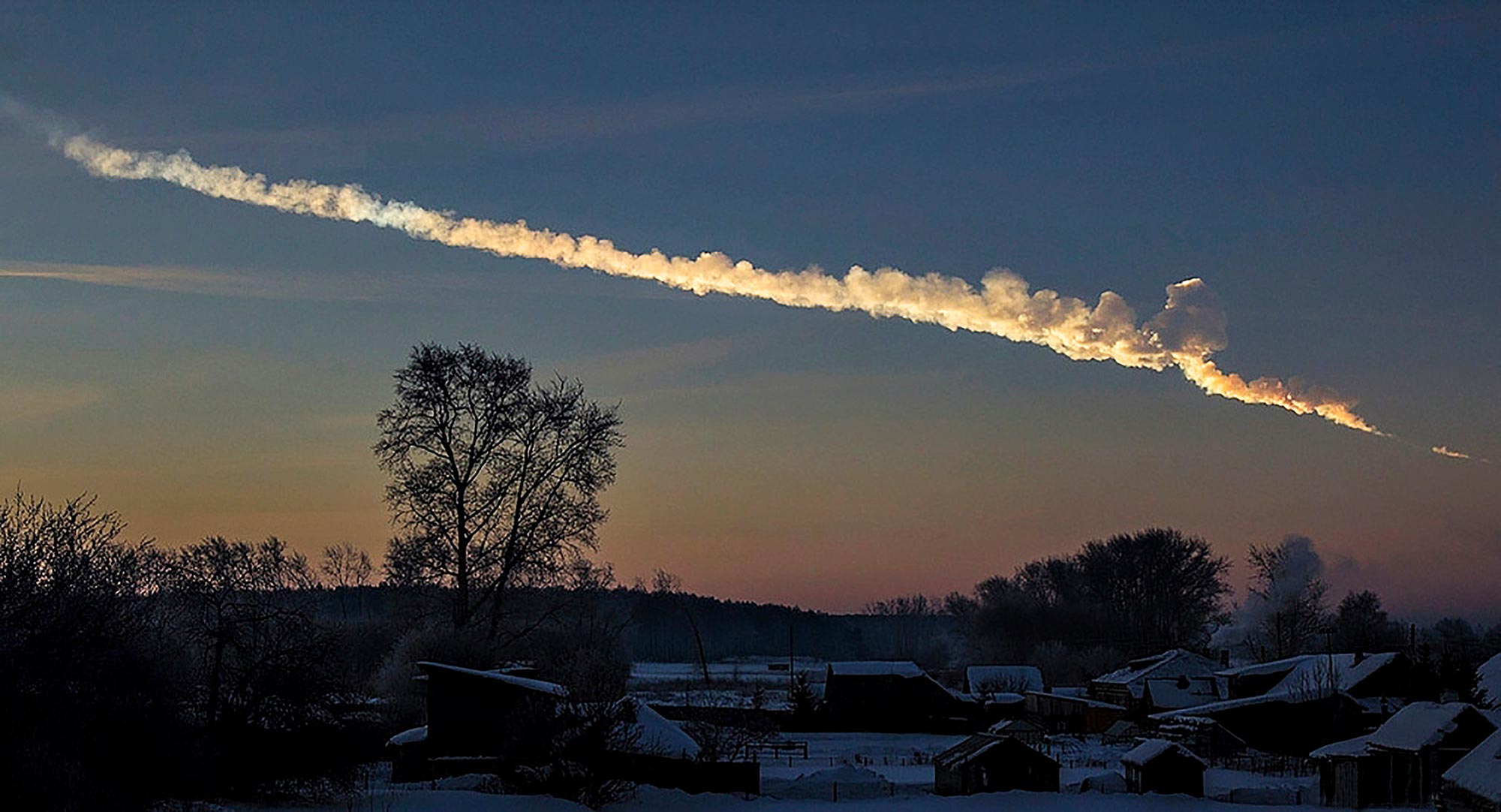
Prior to this study, researchers speculated that the Taurid swarm contained a considerable number of large, kilometer-class space rocks left behind by a large object possibly up to 100 kilometers (62 miles) wide. Large objects can cause regional damage if they were to impact Earth, such as the Chelyabinsk asteroid that hit Russia and injured more than 1,600 people in 2013. Even larger objects can cause extinction-level events, such as the asteroid that killed the dinosaurs over 66 million years ago.
Unveiling the True Scale of the Taurid Swarm
“Fortunately, we found that it’s likely there may only be a handful of asteroids—perhaps only nine to 14 of them—that fit this large size class in the swarm,” Ye explained. “Judging from our findings, the parent object that originally created the swarm was probably closer to 10 kilometers in diameter rather than a massive 100-kilometer object. While we still need to be vigilant about asteroid impacts, we can probably sleep better knowing these results.”
Insights Into Comet Encke and Planetary Evolution
According to Ye, the Taurid swarm holds important clues about planetary evolution, especially due to its connection to the comet Encke. Encke, which has the one of the shortest orbital periods (the time it takes to complete one rotation around the sun) of known comets at just 3.3 years, is also unusually large and dusty for a short-period comet (orbiting the sun in 200 years or less). Considering all available evidence, scientists believe that Encke experienced significant fragmentation in the past—and may continue to fall apart similarly in the future.
“Studying the Taurid swarm helps us understand how small celestial bodies like comets and asteroids form and break apart over time,” Ye said. “Our research has implications not just for asteroid detection and planetary defense, but also for our broader understanding of solar system objects.”
Future Steps in Asteroid Detection
While the study’s results are reassuring, the team believes that they also underscore the need for ongoing vigilance and improved detection capabilities. Using advanced facilities such as the ZTF telescope, which can efficiently conduct vast sky surveys and track potentially hazardous near-Earth objects, the researchers plan to conduct follow-up observations in the coming years when the Taurid asteroid swarm passes close to Earth again.
“We have opportunities in 2025 and 2026 to further refine our results,” Ye said. “As a result, we’re excited to continue this important work.”
Meeting: 56th annual meeting of the American Astronomical Society (AAS) Division for Planetary Sciences (DPS)
Led by Poolesville High School’s Jasmine Li and supervised by UMD, the research team also included scientists from the University of Western Ontario and the University of Washington, Seattle.
This study was supported by NASA (Program No. 80NSSC22K0772). This article does not necessarily reflect the views of this organization.
Never miss a breakthrough: Join the SciTechDaily newsletter.
Follow us on Google and Google News.
7 Comments
How dangerous? Not nearly dangerous enough. It’s past time for a swarm of meteors to put Earth out of our collective miery.
The only thing mierable here is yuor spellig.
Non of yu kno how to spells!
A swarm of smaller asteroids could prevent or complicate any attempt to knock out a big asteroid that is targeting earth. Agree/disagree?
All the scientist will find how to destroy the asteroid instead of creating missiles destroy the peoples and i suggest to all peoples to pray for the safety of peoples,God Allah bless us
Pray for the safety of the asteroids.
How come meteorite did not kill lizard amphibian insect or other primitive animal .the dinosaur are not dead the last surviving dinosaur modern crocodilian is very much alive .the superior dinosaur modern crocodilian the great gator are responsible for there dead. Darwin has said that the strong will survive .keep preaching about advance dinosaur the evidence does not back it up.the early dinosaur has some teeth like tuatara the palate teeth the fish teeth .the scapula is not fuse to coracoid in early dinosaur the basipterygoid is not fuse to pterygoid they have 3 eye feature .nile crocodile is king it has warm blooded nose like mammal it has pseudorotunda .dinosaur ears is like tuatara a early reptile only mesoeucrocodylia spinosauridae has a pseudorotunda in dinosaur