

By studying synthetic minerals, researchers are uncovering how rare earth elements (REEs) form, offering potential for improved extraction methods and revealing untapped deposits to meet increasing global demand.
New light has been shed on the formation of increasingly precious rare earth elements (REEs) by researchers from Trinity College Dublin. They accomplished this by creating synthetic rocks and testing their responses to varying environmental conditions. REEs are used in many electronic devices and green energy technologies, including everything from smartphones to electric vehicles.
The findings, just published on September 19 in the journal Global Challenges, have implications for recycling REEs from electronic waste, designing materials with advanced functional properties, and even for finding new REE deposits hidden around the globe.
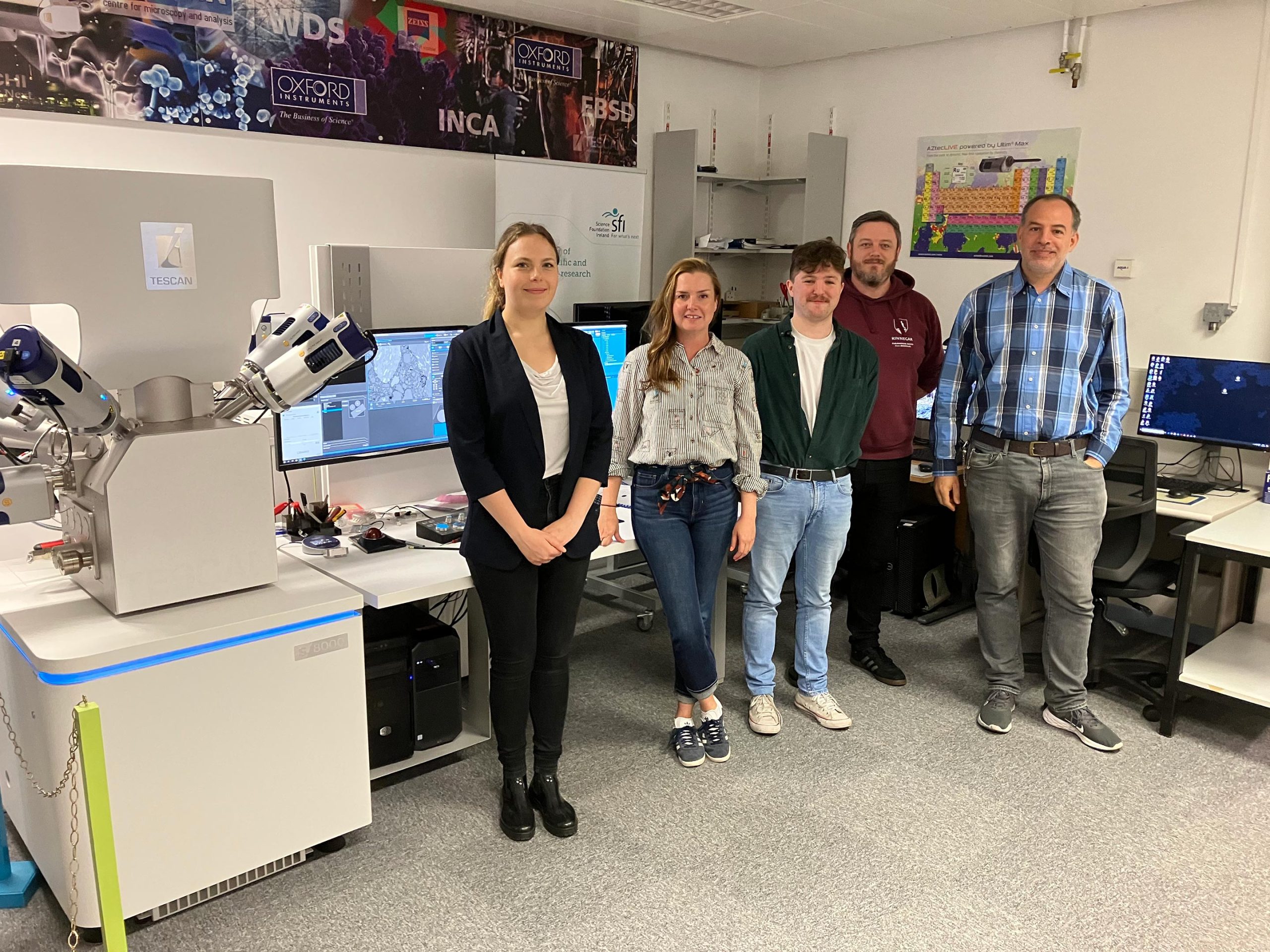
Dr. Juan Diego Rodriguez-Blanco, Associate Professor in Nanomineralogy at Trinity and an iCRAG (SFI Research Centre in Applied Geosciences) Funded Investigator, was the principal investigator of the work. He said:
“As both the global population and the fight against carbon emissions grow in the wake of global climate change, the demand for REEs simultaneously increases, which is why this research is so important. By growing our understanding of REE formation, we hope to pave the way to a more sustainable future.
“The genesis of rare earth deposits is one of the most complex problems in Earth sciences, but our approach is shedding new light on the mechanisms by which rocks containing rare earths form. This knowledge is critical for the energy transition, as rare earths are key manufacturing ingredients in the renewable energy economy.”
Many countries are currently searching for more REE deposits with minable concentrations, but the extraction processes are often challenging, and the separation methods are expensive and environmentally aggressive.
One of the main sources of REEs is REE-carbonate deposits. The biggest known deposit is Bayan-Obo in China, which supplies over 60% of the global REEs demand.
What Have the Researchers Discovered?
Their study has revealed that fluids containing REEs replace common limestone – and this happens via complex reactions even at ambient temperature. Some of these reactions are extremely fast, taking place in the same time it takes to brew a cup of coffee.
This knowledge allows the team to better understand the basic mineral reactions that are also involved in industrial separation processes, which will help improve extraction methods and separate REEs from fluids.
The team’s research aims to understand the complex processes of REE-carbonate deposit formation. But instead of studying natural samples, they synthesize their own minerals and rare earth carbonate rocks (similar to Bastnasite, the key mineral from which REEs can be extracted from carbonatite rocks). They then mimic natural reactions to discover how REE mineralizations form.
This also allows them to assess how changes in the main environmental factors promote their formation. This can help us understand the origin of mineralizations on untapped carbonatite resources, which are not only in China but also in other areas of the world, such as Brazil, Australia, USA, India, Vietnam, South Africa, and Greenland.
“As REEs are playing a critical role in a technology-filled and sustainable future, it is necessary to understand the behavior of REEs in the geochemical cycle and in basic chemical reactions,” explains Adrienn Maria Szucs, PhD candidate in Geochemistry in Trinity’s School of Natural Sciences, and lead author of this study.
Reference: “Targeted Crystallization of Rare Earth Carbonate Polymorphs at Hydrothermal Conditions via Mineral Replacement Reactions” by Adrienn Maria Szucs, Melanie Maddin, Daniel Brien, Paul Christopher Guyett and Juan Diego Rodriguez-Blanco, 18 September 2022, Global Challenges.
DOI: 10.1002/gch2.202200085
This research was funded by Science Foundation Ireland, the Geological Survey of Ireland and the Environmental Protection Agency under the SFI Frontiers for the Future Programme. Adrienn was also supported via a Provost PhD Award at Trinity.
Never miss a breakthrough: Join the SciTechDaily newsletter.
Follow us on Google and Google News.
1 Comment
Your headline is sloppy science. It should be “How do rare earth minerals[or deposits]form?” How the elements form is a question for nuclear physicists or cosmologists.I’m only being a stickler because I consider this site to be a reliable source for science news.