
Close Menu
    Facebook X (Twitter) Instagram
    SciTechDaily
    • Biology
    • Chemistry
    • Earth
    • Health
    • Physics
    • Science
    • Space
    • Technology
    Facebook X (Twitter) Pinterest YouTube RSS
    SciTechDaily
    Home»Biology»How Genetic Defects in Myelin Formation Cause White Matter Diseases
    Biology

    How Genetic Defects in Myelin Formation Cause White Matter Diseases

    By Bill Hathaway, Yale UniversityNovember 17, 2015No Comments2 Mins Read
    Facebook Twitter Pinterest Telegram LinkedIn WhatsApp Email Reddit
    Share
    Facebook Twitter LinkedIn Pinterest Telegram Email Reddit
    Yale Researchers Show How a Mutated Gene Wreaks Havoc on White Matter
    Yale University research links lipid metabolism gene mutations to a hereditary myelin disease, potentially offering insights into controlling multiple sclerosis.

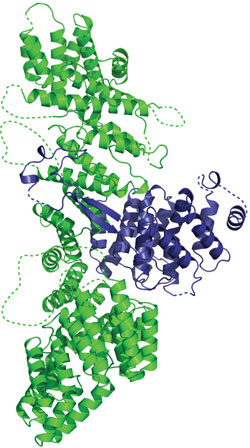
    New research from Yale University may shed insight into mechanisms to control the course of multiple sclerosis. Their results point to a role for FAM126A in supporting myelination, an important process in development and also following acute exacerbations in multiple sclerosis.

    An inherited disease of myelin marked by slow, progressive neurological impairment is caused by mutations of a gene that controls lipid metabolism, a finding that may shed insight into mechanisms to control the course of multiple sclerosis (MS), a Yale team has found.

    Mutations in a single gene, called FAM126A, cause a panoply of pathologies, such as developmental delay, intellectual disability, peripheral neuropathy, and muscle wasting, in addition to congenital cataracts. Until now the precise function of the gene was unknown.

    The labs of Yale cell biologists Pietro De Camilli and Karin Reinisch found that the protein encoded by the gene, called hyccin, helps produce a lipid crucial to the formation of the myelin sheaths that surround and protect the axons of neurons throughout the nervous system.

    Their labs, working with other groups in the United States, Italy, and Germany, analyzed cells from patients suffering from the disease known as Hypomyelination and Congenital Cataract and found that FAM126A mutations result in the destabilization of an enzyme complex crucial to the production of myelin.

    In MS, the course of the disease is critically dependent upon the reformation of myelin sheaths after immune system attacks then destroys them, eventually leading to the death of the neurons. The researchers hypothesize that the lipid that hyccin helps generate may play a key role in creation of myelin sheaths in normal development as well as in recovering MS patients.

    Postdoc Jeremy Baskin (now at Cornell) and graduate student Xudong Wu (now at Harvard) led the study in the De Camilli and Reinisch labs, respectively. The research was published November 16 in the journal Nature Cell Biology.

    Reference: “The leukodystrophy protein FAM126A (hyccin) regulates PtdIns(4)P synthesis at the plasma membrane” by Jeremy M. Baskin, Xudong Wu, Romain Christiano, Michael S. Oh, Curtis M. Schauder, Elisabetta Gazzerro, Mirko Messa, Simona Baldassari, Stefania Assereto, Roberta Biancheri, Federico Zara, Carlo Minetti, Andrea Raimondi, Mikael Simons, Tobias C. Walther, Karin M. Reinisch and Pietro De Camilli, 16 November 2015, Nature Cell Biology.
    DOI: 10.1038/ncb3271

    Never miss a breakthrough: Join the SciTechDaily newsletter.
    Follow us on Google and Google News.

    Cell Biology Disease Yale University
    Share. Facebook Twitter Pinterest LinkedIn Email Reddit

    Related Articles

    New Yale Studies Explore the Science of Cardiovascular Diseases

    Yale Scientists Recode Organisms to Resist Viral Contamination

    Yale Study Shows Protein IL-18 Contributes to Colitis

    A New Way to Attack Malarial Parasites in Blood Cells

    Biologists Identify a New Approach to Cancer Immunotherapy

    New Research Details Why Typhoid Toxin Targets Only Humans

    New Research Changes the View about the Genetics of Leukemia Risk

    Researchers Solve Biological Mystery about the Common Genesis of Many Serious Diseases

    Optogenetics Regulates Metabolic Activity in the Membranes of Cells

    Leave A Reply Cancel Reply

    • Facebook
    • Twitter
    • Pinterest
    • YouTube

    Don't Miss a Discovery

    Subscribe for the Latest in Science & Tech!

    Trending News

    Largest-Ever Study Finds Medicinal Cannabis Ineffective for Anxiety, Depression, PTSD

    250-Million-Year-Old Egg Solves One of Evolution’s Biggest Mysteries

    Living With Roommates Might Be Changing Your Gut Microbiome Without You Knowing

    Century-Old Cleaning Chemical Linked to 500% Increased Risk of Parkinson’s Disease

    What if Your Memories Never Happened? Physicists Take a New Look at the Boltzmann Brain Paradox

    One of the Universe’s Largest Stars May Be Getting Ready To Explode

    Scientists Discover Enzyme That Could Supercharge Ozempic-Like Weight Loss Drugs

    Popular Sweetener Linked to DNA Damage – “It’s Something You Should Not Be Eating”

    Follow SciTechDaily
    • Facebook
    • Twitter
    • YouTube
    • Pinterest
    • Newsletter
    • RSS
    SciTech News
    • Biology News
    • Chemistry News
    • Earth News
    • Health News
    • Physics News
    • Science News
    • Space News
    • Technology News
    Recent Posts
    • What Did Prehistoric Europeans Eat? Scientists Uncover Surprising Answers
    • Scientists Say This Overlooked Organ Could Hold the Key to Longer Life
    • Want Less Stress? Landmark Study Points to a Simple Habit
    • Scientists Reveal Eating Fruits and Vegetables May Increase Your Risk of Lung Cancer
    • AI Reveals Explosive Growth of Floating Algae Across the World’s Oceans
    Copyright © 1998 - 2026 SciTechDaily. All Rights Reserved.
    • Science News
    • About
    • Contact
    • Editorial Board
    • Privacy Policy
    • Terms of Use

    Type above and press Enter to search. Press Esc to cancel.