
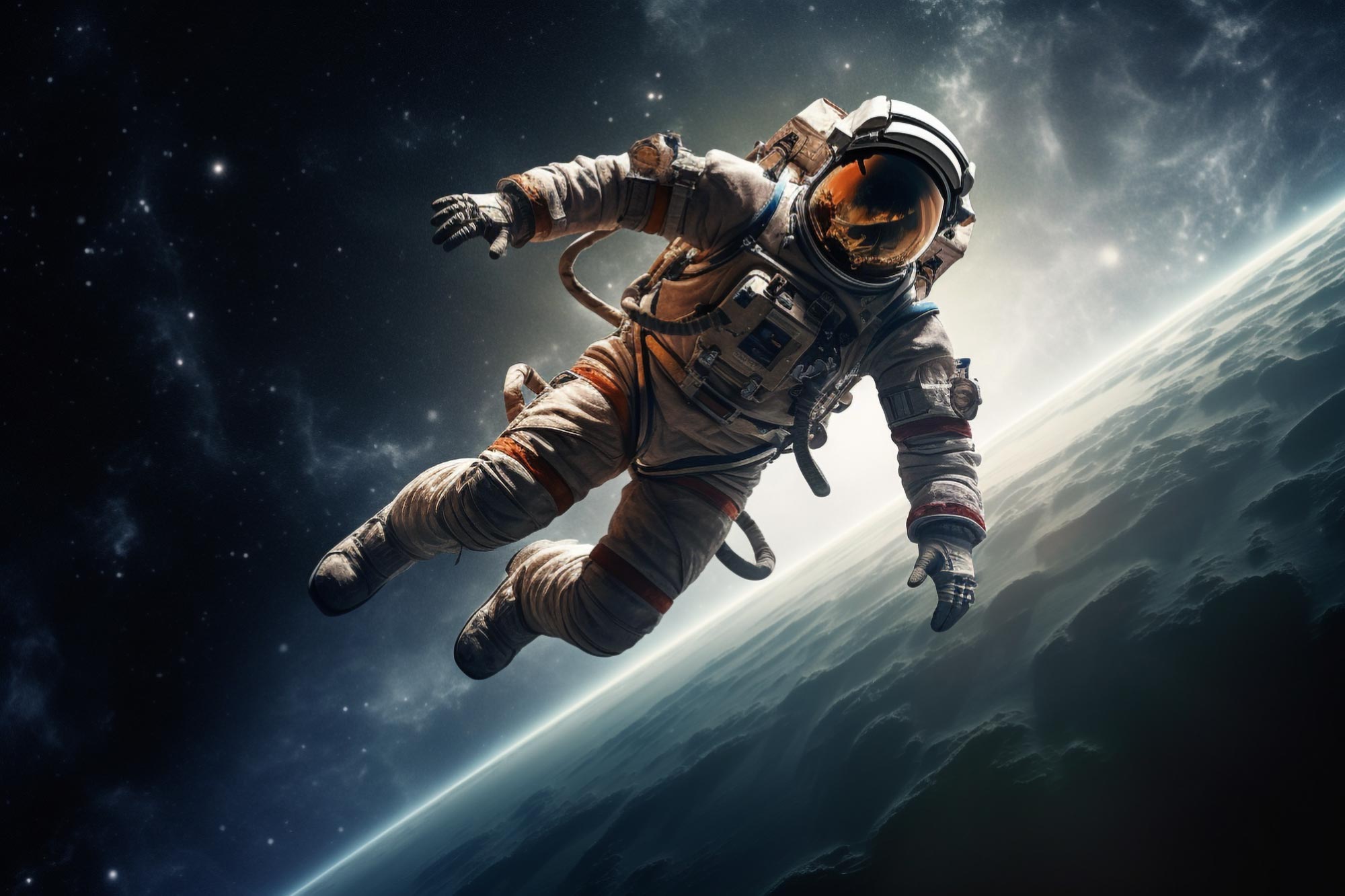
International team reveals previously unknown effects on physiology that could shape the future of long-duration space missions.
Researchers have discovered significant changes in the gut microbiome due to spaceflight, which affects host physiology and could influence long-term space missions. These insights into microbial shifts and their impact on immune and metabolic functions are crucial for designing future astronaut health protocols and understanding space-related physiological changes.
Spaceflight’s Impact on Gut Microbiome
Scientists have uncovered how spaceflight profoundly alters the gut microbiome, revealing previously unknown effects on host physiology that could shape the future of long-duration space missions.
Led by University College Dublin (UCD) and McGill University, Canada, in collaboration with NASA and an international consortium, the research offers the most detailed profile to date of how space travel impacts the gut microbes we carry into space.
Genetic Insights From Space
Published in npj Biofilms and Microbiomes, the study used advanced genetic technologies to examine changes in the gut microbiome, colons, and livers of mice aboard the International Space Station (ISS) over three months. The findings reveal significant shifts in specific bacteria and corresponding changes in host gene expression associated to immune and metabolic dysfunction commonly observed in space, offering new insights into how these changes may affect astronaut physiology during extended missions.
Dr. Emmanuel Gonzalez, McGill University, and first author of the study, said: “Spaceflight extensively alters astronaut physiology, yet many underlying factors remain a mystery. By integrating new genomic methods, we can simultaneously explore gut bacteria and host genetics in extraordinary detail and are beginning to see patterns that could explain spaceflight pathology. It’s clear we’re not just sending humans and animals to space, but entire ecosystems, the understanding of which is crucial to help us develop safeguards for future space exploration.”
Global Collaborations in Space Biology
The international collaboration, spearheaded by UCD with NASA GeneLab’s Analysis Working Groups, is part of the recent Nature Portfolio package: The Second Space Age: Omics, Platforms and Medicine across Space Orbits – the largest coordinated release of space biology discoveries in history.
These findings highlight Ireland’s growing role in microbiome and space life sciences research and demonstrate how understanding biological adaptations to spaceflight can not only advance aerospace medicine but also have significant implications for health on Earth.
Biological Implications for Space and Earth
Professor Nicholas Brereton, UCD School of Biology and Environmental Science, and senior author of the study, said: “These discoveries highlight the intricate dialogue between specific gut bacteria and their mouse hosts, critically involved in bile acid, cholesterol, and energy metabolism. They shed new light on the importance of microbiome symbiosis to health and how these Earth-evolved relationships may be vulnerable to the stresses of space.
“We hope this research exemplifies how cooperative Open Science can drive discoveries with clear medical benefits on Earth, while also supporting the upcoming Artemis missions, the deployment of the Gateway deep space station, and a crewed mission to Mars.”
NASA’s Perspective on Space Biology Research
Ames Space Biology Portfolio Scientist, NASA Ames Research Center, Jonathan Galazka said: “These discoveries are an important piece in our understanding of how spaceflight impacts astronauts and will aid the design of safe and effective missions to Earth orbit, the Moon, and Mars. Moreover, the collaborative nature of this project is a blueprint for how Open Science can accelerate the pace of discovery.”
Reference: “Spaceflight alters host-gut microbiota interactions” by E. Gonzalez, M. D. Lee, B. T. Tierney, N. Lipieta, P. Flores, M. Mishra, L. Beckett, A. Finkelstein, A. Mo, P. Walton, F. Karouia, R. Barker, R. J. Jansen, S. J. Green, S. Weging, J. Kelliher, N. K. Singh, D. Bezdan, J. Galazska and N. J. B. Brereton, 29 August 2024, npj Biofilms and Microbiomes.
DOI: 10.1038/s41522-024-00545-1
Never miss a breakthrough: Join the SciTechDaily newsletter.
Follow us on Google and Google News.
2 Comments
An eye-opening read about the real effects of space travel on astronauts. The detailed explanations of internal changes are particularly intriguing. 바카라사이트
It’s safe to say that there’s not a single thing that a spaceflight can improve in the body. It can only deteriorate and we can only argue the pace of deterioration. So what’s the point of doing it then?