
Close Menu
    Facebook X (Twitter) Instagram
    SciTechDaily
    • Biology
    • Chemistry
    • Earth
    • Health
    • Physics
    • Science
    • Space
    • Technology
    Facebook X (Twitter) Pinterest YouTube RSS
    SciTechDaily
    Home»Space»How to Best See Comet NEOWISE – Before It’s Gone for Another 6,800 Years
    Space

    How to Best See Comet NEOWISE – Before It’s Gone for Another 6,800 Years

    By NASAJuly 18, 2020No Comments2 Mins Read
    Facebook Twitter Pinterest Telegram LinkedIn WhatsApp Email Reddit
    Share
    Facebook Twitter LinkedIn Pinterest Telegram Email Reddit
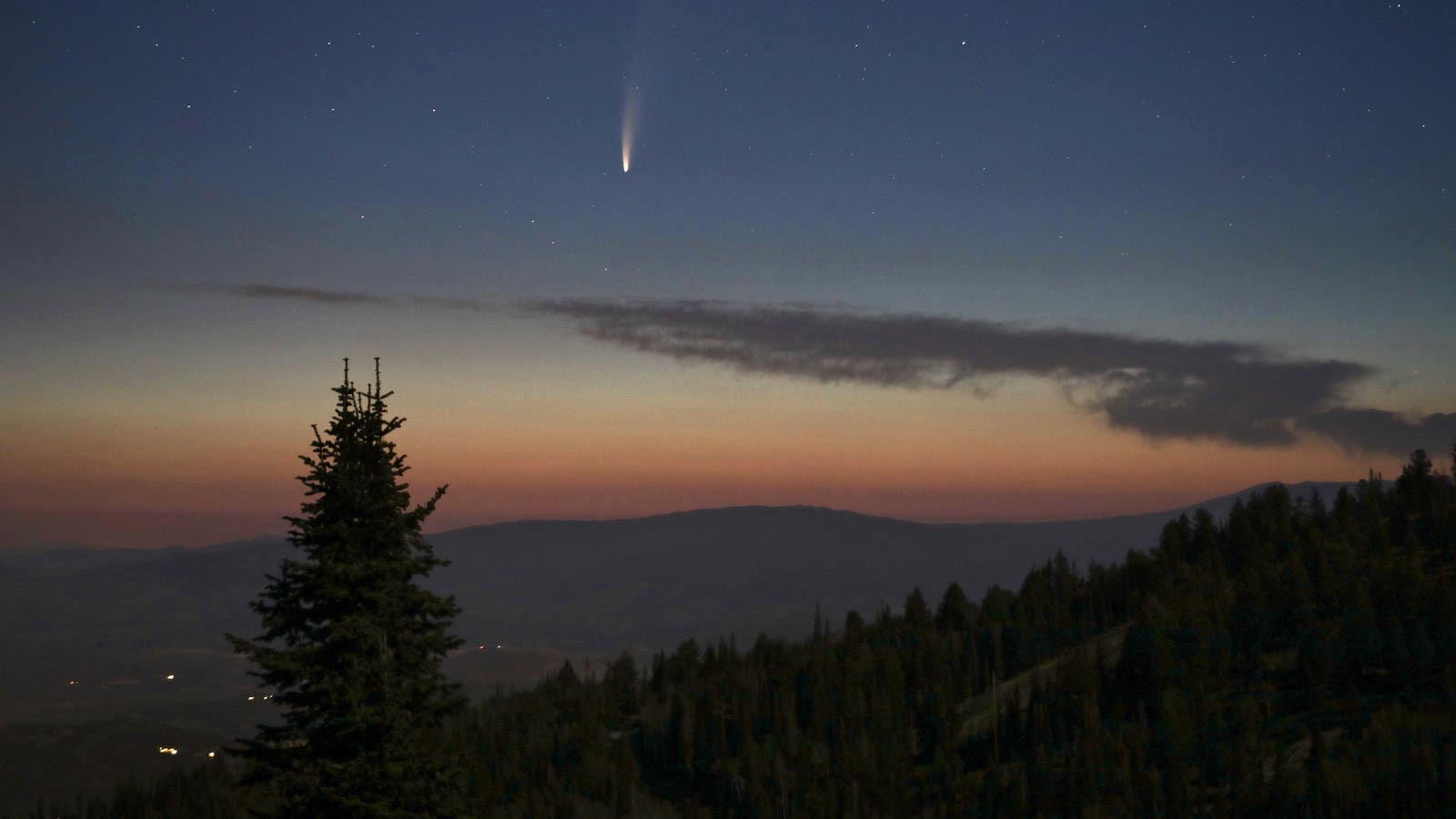
    Comet C/2020 F3 NEOWISE
    Comet C/2020 F3 (NEOWISE) in the predawn skies on July 9, 2020, over Deer Valley, Utah. Credit: NASA

    Observers in the Northern Hemisphere are hoping to catch a glimpse of Comet NEOWISE as it zips through the inner solar system before it speeds away into the depths of space. Discovered on March 27, 2020, by NASA’s Near-Earth Object Wide-field Infrared Survey Explorer (NEOWISE) mission, Comet NEOWISE is putting on a dazzling display for skywatchers before it disappears, not to be seen again for another 6,800 years. 

    For those hoping to catch a glimpse of  Comet NEOWISE before it’s gone, there are several observing opportunities over the coming days when it will become increasingly visible shortly after sunset in the northwest sky. If you’re looking at the sky without the help of observation tools, Comet NEOWISE will likely look like a fuzzy star with a bit of a tail, so using binoculars or a small telescope is recommended to get the best views of this object. 

    For those hoping to see Comet Neowise for themselves, here’s what to do: 

    • Find a spot away from city lights with an unobstructed view of the sky

    • Just after sunset, look below the Big Dipper in the northwest sky

    • If you have them, bring binoculars or a small telescope to get the best views of this dazzling display

    Each night, the comet will continue rising increasingly higher above the northwestern horizon as illustrated in the below graphic:

    Skychart Comet C/2020 F3
    Skychart showing the location of Comet C/2020 F3 just after sunset, July 15 through 23. Credit: NASA/JPL-Caltech

    Want to learn more about Comet NEOWISE? Take a look at some of these resources: 

    Read these skywatching Tips from NASA.

    Learn these tips and tricks on how to photograph comets and meteor showers.

    Take a look at these images of Comet NEOWISE captured by NASA missions: 

    • Parker Solar Probe

    • International Space Station

    Learn more about comet science, how Comet NEOWISE was discovered, and how you can spot it in the sky in this episode of NASA Science Live:

    https://youtu.be/FFn4-kQPjzk

    Never miss a breakthrough: Join the SciTechDaily newsletter.
    Follow us on Google and Google News.

    Comet NASA NEOWISE Popular
    Share. Facebook Twitter Pinterest LinkedIn Email Reddit

    Related Articles

    Celebrity Comet NEOWISE Close-Up Snapped by Hubble

    Stunning Photo Captures International Space Station Above Comet NEOWISE

    Comet NEOWISE Sizzles As It Slides by the Sun – A Treat for Observers on Earth and in Space

    Comet NEOWISE Has Suddenly Become Visible to the Unaided Eye

    NEOWISE: One Year of Observations Mapped

    NASA’s NEOWISE Spacecraft Views Its First Comet

    Astronomers Reveal the True Identity of Mysterious Centaurs

    Comet 2013 A1 to Make a Very Close Flyby of Mars

    Comet Survives after Close Brush With the Sun

    Leave A Reply Cancel Reply

    • Facebook
    • Twitter
    • Pinterest
    • YouTube

    Don't Miss a Discovery

    Subscribe for the Latest in Science & Tech!

    Trending News

    This Experimental Drug Repaired the Gut and Reversed Severe Fatty Liver Disease

    Physicists Just Turned a Black Hole Energy Theory Into Reality

    Stanford Scientists Solve a 252-Million-Year-Old Mass Extinction Mystery

    The Ancient Survival Mechanism Making Weight Loss So Difficult

    Just 3,000 Steps a Day May Help Protect the Brain From Alzheimer’s

    “Weird Clams” Reveal a New Invasion Along the U.S. Northeast Coast

    Archaeologists Decapitated Tutankhamun and Glued His Body Back Together

    New Black Hole Theory Solves a 50-Year-Old Problem

    Follow SciTechDaily
    • Facebook
    • Twitter
    • YouTube
    • Pinterest
    • Newsletter
    • RSS
    SciTech News
    • Biology News
    • Chemistry News
    • Earth News
    • Health News
    • Physics News
    • Science News
    • Space News
    • Technology News
    Recent Posts
    • New Study Reveals Herpesvirus Infection May Accelerate Alzheimer’s Disease
    • Microplastics Found in 84% of Serious Heart Attack Patients
    • The Oldest Known Right-Handed Animal May Have Lived 550 Million Years Ago
    • MIT’s Tiny Flying Robot Just Learned To Move Like a Real Insect
    • Why Are Bees Struggling To Survive This Summer?
    Copyright © 1998 - 2026 SciTechDaily. All Rights Reserved.
    • Science News
    • About
    • Contact
    • Editorial Board
    • Privacy Policy
    • Terms of Use

    Type above and press Enter to search. Press Esc to cancel.