
Close Menu
    Facebook X (Twitter) Instagram
    SciTechDaily
    • Biology
    • Chemistry
    • Earth
    • Health
    • Physics
    • Science
    • Space
    • Technology
    Facebook X (Twitter) Pinterest YouTube RSS
    SciTechDaily
    Home»Space»NEOWISE: One Year of Observations Mapped
    Space

    NEOWISE: One Year of Observations Mapped

    By DC Agle, Jet Propulsion LaboratoryJanuary 16, 2015No Comments3 Mins Read
    Facebook Twitter Pinterest Telegram LinkedIn WhatsApp Email Reddit
    Share
    Facebook Twitter LinkedIn Pinterest Telegram Email Reddit
    NEOWISE Year in Review 2014
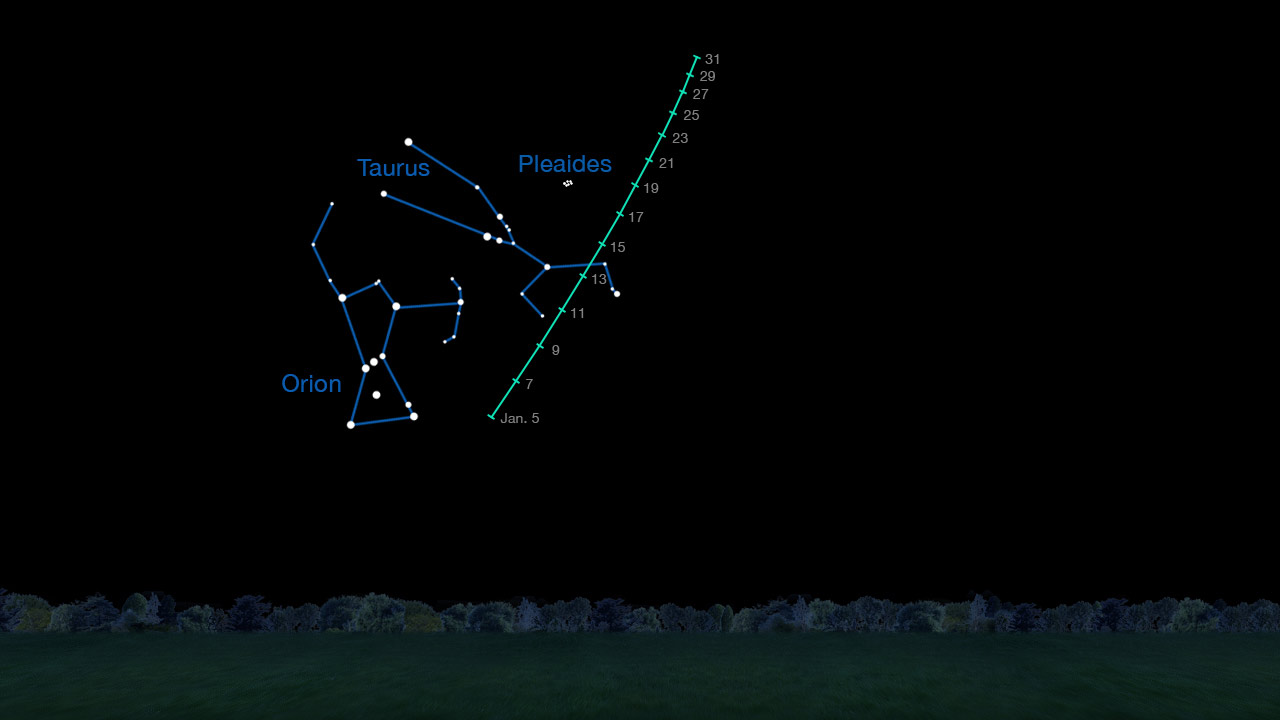
    On clear nights in January 2015, comet C/2014 Q2 (Lovejoy) is visible in the Taurus region of the sky to observers using binoculars. This chart indicates where to look for it on different dates during the month. Credit: NASA/JPL-Caltech

    NASA reviews the past 12 months of NEOWISE discoveries with a short video that shows the progression of the NEOWISE survey in the year after its December 2013 restart.

    NASA’s Near-Earth Object Wide-field Survey Explorer (NEOWISE) spacecraft discovered and characterized 40 near-Earth objects (NEOs) in the first year after the mission was re-started in December 2013. Eight of the discoveries have been classified as potentially hazardous asteroids (PHAs), based on their size and how close their orbits could come to Earth’s orbit.

    The mission has further observed and characterized 245 previously known near-Earth objects. From December 2013 to December 2014, NEOWISE discovered three new comets and observed 32 others. One of the others has turned into the brightest comet in Earth’s night sky in early 2015, comet C/2014 Q2 (Lovejoy).


    This movie shows the progression of NASA’s NEOWISE survey in the year after its December 2013 restart. Each dot represents an asteroid or comet that the mission observed. Green dots represent near-Earth objects (asteroids and comets that come within 1.3 astronomical units of the sun; one astronomical unit is Earth’s distance from the sun). Yellow squares represent comets. Gray dots represent all other asteroids, which are mostly in the main asteroid belt between Mars and Jupiter. The orbits of Mercury, Venus, Earth, and Mars are shown.

    NEOWISE always looks in the dawn and twilight skies – the direction perpendicular to a line between Earth and the sun. This unique vantage point makes it easy for NEOWISE to spot NEOs that get particularly close to Earth.

    Originally called the Wide-field Infrared Survey Explorer (WISE), the spacecraft was placed in hibernation in 2011 after its primary mission was completed. In September 2013, it was reactivated, renamed NEOWISE, and assigned a new mission to assist NASA’s efforts to identify the population of potentially hazardous near-Earth objects. NEOWISE is also characterizing previously known asteroids and comets to provide information about their sizes and compositions.
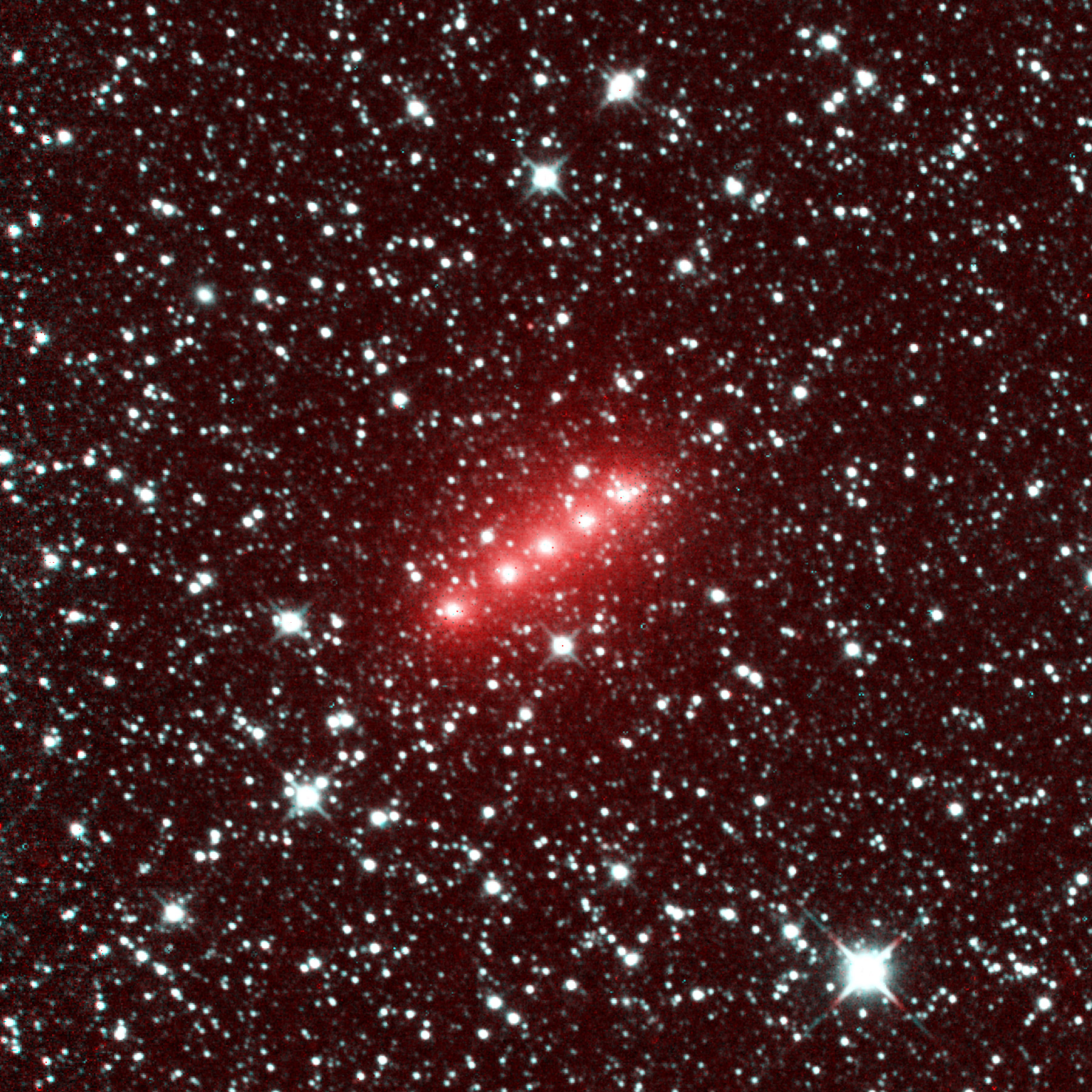
    Image of Comet Lovejoy
    Comet C/2014 Q2 (Lovejoy) is one of more than 32 comets imaged by NASA’s NEOWISE mission from December 2013 to December 2014. This image of comet Lovejoy combines a series of observations made in November 2013. Credit: NASA/JPL-Caltech

    NEOWISE is a space telescope that scans the skies for asteroids and comets. The telescope sees infrared light, which allows it to pick up the heat signature of asteroids and obtain better estimates of their true sizes. As a result, NEOWISE can see dark asteroids that are harder for visible-light surveys to find. Nearly all of the NEOWISE discoveries have been large (hundreds of yards, or meters, wide) and very dark, similar to printer toner. When NEOWISE’s infrared data on an object is combined with that of a visible-light optical telescope, it helps scientists understand the object’s composition.

    NASA’s Jet Propulsion Laboratory in Pasadena, California, manages the NEOWISE mission for NASA’s Science Mission Directorate in Washington. The Space Dynamics Laboratory in Logan, Utah, built the science instrument. Ball Aerospace & Technologies Corp. of Boulder, Colorado, built the spacecraft. Science operations and data processing take place at the Infrared Processing and Analysis Center at the California Institute of Technology in Pasadena. Caltech manages JPL for NASA.


    Never miss a breakthrough: Join the SciTechDaily newsletter.
    Follow us on Google and Google News.

    Asteroid Astronomy Comet NASA NEOWISE
    Share. Facebook Twitter Pinterest LinkedIn Email Reddit

    Related Articles

    We Asked a NASA Scientist: What’s the Difference Between Asteroids, Comets and Meteors? [Video]

    NASA’s NEOWISE Asteroid-Hunting Space Telescope Gets Two-Year Mission Extension

    Comet NEOWISE Has Suddenly Become Visible to the Unaided Eye

    NEOWISE Mission Spots One Comet, Maybe Two

    Astronomers Identify Greenhouse Gases in Comets

    “Skull Shaped” Asteroid 2015 TB145 Will Flyby Earth This Halloween

    NASA Comet Hitchhiker Would Take Tour of Small Asteroids and Comets

    NASA’s NEOWISE Spacecraft Views Its First Comet

    NASA’s Near-Earth Object Observations Program Discovers Ten Thousandth NEO

    Leave A Reply Cancel Reply

    • Facebook
    • Twitter
    • Pinterest
    • YouTube

    Don't Miss a Discovery

    Subscribe for the Latest in Science & Tech!

    Trending News

    The Universe Is Expanding Too Fast and Scientists Can’t Explain Why

    “Like Liquid Metal”: Scientists Create Strange Shape-Shifting Material

    Early Warning Signals of Esophageal Cancer May Be Hiding in Plain Sight

    Common Blood Pressure Drug Shows Surprising Power Against Deadly Antibiotic-Resistant Superbug

    Scientists Uncover Dangerous Connection Between Serotonin and Heart Valve Disease

    Scientists Discover a “Protector” Protein That Could Help Reverse Hair Loss

    Bone-Strengthening Discovery Could Reverse Osteoporosis

    Scientists Uncover Hidden Trigger Behind Stem Cell Aging

    Follow SciTechDaily
    • Facebook
    • Twitter
    • YouTube
    • Pinterest
    • Newsletter
    • RSS
    SciTech News
    • Biology News
    • Chemistry News
    • Earth News
    • Health News
    • Physics News
    • Science News
    • Space News
    • Technology News
    Recent Posts
    • Scientists Overcome Major Quantum Bottleneck, Potentially Transforming Teleportation and Computing
    • Quantum Physics’ Strangest Problem May Hold the Key to Time Itself
    • Scientists Create “Liquid Gears” That Spin Without Touching
    • The Simple Habit That Could Help Prevent Cancer
    • Forgotten Medicinal Plant Shows Promise in Fighting Dangerous Superbugs
    Copyright © 1998 - 2026 SciTechDaily. All Rights Reserved.
    • Science News
    • About
    • Contact
    • Editorial Board
    • Privacy Policy
    • Terms of Use

    Type above and press Enter to search. Press Esc to cancel.