
Close Menu
    Facebook X (Twitter) Instagram
    SciTechDaily
    • Biology
    • Chemistry
    • Earth
    • Health
    • Physics
    • Science
    • Space
    • Technology
    Facebook X (Twitter) Pinterest YouTube RSS
    SciTechDaily
    Home»Space»We Asked a NASA Scientist: What’s the Difference Between Asteroids, Comets and Meteors? [Video]
    Space

    We Asked a NASA Scientist: What’s the Difference Between Asteroids, Comets and Meteors? [Video]

    By NASADecember 24, 20214 Comments3 Mins Read
    Facebook Twitter Pinterest Telegram LinkedIn WhatsApp Email Reddit
    Share
    Facebook Twitter LinkedIn Pinterest Telegram Email Reddit
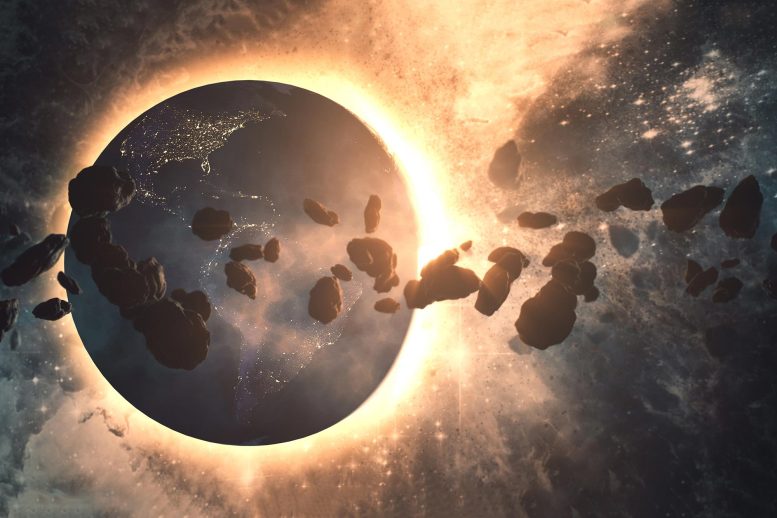
    Ateroid Belt Earth Illustration
    Most asteroids are found in a ring between the orbit of Mars and Jupiter called the asteroid belt.

    What’s the difference between asteroids, comets and meteors? These space rocks each have their own unique attributes. But differences aside, these fascinating objects are all worthy of study. Just ask NASA JPL scientist Ryan Park and he’ll agree.

    Well, they’re all planetary objects orbiting the Sun. An asteroid is a small, rocky object and when seen in a telescope, it appears as a point of light. Most asteroids are found in a ring between the orbit of Mars and Jupiter called the asteroid belt.

    Some asteroids are round, some are elongated, and some even have a satellite. A comet also orbits the Sun, but unlike an asteroid, it’s composed of ice and dust. So, when a comet gets close to the Sun, its ice and dust content start to vaporize. So, when seen in a telescope, a comet appears fuzzy and/or has a tail.

    So, what’s a meteor? Well, let’s start with a meteoroid. A meteoroid is a small piece of asteroid or a comet, typically pebble-sized, but could be a little smaller or a little larger, and often created from a collision.. When a meteoroid gets close to the Earth and enters the Earth’s atmosphere, it’s called a meteor. And a meteor enters the Earth’s atmosphere at a very high speed. So it burns up and produces a streak of light called a shooting star. So, if you have seen a shooting star, you likely saw a meteor. And if a meteor survives the burn and lands on the ground, it’s called a meteorite.

    So, what’s the difference between asteroids, comets, and meteors? Well, asteroids are rocky, comets are icy, and meteors are much smaller and are the shooting stars that you see up in the sky.

    We Asked a NASA Expert Video Series

    • Why is Venus Called Earth’s Evil Twin?
    • Is NASA Really Crashing a Spacecraft Into an Asteroid?
    • Is NASA Aware of Any Earth-Threatening Asteroids?
    • When Was the Last Time an Asteroid Hit Earth?
    • How Did Perseverance Mars Rover Pick Its Landing Spot?
    • What if an Asteroid Was Going To Hit Earth?
    • Did Mars Ever Look Like Earth?
    • What Are Lagrange Points?
    • What Are the Trojan Asteroids?
    • Is There Oxygen on Mars?
    • Does NASA Know About All the Asteroids?
    • Do Aliens Exist?
    • Is There Weather on Mars?
    • Will an Asteroid Ever Hit Earth?
    • Is Mars Habitable?
    • Could Microbes Survive a Trip to Mars?

    Never miss a breakthrough: Join the SciTechDaily newsletter.
    Follow us on Google and Google News.

    Asteroid Astronomy Comet Meteors NASA
    Share. Facebook Twitter Pinterest LinkedIn Email Reddit

    Related Articles

    Scientists Discover a New Meteor Shower From a Mysterious Crumbling Asteroid

    “Skull Shaped” Asteroid 2015 TB145 Will Flyby Earth This Halloween

    NASA Comet Hitchhiker Would Take Tour of Small Asteroids and Comets

    NEOWISE: One Year of Observations Mapped

    NASA’s Near-Earth Object Observations Program Discovers Ten Thousandth NEO

    Orbits of a Near-Earth Asteroid and a Potentially Hazardous Asteroid

    Trajectory Models of Refractory Particles Help Solve Two Solar System Puzzles

    Near Miss Asteroid – An Opportunity To Test a Rapid Response Program

    View the Eta Aquarid Meteor Shower From Halley’s Comet

    4 Comments

    1. gordo53 on December 24, 2021 10:32 am

      So when somebody digs an iron rock out of the soil, what’s that called?

      Reply
    2. dan gerene on December 25, 2021 4:22 pm

      gordo53, It’s an old cannonball.

      Reply
    3. John thee on December 25, 2021 7:29 pm

      Mind pollution

      Reply
    4. Jacflash on January 1, 2022 4:36 pm

      I found a ball of metal type material just bigger than a golf ball spiked surface the colour and weight of iron but it is NOT magnetic. Could this be a meteorite?

      Reply
    Leave A Reply Cancel Reply

    • Facebook
    • Twitter
    • Pinterest
    • YouTube

    Don't Miss a Discovery

    Subscribe for the Latest in Science & Tech!

    Trending News

    Breakthrough Bowel Cancer Trial Leaves Patients Cancer-Free for Nearly 3 Years

    Natural Compound Shows Powerful Potential Against Rheumatoid Arthritis

    100,000-Year-Old Neanderthal Fossils in Poland Reveal Unexpected Genetic Connections

    Simple “Gut Reset” May Prevent Weight Gain After Ozempic or Wegovy

    2.8 Days to Disaster: Scientists Warn Low Earth Orbit Could Suddenly Collapse

    Common Food Compound Shows Surprising Power Against Superbugs

    5 Simple Ways To Remember More and Forget Less

    The Atomic Gap That Could Cost the Semiconductor Industry Billions

    Follow SciTechDaily
    • Facebook
    • Twitter
    • YouTube
    • Pinterest
    • Newsletter
    • RSS
    SciTech News
    • Biology News
    • Chemistry News
    • Earth News
    • Health News
    • Physics News
    • Science News
    • Space News
    • Technology News
    Recent Posts
    • Scientists Print Artificial Neurons That Can Talk to the Brain
    • Bowel and Ovarian Cancers Are Dramatically Rising in Young Adults and Scientists Aren’t Sure Why
    • Alzheimer’s May Begin Decades Earlier Than You Think, New Mayo Clinic Study Finds
    • The Hidden Risk of Taking Breaks From Weight-Loss Drugs Like Ozempic
    • Total Solar Eclipse Made Cities Go Eerily Quiet Beneath the Surface
    Copyright © 1998 - 2026 SciTechDaily. All Rights Reserved.
    • Science News
    • About
    • Contact
    • Editorial Board
    • Privacy Policy
    • Terms of Use

    Type above and press Enter to search. Press Esc to cancel.