
In the history of space exploration, a handful of missions have set new records for ruggedness and longevity. On Mars, the undisputed champion is the Opportunity rover, which was slated to run for 90 days but remained in operation for 15 years instead! In orbit around Mars, that honor goes to the 2001 Mars Odyssey, which is still operational 20 years after it arrived around the Red Planet.
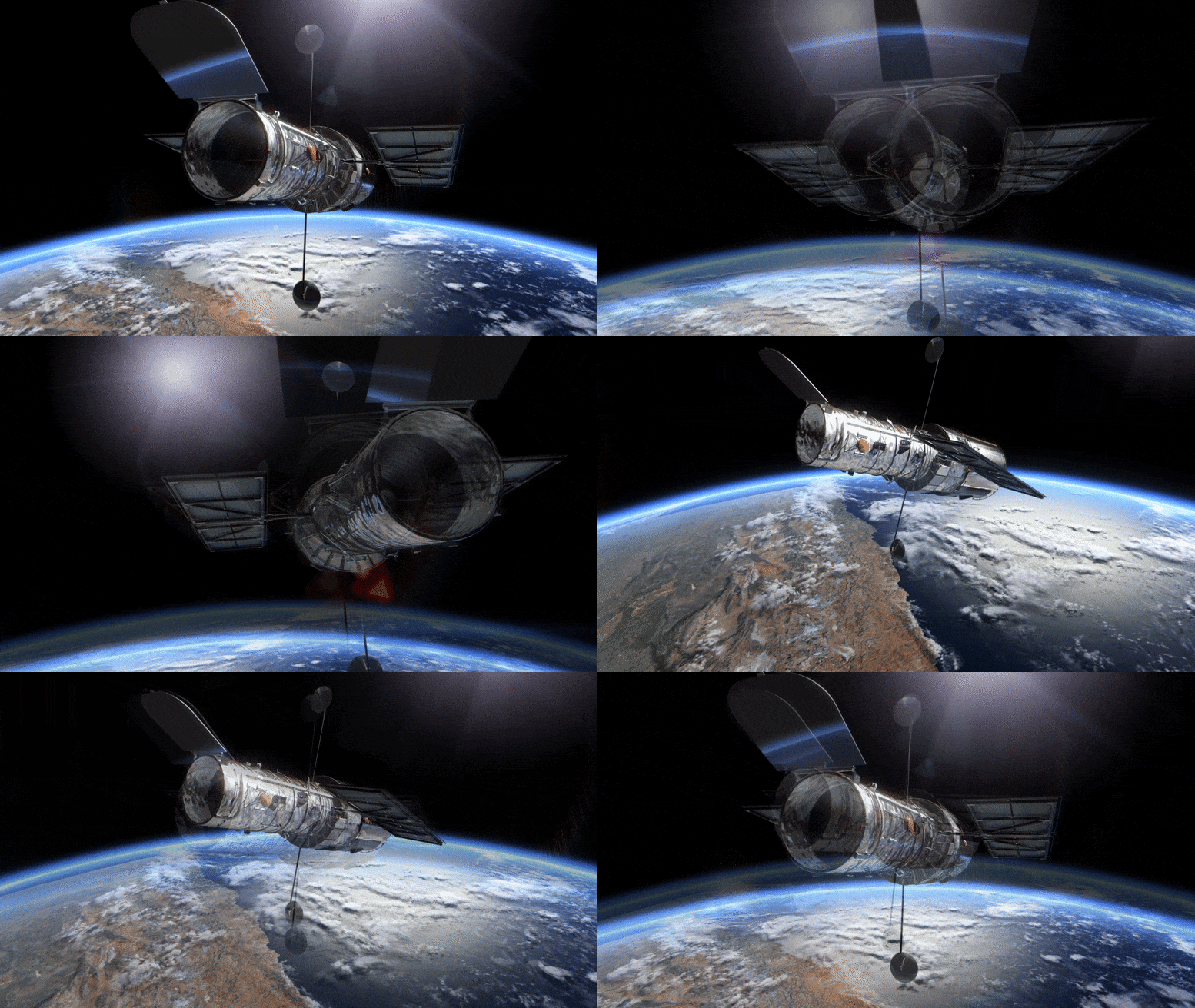
In deep space, the title for the longest-running mission goes to the Voyager 1 probe, which has spent the past 44 years exploring the Solar System and what lies beyond. But in Earth orbit, the longevity prize goes to the Hubble Space Telescope (HST), which is once again fully operational after experiencing technical issues. With this latest restoration of operations, Hubble is well on its way to completing 32 years of service.
The issue began at 01:46 A.M. EDT (10:46 P.M. PDT) on October 23rd, when NASA reported that the venerated space telescope was sending error codes, which indicate the loss of a specific synchronization message. This message provides timing information that Hubble’s instruments use to respond to data requests and commands correctly. The same error codes were issued two days later, indicating multiple losses of synchronization messages and triggering Hubble to enter safe mode.
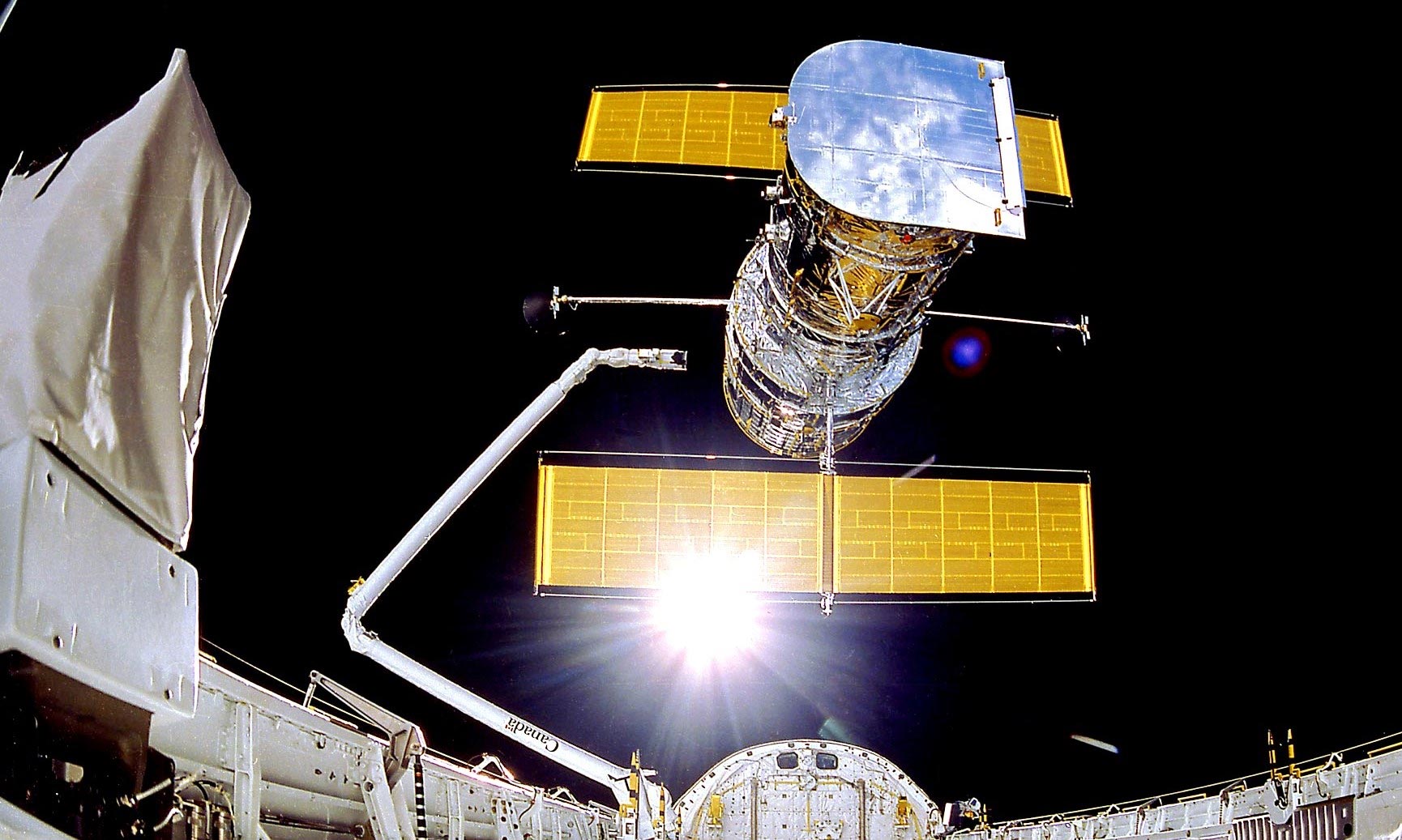
Throughout November, NASA’s Hubble team attempted to restart its main computer and backup systems. On November 8th, they announced that they had retained partial control by bringing the telescope’s Advanced Camera for Surveys (ACS) back online. They followed by restoring the Cosmic Origins Spectrograph (COS) and the Wide Field Camera 3 (WFC-3), Hubble’s most heavily used instrument.
On Monday, December 6th, the team announced that all four active instruments were back online after power was restored to the Space Telescope Imaging Spectrograph (STIS). While the telescope is fully operational again, this latest glitch and need for restoration are part of a recurring pattern. Last June, an unspecified issue caused Hubble’s NSSC-1 payload computer to stop working, prompting it to enter safe mode.
As part of the telescope’s Science Instrument Command and Data Handling (SI C&DH) module, this computer controls and coordinates the telescope’s scientific instruments. After a lengthy investigation and multiple attempts to restart Hubble’s backup systems, the telescope was restored to full operational status by July 17th. Similarly, back in October 2018, one of Hubble‘s reaction wheels failed t to go into safe mode. But on October 26th, after a considerable effort on behalf of the operations team, NASA announced that the venerable Hubble had been restored to working order.
Given Hubble’s long history of service and the fact that it runs on systems developed in the late 80s-early 90s, these two incidents have caused their fair share of trepidation. After all, when a 31-year-old mission experiences three significant issues that cause it to enter safe mode – the most recent of which happened in the last six months – one might get the impression it was on its last legs.
And yet, Hubble’s heat is once back online after experiencing another scare. According to the latest updates from NASA’s Goddard Spaceflight Center, the team will continue developing and testing changes they’ve made to the instrument software. These changes (it is hoped) will allow Hubble to continue running science operations if it experiences several lost synchronization messages in the future.
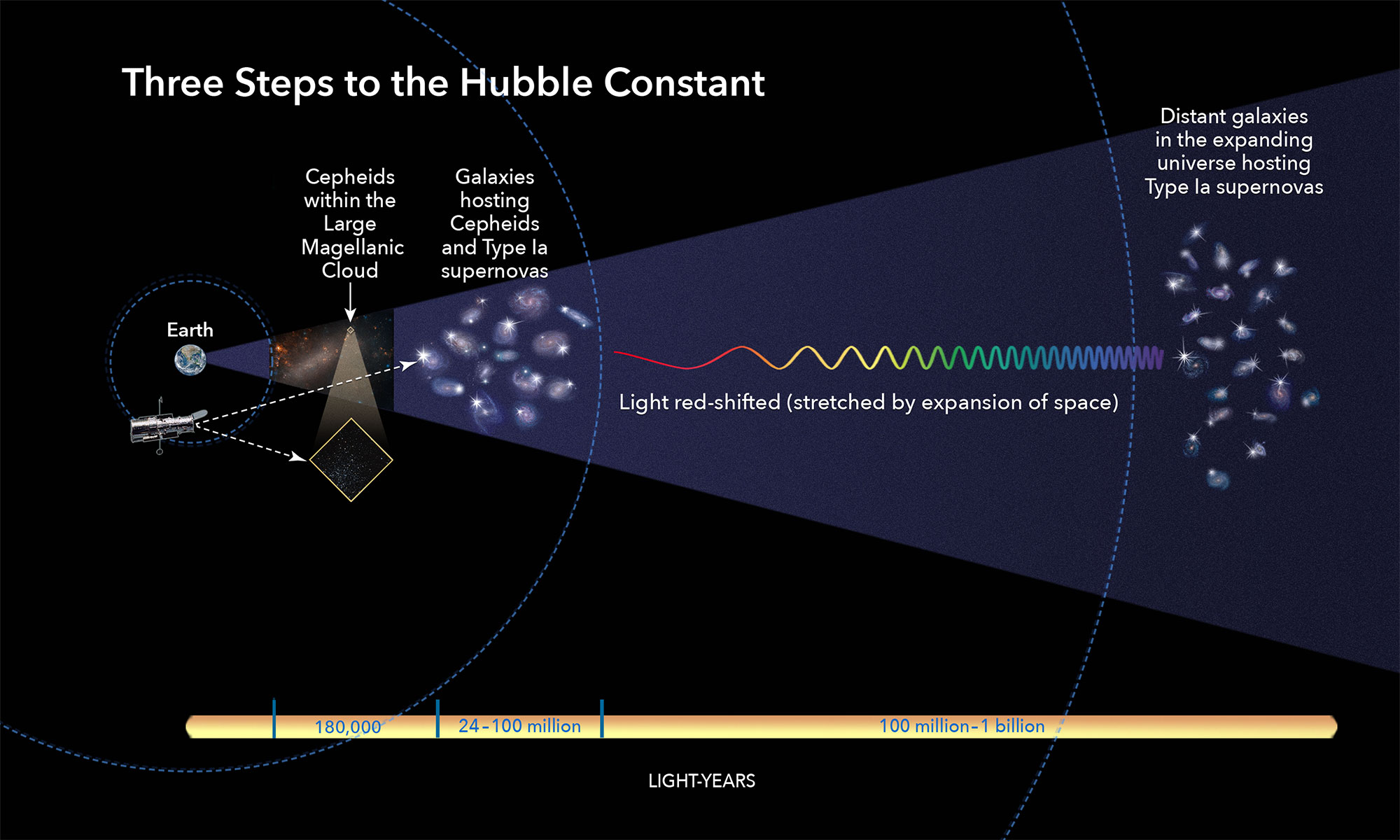
The first of these changes is scheduled to be installed on the COS in mid-December, while the other instruments will receive similar updates in the coming months. In its 31 years of operation, Hubble has been responsible for some of the most profound astronomical discoveries. These include providing new measurements on the expansion rate of the Universe, which revealed that it’s been accelerating for billions of years (leading to the theory of Dark Energy).
Its deep cosmological surveys have also led to newer, more accurate age estimates for the Universe, and taught us a great deal about the supermassive black holes (SMBHs) that reside at the center of most galaxies. It has also been essential to the study of extrasolar planets, often by working in tandem with exoplanet-hunting telescopes like Kepler. It has been used extensively to study the planets, comets, asteroids, and other objects in the Solar System.
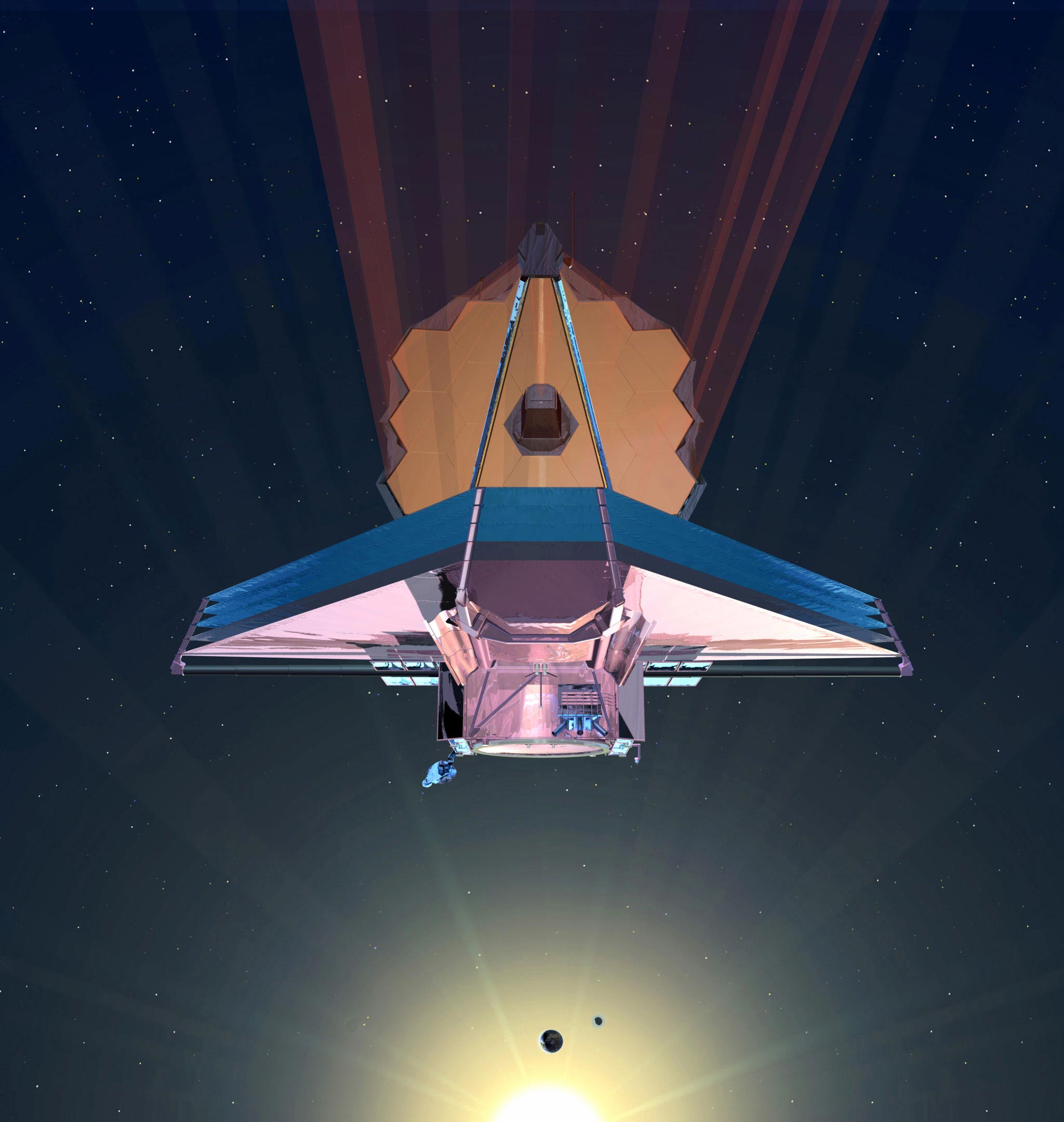
With the launch of the James Webb Space Telescope (JWST) later this month, NASA expects the two observatories will work together throughout the remainder of this decade, expanding our knowledge of the cosmos even further. In fact, some estimate that Hubble could be around until the 2030s and 2040s, where it could assist next-generation telescopes like NASA’s Nancy Grace Roman Space Telescope (RST), the ESA’s Euclid and PLATO spacecraft.
For the second time in the past year, Hubble has shown us that it’s not done yet!
Adapted from an article originally published on Universe Today.
Never miss a breakthrough: Join the SciTechDaily newsletter.
Follow us on Google and Google News.
1 Comment
Amazing CGI and photoshop!! WOW!