
Close Menu
    Facebook X (Twitter) Instagram
    SciTechDaily
    • Biology
    • Chemistry
    • Earth
    • Health
    • Physics
    • Science
    • Space
    • Technology
    Facebook X (Twitter) Pinterest YouTube RSS
    SciTechDaily
    Home»Space»Hubble’s Supernova Snap: A Window Into the Expanding Universe
    Space

    Hubble’s Supernova Snap: A Window Into the Expanding Universe

    By ESA/HubbleJanuary 27, 2025No Comments2 Mins Read
    Facebook Twitter Pinterest Telegram LinkedIn WhatsApp Email Reddit
    Share
    Facebook Twitter LinkedIn Pinterest Telegram Email Reddit
    Supernova SN 2022aajn Galaxy
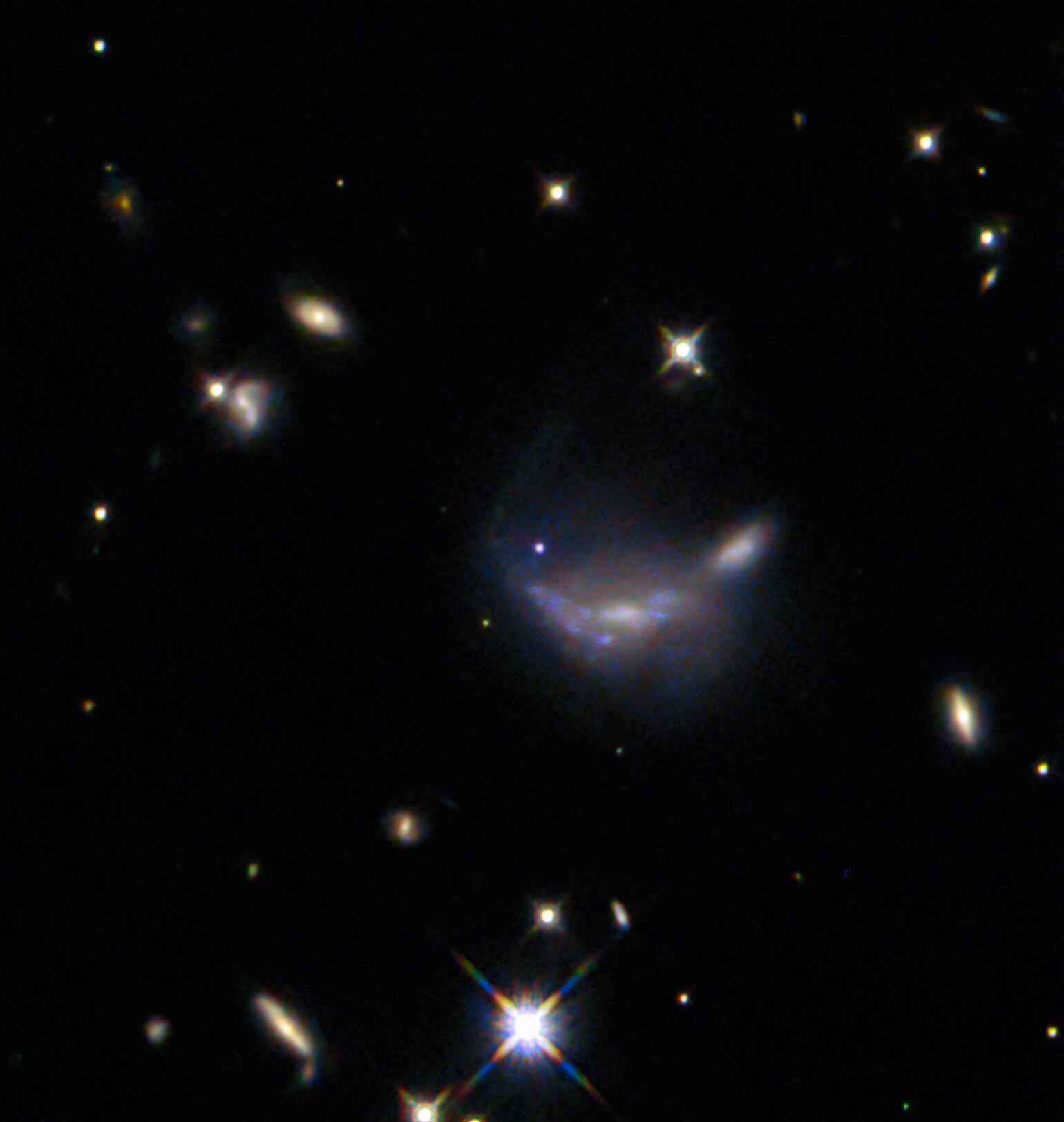
    Hubble’s latest image captures a galaxy 600 million light-years away, hosting a recently discovered supernova, SN 2022aajn. Credit: ESA/Hubble & NASA, R. J. Foley (UC Santa Cruz)

    A Distant Supernova Discovery

    This latest image from the Hubble Space Telescope features a distant galaxy located about 600 million light-years away in the constellation Gemini. This galaxy recently hosted a supernova, named SN 2022aajn, which was discovered in November 2022. In the image, the supernova appears as a bright blue dot at the center, standing out against the galaxy’s hazy glow.

    Why Observe This Supernova?

    Since its discovery, SN 2022aajn has not been widely studied. So why did Hubble turn its attention to it? This supernova is classified as a Type Ia, a special kind of stellar explosion that occurs when the core of a dead star reignites and detonates.

    Type Ia supernovae are valuable to astronomers because they serve as reliable cosmic yardsticks. They are believed to have a consistent intrinsic brightness, meaning they all emit the same amount of light regardless of their location in the universe. By comparing how bright the supernova appears from Earth to its known true brightness, scientists can determine its distance and, in turn, measure the distance to its host galaxy with remarkable accuracy.

    Measuring Cosmic Distances with Supernovae

    This seemingly simple measurement method is complicated by cosmic dust. The farther away a supernova is, the fainter and redder it will appear — but intergalactic dust can make a supernova appear fainter and redder as well. To understand this complication, researchers will use Hubble to survey a total of 100 Type Ia supernovae in seven wavelength bands from the ultraviolet to the near-infrared.

    This image combines data taken at four infrared wavelengths. Infrared light passes through dust more easily than visible or ultraviolet light. By comparing the brightness of the sampled supernovae across different wavelengths, researchers can disentangle the effects of dust and distance, helping to improve measurements of galaxies billions of light-years away and even the expansion of our Universe.

    Never miss a breakthrough: Join the SciTechDaily newsletter.
    Follow us on Google and Google News.

    Astronomy European Space Agency Hubble Space Telescope
    Share. Facebook Twitter Pinterest LinkedIn Email Reddit

    Related Articles

    A Diamond Necklace of Cosmic Proportions

    Hubble Snaps a Stunning Close-Up of a Magnificent Spiral Galaxy

    Extraordinary Hubble Image: Light Bends From the Beyond

    Hubble Space Telescope Sees Volcanic Activity Reforming the Atmosphere on a Rocky Exoplanet

    Hubble Spies a Luminous Heart With Dark Tendrils

    Spectacular Return to the Veil Nebula

    Hubble Spots a Peculiar Sight: Unusual Spiral Galaxy With a Heavy Arm

    A Flash of Life: Hubble Spies an Unusual Planetary Nebula

    Through the Cosmic Clouds: Hubble Spots a Beautiful Stellar Nursery

    Leave A Reply Cancel Reply

    • Facebook
    • Twitter
    • Pinterest
    • YouTube

    Don't Miss a Discovery

    Subscribe for the Latest in Science & Tech!

    Trending News

    One of the Universe’s Largest Stars May Be Getting Ready To Explode

    Scientists Discover Enzyme That Could Supercharge Ozempic-Like Weight Loss Drugs

    Popular Sweetener Linked to DNA Damage – “It’s Something You Should Not Be Eating”

    Ancient “Rock” Microbes May Reveal How Complex Life Began

    Researchers Capture Quantum Interference in One of Nature’s Rarest Atoms

    “A Plague Is Upon Us”: The Mass Death That Changed an Ancient City Forever

    Scientists Discover Game-Changing New Way To Treat High Cholesterol

    This Small Change to Your Exercise Routine Could Be the Secret to Living Longer

    Follow SciTechDaily
    • Facebook
    • Twitter
    • YouTube
    • Pinterest
    • Newsletter
    • RSS
    SciTech News
    • Biology News
    • Chemistry News
    • Earth News
    • Health News
    • Physics News
    • Science News
    • Space News
    • Technology News
    Recent Posts
    • Revolutionary Imaging Technique Unlocks Secrets of Matter at Extreme Speeds
    • Where Does Mass Come From? Scientists Find Evidence of a New Exotic Nuclear State
    • Quantum Breakthrough: Unhackable Keys Sent Over 120 km Using Quantum Dots
    • Researchers Discover Unknown Beetle Species Just Steps From Their Lab
    • Jellyfish Caught Feasting on Exploding Sea Worms for the First Time
    Copyright © 1998 - 2026 SciTechDaily. All Rights Reserved.
    • Science News
    • About
    • Contact
    • Editorial Board
    • Privacy Policy
    • Terms of Use

    Type above and press Enter to search. Press Esc to cancel.