
Close Menu
    Facebook X (Twitter) Instagram
    SciTechDaily
    • Biology
    • Chemistry
    • Earth
    • Health
    • Physics
    • Science
    • Space
    • Technology
    Facebook X (Twitter) Pinterest YouTube RSS
    SciTechDaily
    Home»Earth»Ice and Fire: The Tale of Frosty, Alaska’s Dormant Stratovolcano
    Earth

    Ice and Fire: The Tale of Frosty, Alaska’s Dormant Stratovolcano

    By Emily Cassidy, NASA Earth ObservatoryDecember 29, 2023No Comments2 Mins Read
    Facebook Twitter Pinterest Telegram LinkedIn WhatsApp Email Reddit
    Share
    Facebook Twitter LinkedIn Pinterest Telegram Email Reddit
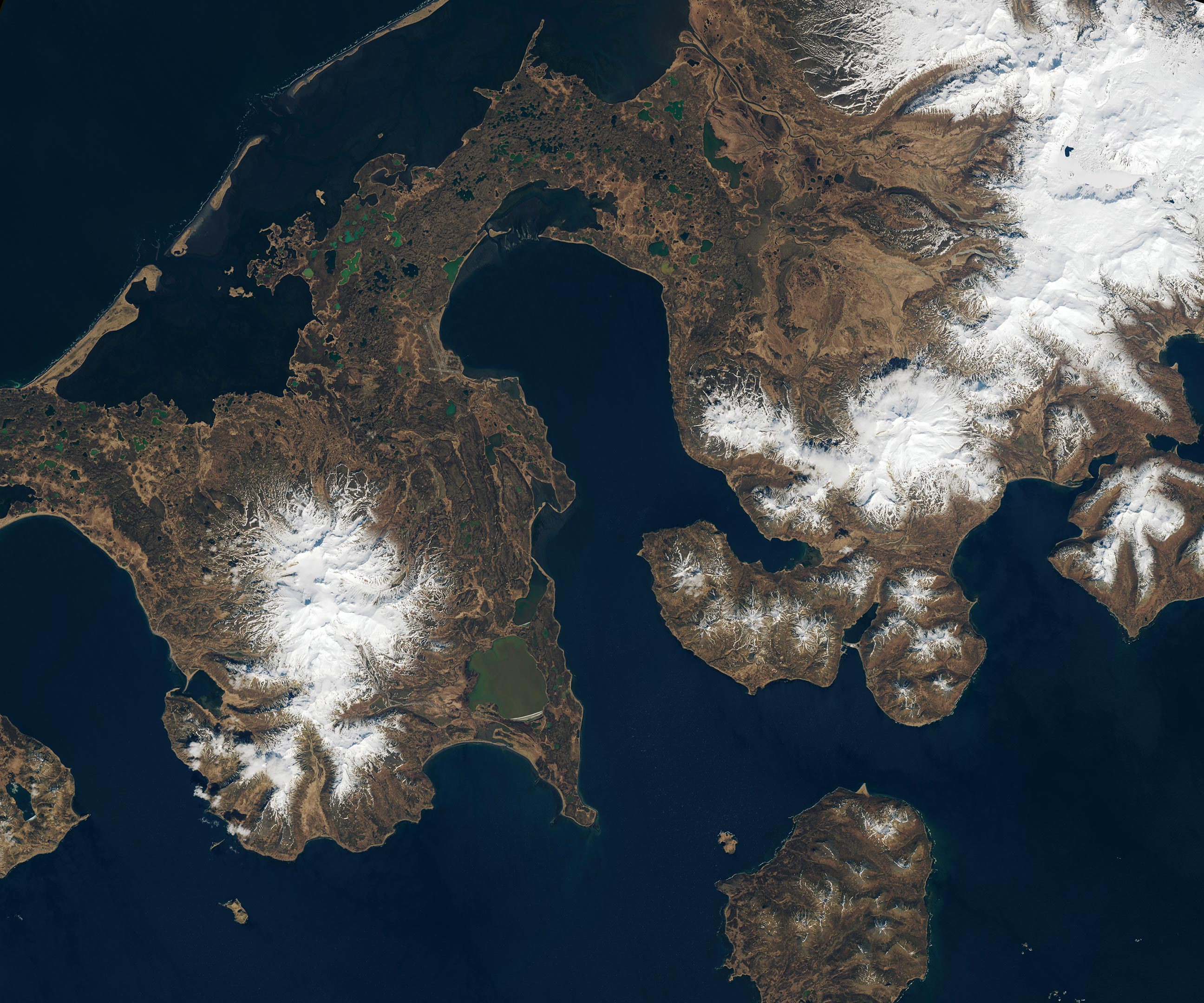
    Frosty Volcano 2023 Annotated
    Satellite image of Frosty Peak Volcano captured on April 22, 2023, by the Operational Land Imager-2 on Landsat 9.

    The Alaskan stratovolcano has not come to life in thousands of years.

    Frosty is a stratovolcano located in Alaska’s Aleutian Island chain. Although the volcano has been dormant for thousands of years, the rock below its glaciated peak tells a story of its lively past.

    The image above, acquired by Landsat 9’s OLI-2 (Operational Land Imager-2) on April 22, 2023, shows Frosty’s 5,670-foot (1,728-meter) peak and the nearby town of Cold Bay to the north.

    Geologic surveys of the volcano indicate that Frosty’s summit caldera is made up of two coalescing craters. Volcanic activity likely began from a single central vent, and fissures on its flanks contributed to its growth. But during the later stages of its development, activity shifted to a new principal vent, creating its present-day two-crater summit.
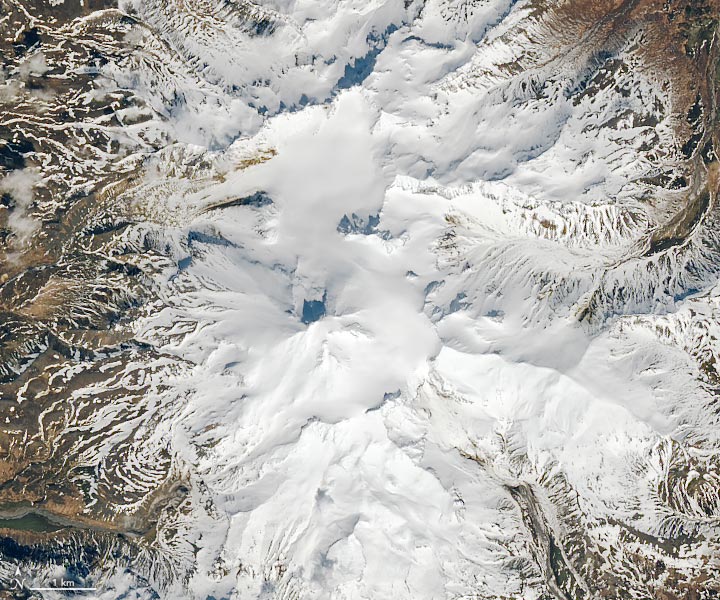
    Frosty Volcano 2023 Peak
    Close up detailed view of Frosty Volcano from the image above.

    According to the U.S. Geological Survey, explosive activity occurred at intervals throughout the growth of Frosty’s main cone. But much of its eruptive activity was effusive, in which basaltic lava flowed from the vent.

    To the south of Frosty is Morzhovoi, an extensively eroded stratovolcano with long u-shaped valleys extending from a central caldera. Only remnants of the volcano remain, with isolated peaks that are fragments of the original caldera rim.

    Both volcanoes have been relatively quiet for thousands of years. In July and August 2001, the Alaskan Volcano Observatory received several reports of steam emanating from Frosty’s peak. After some investigation, the observatory determined that the volcano was still inactive. Mount Shishaldin, a livelier volcano on Unimak Island southwest of the Cold Bay Complex, has had at least 13 explosive events since July 2023.

    NASA Earth Observatory images by Lauren Dauphin, using Landsat data from the U.S. Geological Survey.

    Never miss a breakthrough: Join the SciTechDaily newsletter.
    Follow us on Google and Google News.

    Geography NASA NASA Earth Observatory Volcano
    Share. Facebook Twitter Pinterest LinkedIn Email Reddit

    Related Articles

    Island Obliterated: Dramatic Changes at Hunga Tonga-Hunga Ha’apai

    Hunga Tonga Island Obliterated – NASA Satellites Capture Massive Blast

    A Wolf Awakens in the Galápagos Islands at Night

    A Deadly Day on Mount Semeru: Destructive Rivers of Debris on Indonesian Volcano

    Wall of Lava Burns a Path Through La Palma

    Cumbre Vieja Lights Up the Night – Astronaut Photo Captures Volcanic Eruption From Space

    Socked in Stratovolcano: Astronaut on ISS Captures Incredible View of Uninhabited Atlasov Island

    Kilauea’s Lava Lake Returns – Hawaii’s Most Active Volcano Is Erupting Again

    Newberry Volcano Photographed by Astronaut Onboard the International Space Station

    Leave A Reply Cancel Reply

    • Facebook
    • Twitter
    • Pinterest
    • YouTube

    Don't Miss a Discovery

    Subscribe for the Latest in Science & Tech!

    Trending News

    This Deadly Disease Was Wiping Out Humans 5,500 Years Ago

    Beyond DNA: Scientists Discover Inheritance That Breaks the Rules of Genetics

    Scientists Just Discovered the Eye Defies a Long-Held Rule of Vision

    What if Time Isn’t Fundamental? Physicists Just Tested the Idea in the Lab

    Scientists Say We’ve Been Wrong About the Aging Brain

    68 Quadrillion Miles: Scientists Map Earth’s Vast Hidden Fungal Network for the First Time

    Hidden Damage From Youth May Explode Into Disease Later in Life

    Climate Models May Be Wrong About How Trees Store Carbon

    Follow SciTechDaily
    • Facebook
    • Twitter
    • YouTube
    • Pinterest
    • Newsletter
    • RSS
    SciTech News
    • Biology News
    • Chemistry News
    • Earth News
    • Health News
    • Physics News
    • Science News
    • Space News
    • Technology News
    Recent Posts
    • Scientists Rediscover Rare Island Fox Not Seen for More Than 20 Years
    • The Amazon’s Mysterious “Ghost Dog” Has Been Hiding a Big Secret
    • Scientists Say Frequent Ejaculation May Improve Sperm Quality and Fertility
    • Antarctica’s Future May Be More Predictable Than Scientists Thought
    • Sea Level Rise Is Swallowing Farmland at Alarming Rates
    Copyright © 1998 - 2026 SciTechDaily. All Rights Reserved.
    • Science News
    • About
    • Contact
    • Editorial Board
    • Privacy Policy
    • Terms of Use

    Type above and press Enter to search. Press Esc to cancel.