
Device Can Be Used To Illuminate Dark, Underground Spaces in Daytime
A team of Nanyang Technological University, Singapore (NTU Singapore) researchers has designed a ‘smart’ device to harvest daylight and relay it to underground spaces, reducing the need to draw on traditional energy sources for lighting.
In Singapore, authorities are looking at the feasibility of digging deeper underground to create new space for infrastructure, storage, and utilities. Demand for round-the-clock underground lighting is therefore expected to rise in the future.
To develop a daylight harvesting device that can sustainably meet this need, the NTU team drew inspiration from the magnifying glass, which can be used to focus sunlight into one point.
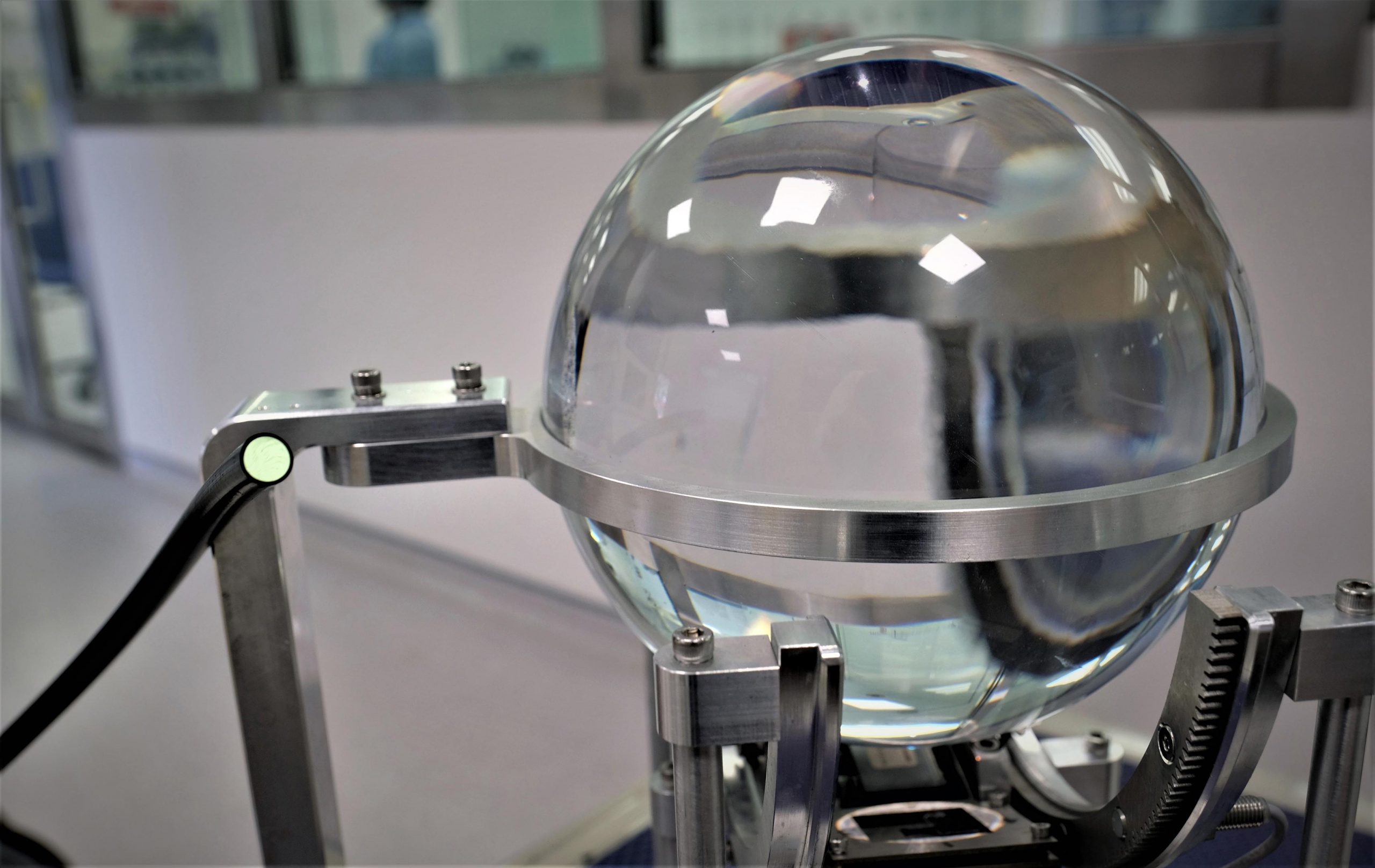
They used an off-the-shelf acrylic ball, a single plastic optical fiber — a type of cable that carries a beam of light from one end to another — and computer chip-assisted motors.
The device sits above ground and just like the lens of a magnifying glass, the acrylic ball acts as the solar concentrator, enabling parallel rays of sunlight to form a sharp focus on its opposite side. The focused sunlight is then collected into one end of a fiber cable and transported along it to the end that is deployed underground. Light is then emitted via the end of the fiber cable directly.
At the same time, small motors — assisted by computer chips — automatically adjust the position of the fiber’s collecting end, to optimize the amount of sunlight that can be received and transported as the sun moves across the sky.
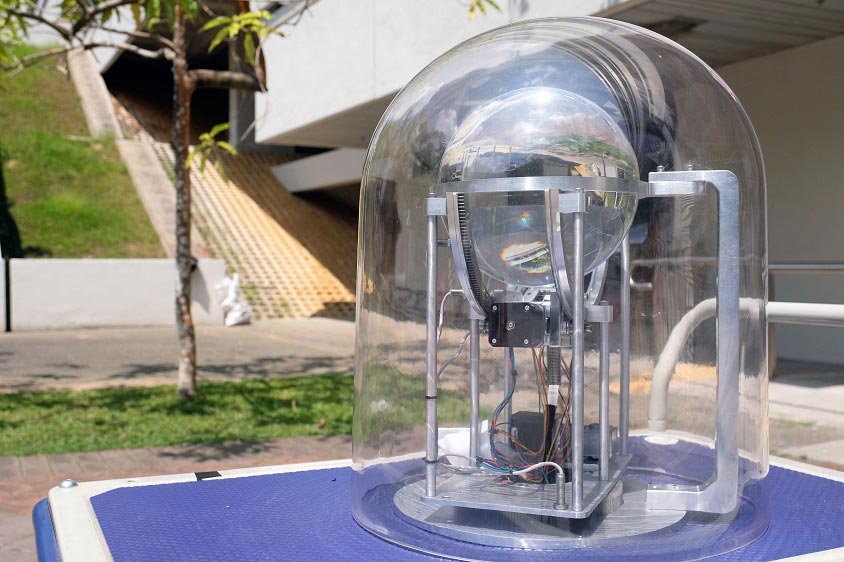
Bright idea: Daylight can now be brought underground, thanks to NTU Singapore scientists who have built a ‘smart’ device to harvest the daylight to light up underground spaces. Like a magnifying glass, the device shaped like a crystal ball focuses sunlight into one point where it is collected at the end of a fiber cable then transported to the other end that is deployed underground where the light is emitted. This reduces the need to tap on traditional energy sources for lighting. Credit: NTU Singapore
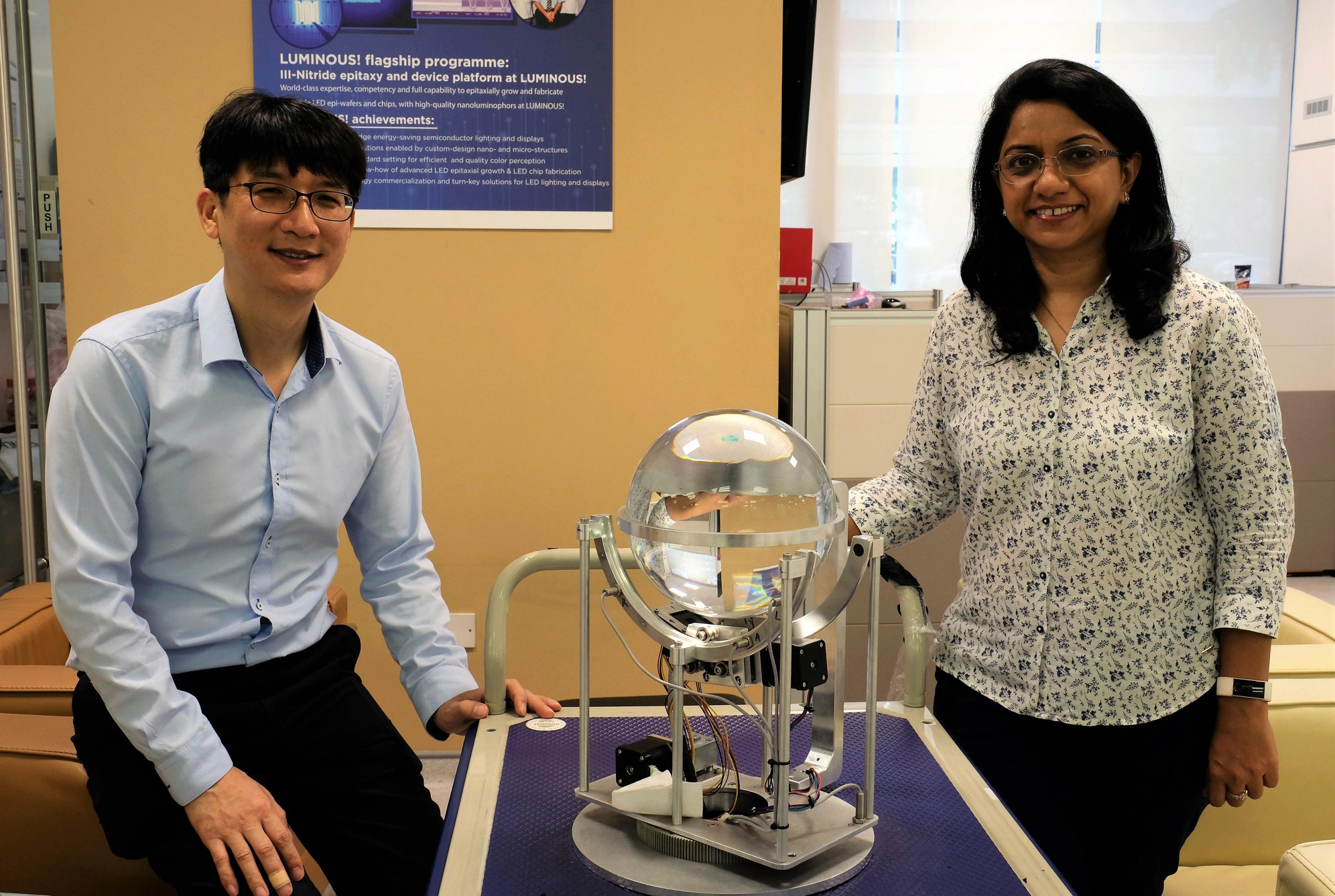
Developed by Assistant Professor Yoo Seongwoo from the School of Electrical and Electronics Engineering and Dr. Charu Goel, Principal Research Fellow at NTU’s The Photonics Institute, the innovation was reported in the peer-reviewed scientific journal Solar Energy early this month.
The device overcomes several limitations of current solar harvesting technology. In conventional solar concentrators, large, curved mirrors are moved by heavy-duty motors to align the mirror dish to the sun. The components in those systems are also exposed to environmental factors like moisture, increasing maintenance requirements.
The NTU device, however, is designed to use the round shape of the acrylic ball, ridding the system of heavy-duty motors to align with the sun, and making it compact.
The prototype designed by the researchers weighs 10 kg (22 lb) and has a total height of 50 cm (20 in). To protect the acrylic ball from environmental conditions (ultraviolet light, dust, etc.), the researchers also built a 3mm thick, transparent dome-shaped cover using polycarbonate.
Device Compact Enough To Be Mounted as a Lamp Post
Asst Prof Yoo, lead author of the study said, “Our innovation comprises commercially available off-the-shelf materials, making it potentially very easy to fabricate at scale. Due to space constraints in densely populated cities, we have intentionally designed the daylight harvesting system to be lightweight and compact. This would make it convenient for our device to be incorporated into existing infrastructure in the urban environment.”
The NTU team believes the device is ideally suited to be mounted as a conventional lamp post above ground. This would enable the innovation to be used in two ways: a device to harvest sunlight in the day to light up underground spaces, and a streetlamp to illuminate above ground at night using electricity.
The research by the NTU scientists is an example of NTU’s Smart Campus vision that aims to develop technologically advanced solutions for a sustainable future.
‘Smart’ Automatic Positioning To Harvest Maximum Sunlight
As the sun moves across the sky throughout the day, so will the position of the focused sunlight inside the acrylic ball. To ensure that maximum sunlight is being collected and transported down the fiber cable throughout the day, the system uses a computer chip-based mechanism to track the sun rays.
The Global Positioning System (GPS) coordinates of the device location are pre-loaded into the system, allowing it to determine the spot where maximum sunlight should be focused at any given time. Two small motors are then used to automatically adjust the position of the fiber to catch and transport sunlight from the focused spot at one-minute intervals.
To guarantee the device’s automatic positioning capability, pairs of sensors that measure light brightness are also placed around the sunlight-collecting end of the fiber cable. Whenever the sensors detect inconsistencies in the light measurements, the small motors automatically activate to adjust the cable’s position until the values on the sensors are the same. This indicates that the fiber is catching the maximum amount of sunlight possible.
During rain or overcast skies when there is inadequate sunlight to be collected and transported underground, an LED bulb powered by electricity installed right next to the emitting end of the fiber cable, will automatically light up. This ensures that the device can illuminate underground spaces throughout the day without interruption.
Performs Better Than LED Bulbs
In experiments in a pitch-black storeroom (to simulate an underground environment), the NTU researchers found the device’s luminous efficacy — the measure of how well a light source produces visible light using 1 Watt of electrical power- to be at 230 lumens/Watt.
This far exceeds those recorded by commercially available LED bulbs, which have a typical output of 90 lumens/Watt. The quality of the light output of the NTU smart device is also comparable with current commercially available daylight harvesting systems which are far more costly.
Dr. Charu, who is the first author of the study, said, “The luminous efficacy of our low-cost device proves that it is well-suited for low-level lighting applications, like car parks, lifts, and underground walkways in dense cities. It is also easily scalable. Since the light-capturing capacity of the ball lens is proportional to its size, we can customize the device to a desired output optical power by replacing it with a bigger or smaller ball.
Michael Chia, Managing Director at Technolite, a Singapore-based design focused agency specializing in lighting, and the industry collaborator of the research study said, “It is our privilege and honor to take this innovation journey with NTU. While we have the commercial and application knowledge, NTU in-depth know-how from a technical perspective has taken the execution of the project to the next level that is beyond our expectations.”
Moving forward, the lighting company is exploring ways to potentially incorporate the smart device or its related concepts into its industrial projects for improved efficiency and sustainability.
Reference: “Hybrid daylight harvesting system using static ball lens concentrator and movable optical fiber” by Charu Goel and Seongwoo Yoo, 28 January 2021, Solar Energy.
DOI: 10.1016/j.solener.2020.12.071
Never miss a breakthrough: Join the SciTechDaily newsletter.
Follow us on Google and Google News.
3 Comments
Oh great! More plastic into the environment. Also, is there no heat generated by concentrating sunlight?
I am extremely underwhelmed. Very old stuff in a fancy-looking new package.
As acrylic balls seem likely to be attractive to thieves, perhaps a hollow sphere with an antifreeze solution inside?