
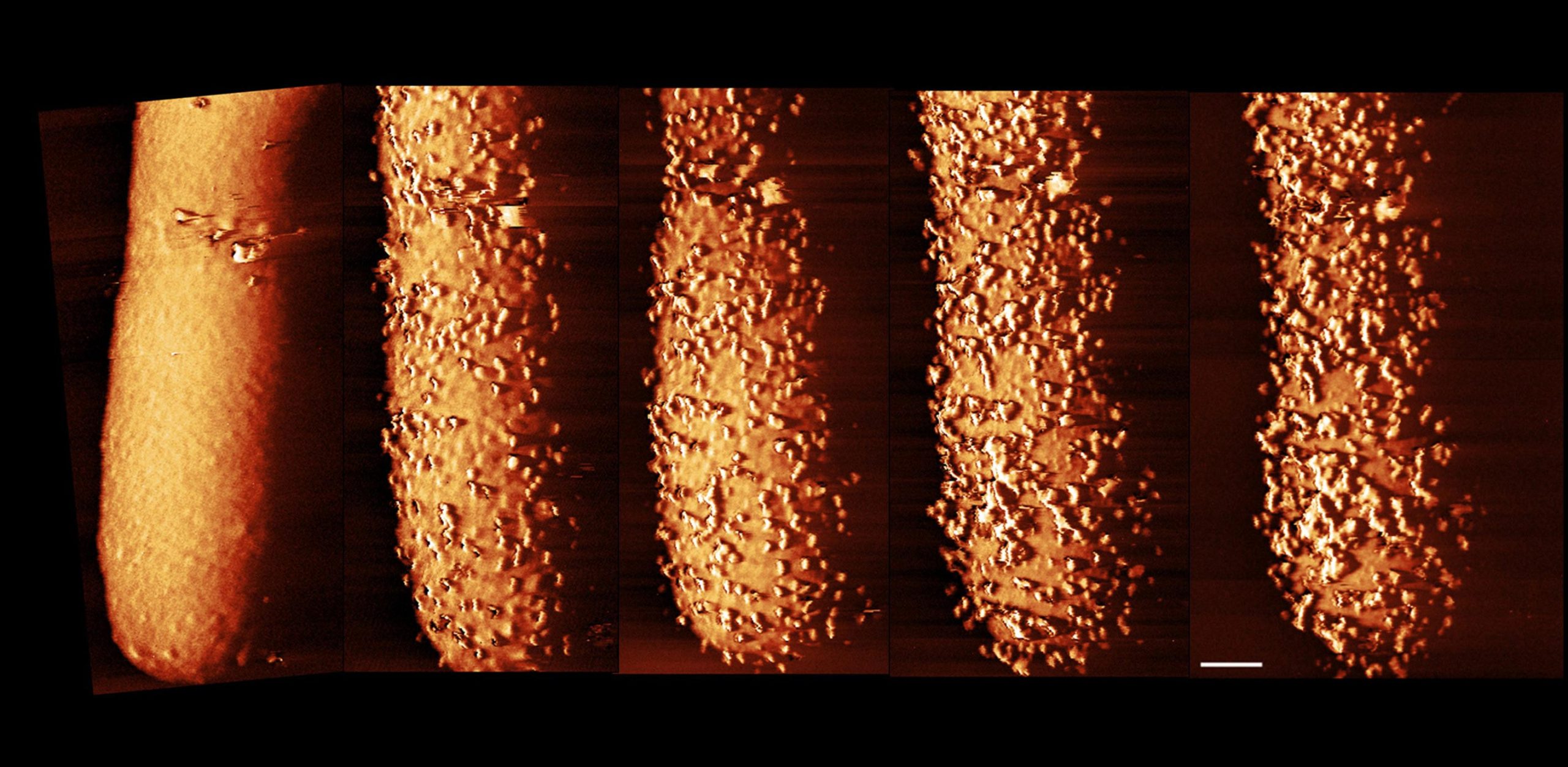
Researchers have revealed how polymyxins, crucial last-resort antibiotics, break down bacterial armor by forcing cells to overproduce and shed it.
Astonishingly, the drugs only kill bacteria when they’re active, leaving dormant cells untouched. This discovery could explain recurring infections and inspire strategies to wake bacteria up before treatment.
Breakthrough in Understanding Polymyxin Antibiotics
A research team from UCL (University College London) and Imperial College London has, for the first time, revealed how a powerful group of antibiotics known as polymyxins manage to break through the protective shield of dangerous bacteria.
The study, published in Nature Microbiology, points to potential new approaches for tackling bacterial infections. This is an urgent priority, as drug-resistant infections are already responsible for more than a million deaths each year.
Polymyxins, first discovered more than 80 years ago, are considered a last-resort option against infections caused by “Gram negative” bacteria. These bacteria are shielded by a tough outer membrane that acts like armor and blocks many antibiotics from entering. Scientists have long known that polymyxins attack this barrier, but exactly how they break it down and kill the bacteria has remained unclear.
Watching Bacteria’s Armor Collapse
In the new work, the team used advanced imaging and biochemical testing to watch the process unfold. They found that Polymyxin B quickly created bulges and bumps across the surface of E. coli cells.
Within minutes, these cells began shedding their outer defenses. The researchers concluded that the antibiotic was driving the bacteria to overproduce and shed its protective armor so rapidly that holes opened up in the barrier. These gaps gave the antibiotic access to the interior of the cell, ultimately killing it.
Why Dormant Bacteria Evade Attack
However, the team found that this process – protrusions, fast production and shedding of armor, and cell death – only occurred when the cell was active. In dormant (sleeping) bacteria, armor production is switched off, making the antibiotic ineffective.
Co-senior author Dr. Andrew Edwards, from Imperial, said: “For decades, we’ve assumed that antibiotics that target bacterial armor were able to kill the microbes in any state, whether they’re actively replicating or they were dormant. But this isn’t the case. Through capturing these incredible images of single cells, we’ve been able to show that this class of antibiotics only works with the help of the bacterium, and if the cells go into a hibernation-like state, the drugs no longer work – which is very surprising.”
Becoming dormant allows bacteria to survive unfavorable conditions, such as a lack of food. They can stay dormant for many years and “wake up” when conditions become more favorable. This can allow bacteria to survive against antibiotics, for instance, and reawaken to cause recurrent infections in the body.
Next Steps in Antibiotic Development
Co-senior author Professor Bart Hoogenboom, based at the London Centre for Nanotechnology at UCL, said: “Polymyxins are an important line of defense against Gram-negative bacteria, which cause many deadly drug-resistant infections. It is important we understand how they work.
“Our next challenge is to use these findings to make the antibiotics more effective. One strategy might be to combine polymyxin treatment – counterintuitively – with treatments that promote armor production and/or wake up ‘sleeping’ bacteria so these cells can be eliminated too.
“Our work also shows we need to take into account what state bacteria are in when we are assessing the effectiveness of antibiotics.”
Atomic-Level Imaging Reveals the Battle
The E. coli cells were imaged at the London Centre for Nanotechnology at UCL. A tiny needle, only a few nanometers wide, was run over the bacterial cell, “feeling” the shape to create an image (a technique called atomic force microscopy) at much higher resolution than would be possible using light.
Co-author Carolina Borrelli, a PhD student at the London Centre for Nanotechnology at UCL, said: “It was incredible seeing the effect of the antibiotic at the bacterial surface in real-time. Our images of the bacteria directly show how much polymyxins can compromise the bacterial armor. It is as if the cell is forced to produce ‘bricks’ for its outer wall at such a rate that this wall becomes disrupted, allowing the antibiotic to infiltrate.”
Sugar, Dormancy, and Antibiotic Effectiveness
The team compared how active (growing) and inactive E. coli cells responded to polymyxin B in the lab, finding that the antibiotic efficiently eliminated active cells but did not kill dormant cells.
They also tested the E. coli cells’ response with and without access to sugar (a food source that wakes up dormant cells). When sugar was present, the antibiotic killed previously dormant cells, but only after a delay of 15 minutes – the time needed for the bacteria to consume the sugar and resume production of its outer armor.
In conditions where the antibiotic was effective, the researchers detected more armor being released from the bacteria. They also observed the bulges occurring across the surface of the cell.
In conditions where it was ineffective, the antibiotic bound itself to the outer membrane but caused little damage.
Unique Insights From Collaboration
Co-author Dr. Ed Douglas, from Imperial, said: “We observed that disruption of the outermost armor of the bacteria only occurred when the bacteria were consuming sugar. Once we knew that, we could quickly figure out what was happening.”
Co-author Professor Boyan Bonev, of the University of Nottingham, said: “Working together has given us unique insights into bacterial physiology and morphology under stress that have remained hidden for decades. Now we understand better the weak points of bacteria.”
Reference: “Polymyxin B lethality requires energy-dependent outer membrane disruption” by Carolina Borrelli, Edward J. A. Douglas, Sophia M. A. Riley, Aikaterini Ellas Lemonidi, Gerald Larrouy-Maumus, Wen-Jung Lu, Boyan B. Bonev, Andrew M. Edwards and Bart W. Hoogenboom, 29 September 2025, Nature Microbiology.
DOI: 10.1038/s41564-025-02133-1
This work was funded by the Biotechnology and Biological Sciences Research Council (BBSRC) and the Engineering and Physical Sciences Research Council (EPSRC), parts of UK Research and Innovation, and by Wellcome.
Never miss a breakthrough: Join the SciTechDaily newsletter.
Follow us on Google and Google News.